



Study Analyzes Impact of COVID-19 Recovery on California’s Transportation Revenue
MTI researchers analyze six possible transportation revenue scenarios to predict the state’s potential economic recovery through 2040.
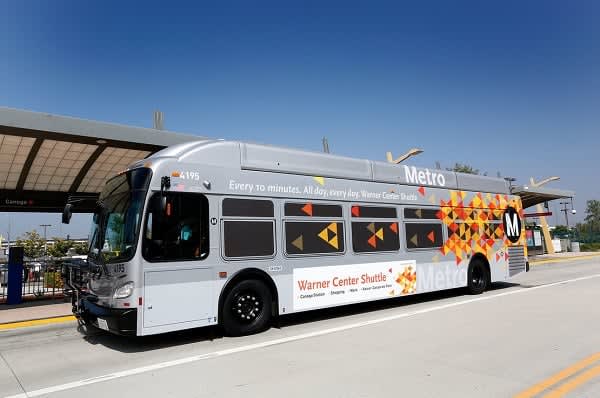
Researchers suggest that in order to achieve its policy goals of reducing carbon emissions from the transportation sector, California’s policymakers may wish to change the structure of taxes to replace the revenue lost from fuel taxes during the pandemic.
L.A. Metro
Drastic changes to travel behavior during the pandemic have decreased fuel tax revenue in many states, but the extent and timing of financial recovery in the years to come remain uncertain. New research from the Mineta Transportation Institute (MTI), "The Impact of the COVID-19 Recovery on California Transportation Revenue: A Scenario Analysis through 2040," estimates the impact the COVID-19 pandemic would have on state-generated transportation revenue under six potential economic recovery scenarios, projecting the state’s future transportation revenue through 2040.
The six scenarios vary by several variables, including the length of the economic downturn and differences in transportation trends such as vehicle miles traveled (VMT), light-duty fleet size, and the mix of internal-combustion engine (ICE) vs. zero-emission vehicles (ZEV). The study used a tested spreadsheet model and well-known data sources to project transportation revenues generated by California’s Senate Bill 1 (2017) package of taxes and fees. These are taxes on gasoline and diesel fuel, plus two annual fees levied on vehicles.
While there is no certainty that the future will resemble any of the chosen scenarios, they nevertheless help state leaders assess and design policies to achieve desired outcomes.
The study’s revenue projections under these six scenarios found that:
The projections demonstrate that annual California transportation revenue by 2040 could range from as little as $6.5 billion to as much as $10.9 billion.
The projected cumulative revenue raised between 2020 and 2040 varies across the scenarios by more than $40 billion.
In 2020, taxes on fuels will generate roughly three-quarters of state generated transportation revenue but will likely generate a much smaller percentage of overall revenue by 2040 (in four of the six scenarios, they generate less than a quarter of revenues).
“The findings highlight the need for California’s policy leader to prepare a long-term strategy for raising adequate transportation revenues that take into account the wide variation that will arise,” says Principal Investigator Dr. Asha W. Agrawal.
Researchers suggest that in order to achieve its policy goals of reducing carbon emissions from the transportation sector, California’s policymakers may wish to change the structure of taxes to replace the revenue lost from fuel taxes. For instance, the research team suggests supplementing the existing tax structure with a new road-user charge of one cent per mile.
More Management

METRO Opens Submissions for 2026 Motorcoach Awards
Nominations are now being accepted for METRO Magazine’s Operator of the Year and Innovative Operator of the Year awards.
Read More →
New York MTA Advances Final Contract for Second Avenue Subway Expansion
Contract Four is the largest in the Second Avenue Subway Phase 2 project and includes construction of station infrastructure, tracks, and signals for the subway expansion, MTA officials said. Work on Contract Four will begin in 2027.
Read More →
Transit Agencies Highlight Safety Gains at National Summit
Leaders from 15 major transit systems shared crime-reduction results and safety initiatives while discussing the role of continued federal support.
Read More →

NITA Names New Leadership, Expands Reduced-Fare Program at First Board Meeting
The new regional transit authority appointed its first board chair and interim executive director while extending reduced fares across CTA, Metra, and Pace for eligible riders.
Read More →
Beyond the Checklist: A Structured Approach to Transit Maintenance
Reliability-Centered Maintenance helps transit agencies move beyond routine checklists to focus limited resources on the assets and failures that have the greatest impact on safety, reliability, and service.
Read More →
APTA 2026 Nominating Committee Selects Leadership Slate, Names Chair and Vice Chair Nominees
Leadership changes will help shape the association’s priorities and its representation of the transportation industry during the 2026–2027 term.
Read More →
DART Launches Major Security, Fare Enforcement Initiative
The 90-day demonstration will deploy coordinated security teams at five light rail stations while testing controlled access and gathering data to guide future investments.
Read More →
Advancing Fare Collection Through Technology and Innovation
Learn about delivering 1300 gates at 91 stations while managing fare evasion. Explore the large scale deployment, solution customization and real-world results that affect the region. Prepare for deployment in your region now.
Read More →
Game Day in Motion: Moving Millions During the 2026 World Cup
Between packed transit stations and team motorcoaches, see how agencies and operators across North America tackled the transportation demands of the 2026 FIFA World Cup.
Read More →
Surface Transportation Extension Averts Shutdown, Leaves Transit Funding Gap
The stopgap keeps federal transportation programs moving, but missing advance funding could complicate the transit and rail projects agencies are planning next.
Read More →