



Survey of Chicago Transit Riders Indicates Possible Challenges Post-COVID
The survey, conducted by the RTA, shows that about 80% of riders plan to resume their pre-COVID level of transit use, but increased telecommuting is likely to persist.
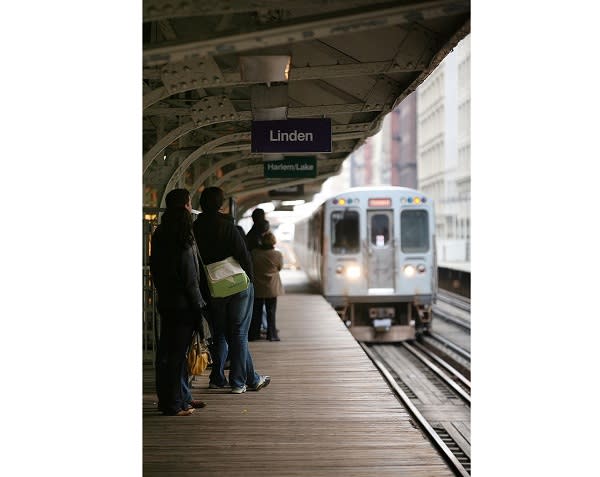
While the survey indicates that automobile travel most frequently replaced pre-pandemic transit trips, the majority of transit trips are being skipped rather than replaced and car trips overall have remained steady rather than increased.
Daniel Schwen
A new report from Chicago’s Regional Transportation Authority (RTA) indicates that about 80% of transit users who stopped riding during the pandemic plan on returning to CTA, Metra, and Pace if COVID-19 concerns diminish. But they also indicate telecommuting may continue at higher than pre-pandemic levels, with lasting implications for the regional transit system.
The report summarizes responses by 5,637 current and lapsed riders. In two stages during November 2020 and January 2021 — as the COVID pandemic was entering a new phase with the initial advent of vaccines — the survey collected data about travel behavior, attitudes, and preferences.
This is the first region-wide survey of current and lapsed transit riders since the pandemic began. The report defines "current riders" as those using transit at least once weekly. "Lapsed riders" use transit less than once weekly now but had used it at least once weekly prior to March 2020.
"A majority of current riders on all three systems feel comfortable riding because of the health precautions taken by CTA, Metra, and Pace," said RTA Executive Director Leanne Redden. "These are important insights we can use to help bring back lapsed riders who indicated they still have concerns about riding again that are based on pre-pandemic perceptions. Our challenges are substantial, but we knew they would be. This report is full of information that we and our partners will use to plan for transit's recovery over the long term."
By gauging lapsed riders' willingness to resume using transit, the survey will inform planning and policies of the RTA, the Service Boards (CTA, Metra, and Pace), and the Chicago Metropolitan Agency for Planning (CMAP). Since early in the pandemic, the RTA has maintained a COVID Transit Dashboard to track trends including ridership, which as of March 1 is down 71% compared to the pre-pandemic baseline.
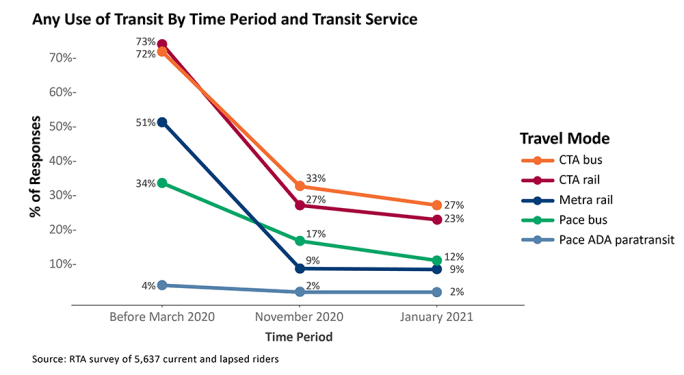
Graphic courtesy RTA
The survey results confirm that telecommuting has been more common during the pandemic than before, among other research findings by RTA over the past year, including:
Significant numbers of transit riders stopped using CTA, Metra, and Pace altogether during the pandemic and had not yet shown signs of returning by January 2021.
Essential on-site workers, people who identify as Black and Latino, and riders experiencing low-income have been most reliant on transit during the pandemic.
The survey also sheds light on riders' preferences about what could drive increased transit usage. For example, speed and reliability are among their top priorities, along with improved connectivity between buses and trains across the three transit operators.
For some current and lapsed riders anticipated future levels of telecommuting — particularly among those employed in professional services like business and finance — appeared in January to be decreasing slightly as the pandemic evolved. In contrast, telecommuting by workers in government and education actually increased from November to January, although the survey suggests this group of riders may be the more likely to return to regular ridership.
While the survey indicates that automobile travel most frequently replaced pre-pandemic transit trips, the majority of transit trips are being skipped rather than replaced and car trips overall have remained steady rather than increased.
The RTA, CTA, Metra, Pace, and other partners can use the survey results to enhance efforts to attract riders back to public transportation. For example:
More than half of current riders indicated satisfaction with the transit system's COVID-19 response, and lapsed riders indicated lower approval.
Respondents indicated strong interest in additional measures to improve health and safety, including cleaner vehicles and enforcement, all of which are high priorities for the Service Boards.
Thanks to federal relief funds, critical transit services have been sustained during the pandemic, and the RTA — whose responsibility includes financing of CTA, Metra, and Pace operations and capital investments — is currently in Step 2 of its three-step regional strategy for COVID recovery. Starting in May, the RTA will initiate Step 3 for longer-term strategic planning through 2023 and beyond.
"The survey results foreshadow challenges we'll address in Step 3 of the COVID recovery strategy, including how to prioritize resources," said Jessica Hector-Hsu, RTA’s director of planning and market development, whose team led the survey effort. "For example, the survey gave each respondent the choice of a hypothetical investment for improving transit. Most favored investing in speed and reliability, suburb-to-suburb connections, and mobility options coordinated across CTA, Metra, and Pace. Notably, lapsed riders were significantly more focused than current ones on the importance of seamless connections between CTA, Metra, and Pace."
The project was funded by the U.S. Department of Transportation through a grant from the Illinois Department of Transportation.
More Management

METRO Opens Submissions for 2026 Motorcoach Awards
Nominations are now being accepted for METRO Magazine’s Operator of the Year and Innovative Operator of the Year awards.
Read More →
New York MTA Advances Final Contract for Second Avenue Subway Expansion
Contract Four is the largest in the Second Avenue Subway Phase 2 project and includes construction of station infrastructure, tracks, and signals for the subway expansion, MTA officials said. Work on Contract Four will begin in 2027.
Read More →
Transit Agencies Highlight Safety Gains at National Summit
Leaders from 15 major transit systems shared crime-reduction results and safety initiatives while discussing the role of continued federal support.
Read More →

NITA Names New Leadership, Expands Reduced-Fare Program at First Board Meeting
The new regional transit authority appointed its first board chair and interim executive director while extending reduced fares across CTA, Metra, and Pace for eligible riders.
Read More →
Beyond the Checklist: A Structured Approach to Transit Maintenance
Reliability-Centered Maintenance helps transit agencies move beyond routine checklists to focus limited resources on the assets and failures that have the greatest impact on safety, reliability, and service.
Read More →
APTA 2026 Nominating Committee Selects Leadership Slate, Names Chair and Vice Chair Nominees
Leadership changes will help shape the association’s priorities and its representation of the transportation industry during the 2026–2027 term.
Read More →
DART Launches Major Security, Fare Enforcement Initiative
The 90-day demonstration will deploy coordinated security teams at five light rail stations while testing controlled access and gathering data to guide future investments.
Read More →
Advancing Fare Collection Through Technology and Innovation
Learn about delivering 1300 gates at 91 stations while managing fare evasion. Explore the large scale deployment, solution customization and real-world results that affect the region. Prepare for deployment in your region now.
Read More →
Game Day in Motion: Moving Millions During the 2026 World Cup
Between packed transit stations and team motorcoaches, see how agencies and operators across North America tackled the transportation demands of the 2026 FIFA World Cup.
Read More →
Surface Transportation Extension Averts Shutdown, Leaves Transit Funding Gap
The stopgap keeps federal transportation programs moving, but missing advance funding could complicate the transit and rail projects agencies are planning next.
Read More →