




And the Survey Says: RTA Launches Survey to Determine Route Options Connecting New Orleans East, Westbank
Survey Reveals Quality Service Will Increase Ridership
PTV surveyed over 700 professionals to answer some of the most pressing questions of the industry.
September 9, 2022
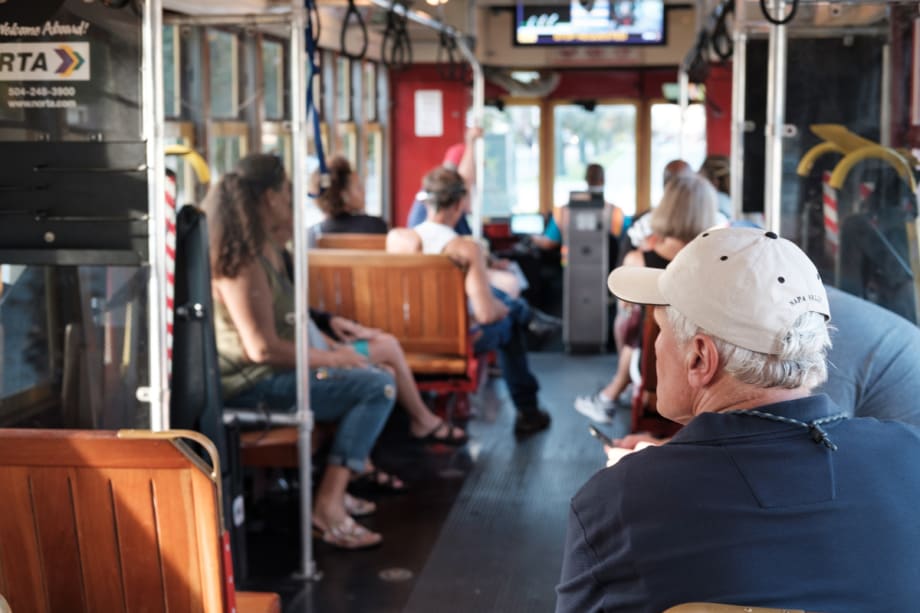
PTV surveyed professionals - from public transport operators and new mobility providers to the public sector officials.
Photo: Luke Michael/Unsplash
3 min to read
The PTV Group released the results from its latest survey "PTV Public Transport Trends Report 2022."
PTV surveyed over 700 professionals — from public transport operators and new mobility providers to the public sector officials — to answer some of the most pressing questions of the industry.
Main challenges: Service quality & punctuality
The pandemic took its toll on public transportation, as 78% of respondents still see returning passenger numbers to pre-pandemic levels as an important issue, according to the survey. However, the results of the PTV survey point out the most acute challenges being in improving quality of service (88%), as well as punctuality (80%), coverage, and accessibility (80%). A majority of 75% also rated decarbonization (e-busses, renewable energy, etc.) among the main challenges of the industry.
According to respondents, mobility hubs — where numerous sustainable transport modes are located - are among the strategies to enhance urban mobility. However, the PTV study showed that such concepts have so far only been implemented to a limited extent. Just 19% of respondents said their organization is already active in this area.
When it comes to sharing services, one-third of respondents said they already integrated shared services into their offering. More than 50% of the participants said they would consider transforming from pure public transport operations into more holistic mobility service providers, according to PTV.
What makes people switch to public transport?
Shifting people from private cars to public transport is an important step towards a green change in mobility, according to PTV. According to the surveyed public transport experts, the most important incentives are better accessibility (95%), more frequent service and on-demand services (95%), and integration with other mobility services (87%). In contrast, cheaper ticket prices only play a smaller role. Just 26% of participants considered price reductions to be the decisive argument for more people to use public transportation.
Effects of technological developments
Every mode of public transit involves technology and is supported and influenced by digital means. More than half of those surveyed say that electrification and decarbonization technologies will influence their business in the next five to 10 years. Also mentioned are apps, for example for planning and booking trips (36%); and artificial intelligence in the area of data analysis and operational planning (31%).
The PTV survey also showed that connected and autonomous vehicles are increasingly relevant to the industry — 40% of respondents are of this opinion, and 20% already work on related projects.
PTV also asked the participants how they use tech to tackle challenges in their daily work: More than half use software for demand & supply planning, and 43% for network planning & optimization.
“There is huge potential for cities to become more livable and sustainable by extending public transport, converting it to electric vehicles, and integrating it with other modes into a multimodal, demand-responsive system”, explained Arnd Vogel, a modelling expert at PTV Group. “Transportation planning based on modeling tools and data helps cities and operators to take the right decisions in this process, regarding fleets, hubs, regulations and operations.
More Management

METRO Opens Submissions for 2026 Motorcoach Awards
Nominations are now being accepted for METRO Magazine’s Operator of the Year and Innovative Operator of the Year awards.
Read More →
New York MTA Advances Final Contract for Second Avenue Subway Expansion
Contract Four is the largest in the Second Avenue Subway Phase 2 project and includes construction of station infrastructure, tracks, and signals for the subway expansion, MTA officials said. Work on Contract Four will begin in 2027.
Read More →
Transit Agencies Highlight Safety Gains at National Summit
Leaders from 15 major transit systems shared crime-reduction results and safety initiatives while discussing the role of continued federal support.
Read More →

NITA Names New Leadership, Expands Reduced-Fare Program at First Board Meeting
The new regional transit authority appointed its first board chair and interim executive director while extending reduced fares across CTA, Metra, and Pace for eligible riders.
Read More →
Beyond the Checklist: A Structured Approach to Transit Maintenance
Reliability-Centered Maintenance helps transit agencies move beyond routine checklists to focus limited resources on the assets and failures that have the greatest impact on safety, reliability, and service.
Read More →
APTA 2026 Nominating Committee Selects Leadership Slate, Names Chair and Vice Chair Nominees
Leadership changes will help shape the association’s priorities and its representation of the transportation industry during the 2026–2027 term.
Read More →
DART Launches Major Security, Fare Enforcement Initiative
The 90-day demonstration will deploy coordinated security teams at five light rail stations while testing controlled access and gathering data to guide future investments.
Read More →
Sponsored•September 9, 2026
Advancing Fare Collection Through Technology and Innovation
Learn about delivering 1300 gates at 91 stations while managing fare evasion. Explore the large scale deployment, solution customization and real-world results that affect the region. Prepare for deployment in your region now.
Read More →
Game Day in Motion: Moving Millions During the 2026 World Cup
Between packed transit stations and team motorcoaches, see how agencies and operators across North America tackled the transportation demands of the 2026 FIFA World Cup.
Read More →
Surface Transportation Extension Averts Shutdown, Leaves Transit Funding Gap
The stopgap keeps federal transportation programs moving, but missing advance funding could complicate the transit and rail projects agencies are planning next.
Read More →