




RELATED: Transit agencies' partnerships with TNCs on the rise
TNCs divert riders from public transit, cost MBTA $20 million: Study
Analysis shows ride-hailing companies add traffic, reduce MBTA ridership, and increase greenhouse gas emissions across region.
July 23, 2019
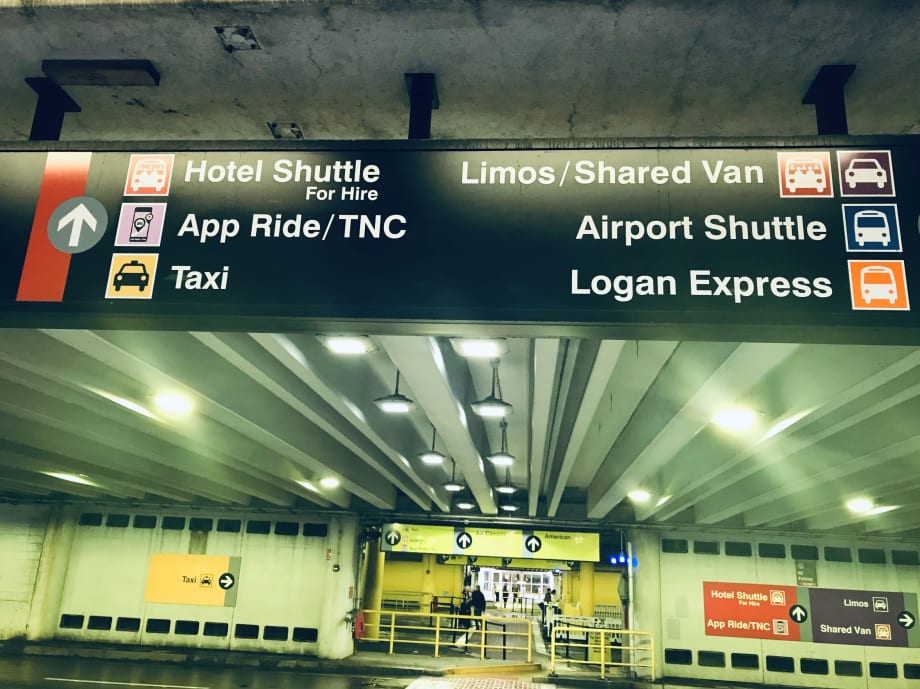
Boston's Logan Airport signage directs passengers to various transportation modes, including TNCs.
METRO Magazine/Janna Starcic
3 min to read
Boston's Logan Airport signage directs passengers to various transportation modes, including TNCs.
METRO Magazine/Janna Starcic
Ride-hailing companies such as Uber and Lyft are increasing not just traffic but greenhouse gas emissions (GHGs) in Greater Boston, new data shows. The first-ever analysis of the climate impacts of transportation network companies, or TNCs was conducted by the Boston area's Metropolitan Area Planning Council (MAPC).
Using recently-released data from the state’s Department of Public Utilities (DPU), which tracks TNC trip data in Massachusetts, MAPC researchers calculated the effect of ride-hailing services on vehicles miles traveled (VMT) and greenhouse gas emissions across Greater Boston. DPU data for the state as a whole, the City of Boston, and individual municipalities in the region are available online at https://tnc.sites.digital.mass.gov.
MAPC found TNCs released an estimated total of 163,300 metric tons of CO2e, which is the equivalent of over 18 million gallons of gasoline consumed. Additionally, the MAPC analysis found that TNCs divert riders from public transit, costing the MBTA an estimated $20 million each year.
“We already know that TNC services are siphoning riders and dollars from public transit, but now we can see clearly that they leave an impact on our congestion as well as our air quality,” said Rebecca Davis, Deputy Director of MAPC, the regional planning agency serving Greater Boston. “Clearly we need to do more to promote shared trips when users choose these services, while advocating for better walking and biking infrastructure and safe, reliable public transit.”
Between 2017 and 2018, the number of ride-hailing trips grew from 64.8 million to 81.3 million, a 25% increase across Massachusetts. MAPC calculated the GHGs by using the number of TNC trips by municipality, and the average miles per trip reported by DPU, applied against earlier research by MAPC that showed almost 60% of ride-hailing trips would have used a non-polluting mode of travel if Uber and Lyft were not an option.
According to MAPC, the negative effects of TNC emissions may be decreased by policies and programs that promote shared trips/ride pooling; providing incentives for drivers to use electric or zero-emission vehicles; and maximize the efficiency of pick-up and drop-off locations.
The study also calls for the state to collect more data on TNCs to better evaluate their impact, giving local planners more effective tools to measure and understand rider behavior.
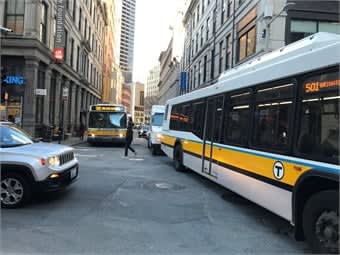
An analysis by the Boston-based Metropolitan Area Planning Council found that TNCs divert riders from public transit, costing the MBTA an estimated $20 million each year.
METRO Magazine/Janna Starcic
Lawmakers will host hearings related to TNC regulations this week. Fees on ride- hailing will be the subject of testimony at a Joint Committee on Financial Services hearing where almost two dozen bills are on the agenda, including several that would increase the 20-cent per ride flat fee now imposed on Uber and Lyft trips.
Another bill by Rep. Adrian Madaro of East Boston would charge companies for congestion-causing “deadhead” rides – those with no passenger – at Logan Airport. Legislation filed last week by Gov. Charlie Baker would impose new safety restrictions and data-collection requirements on ride-hailing companies but is not yet set for a hearing, and has been referred to the Joint Committee on Transportation.
More New Mobility

From Hardware to Digital Partner: Luminator Charts Its Next Chapter
CEO Magnus Friberg discusses Luminator’s shift toward becoming a digital partner, the growing importance of software and interoperability, and how AI can help agencies improve operations and passenger experience.
Read More →
Biz Briefs: Alstom Lands Canadian Contract, LYT to Supply California TSP, and More
In METRO's latest installment, we take a look at recent news from Complete Coach Works, Beep, FlixBus, and more partnerships making headlines across the transportation sector.
Read More →
CharterUP’s Armir Harris on Technology, AI, and the Future of Group Mobility
In a recent episode of METROspectives, CharterUP Founder/CEO Armir Harris discussed the company’s evolution from an online charter bus marketplace into a technology platform supporting public- and private-sector mobility and much more.
Read More →
Jacksonville’s NAVI Project Charts a New Course for Autonomous Public Transportation
Through its NAVI program, JTA is showing how autonomous vehicles, intelligent infrastructure, and coordinated operations can work together to deliver everyday public transportation.
Read More →
Biz Briefs: Luminator Marks Milestone and More
From manufacturers and suppliers to transit agencies and motorcoach operators, these updates offer a snapshot of the projects, partnerships and business moves driving the industry forward.
Read More →
New Tricks for Old Bureaucracies: Joshua Schank on Making Transit Innovation Stick
Former LA Metro Chief Innovation Officer Joshua Schank discusses why good ideas aren't enough, how transit agencies can overcome resistance to change, and why today's challenges demand more innovation.
Read More →
How DART's GoPass Is Redefining Regional Mobility
Serving 14 transit agencies, GoPass simplifies multimodal travel by allowing riders to plan, pay for, and manage an entire trip through one app.
Read More →
Biz Briefs: OCTA Taps Clean Energy for Hydrogen Station, Stadler to Supply Via Rail Vehicles, and More
From manufacturers and suppliers to transit agencies and motorcoach operators, these updates offer a snapshot of the projects, partnerships and business moves driving the industry forward.
Read More →CharterUP Expands Into New Mobility and Autonomous Transportation
Vice President of New Mobility Stephen Joos discusses how CharterUP is leveraging its nationwide transportation network, technology platform, and autonomous vehicle partnerships to expand into workforce mobility, campus shuttles, and transit solutions.
Read More →
METRO Magazine Announces 2026 Innovative Solutions Awards Winners
Projects Recognized for Advancing Mobility Through Technology, Accessibility, Workforce Innovation, and Operational Excellence
Read More →