



TransLink Highlights Opportunities to Speed Metro Vancouver Buses
Staff have worked with municipalities to ensure the identified opportunities have considered local businesses and, are in many cases, win-wins for both transit and local retail areas.
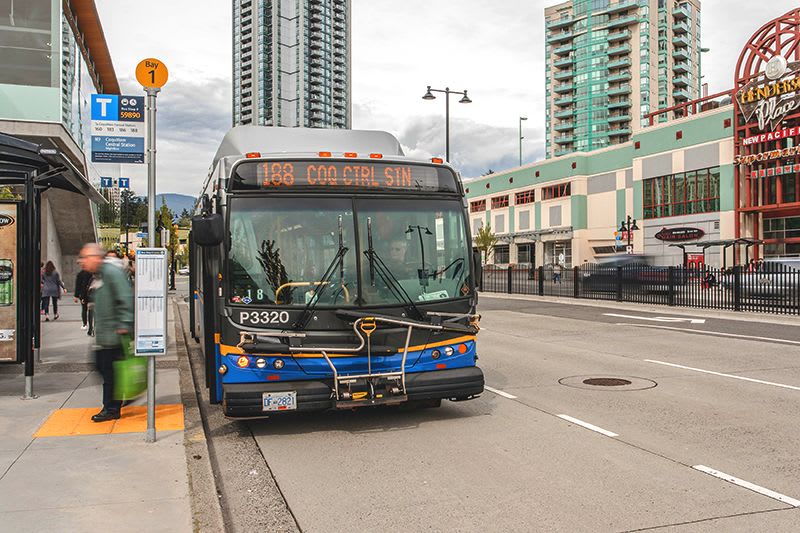
About half of the opportunities identified by TransLink are in the City of Vancouver, while the other half are along key bus corridors in communities such as North Vancouver, Burnaby, Surrey, West Vancouver, New Westminster, and Richmond.
TransLink
Canada’s TransLink is releasing its assessment of near-term opportunities for municipal projects aimed at improving bus travel times around Metro Vancouver while also improving the overall flow of traffic during the pandemic. TransLink has identified more than 25 bus priority opportunities that could be implemented quickly with little impact on surrounding areas.
Staff have worked with municipalities to ensure the identified opportunities have considered local businesses and, are in many cases, win-wins for both transit and local retail areas.
“We appreciate the challenges facing local business during the pandemic which is why these recommended changes do not remove parking in local retail districts,” says TransLink CEO Kevin Desmond. “Many of these changes would improve the travel experience for other road users, pedestrians, and cyclists. Several proposed changes will create more space for patios and parking, supporting economic recovery, and respond to public health requirements.”
Proposed measures include:
Bus stop balancing – Removing or consolidating bus stops that are too closely spaced together to improve bus travel times, increasing sidewalk space, and freeing up curb space for more parking.
Bus bulbs - Extending curbs or constructing boarding islands to reduce the need for buses to merge in and out of traffic, increasing sidewalk space, and freeing up curb space for more parking.
Tactical changes – Making small changes to reduce delay for buses and other vehicles at intersections or temporary changes.
Bus priority lanes focused on locations outside of retail precincts and with at least three travel lanes.
About half of the opportunities identified by TransLink are in the City of Vancouver, while the other half are along key bus corridors in communities such as North Vancouver, Burnaby, Surrey, West Vancouver, New Westminster, and Richmond.
Bus customers travelling through proposed areas could save as much as 10 minutes of travel time per round trip. These opportunities are estimated to cost about $2 million in funding already set aside for bus priority initiatives. If all are implemented, they could generate an estimated $2 million per year in operating savings for the region, recuperating costs within one year.
Municipalities have authority over their own roadways and must provide approval before any changes can be implemented. TransLink will assist municipalities by providing technical analysis, confirm funding, and support engagement activities with stakeholders and transit customers.
More Bus

New York MTA Plans Largest Bus Fleet Upgrade in More Than a Decade
The agency is seeking manufacturers for 650 new CNG buses to replace aging vehicles, improve reliability, and advance its broader fleet modernization strategy.
Read More →
Building a Flexible Path to Transit Electrification
John Hroncich discusses BAE Systems’ modular and scalable approach, lessons learned from decades of real-world operations, and how agencies can identify electrification strategies that fit their fleets.
Read More →
Bus Tech Talk: Keeping Transit Technicians Ahead of the Technology Curve
LA Metro’s Obed Mejia discusses technician training, evolving maintenance technology, fleet replacement, and strategies for getting the most out of today’s transit fleets.
Read More →
Biz Briefs: RIPTA Unveils New Frontrunners, Clevland RTA Adds New Siemens, and More
In METRO's latest installment, we take a look at recent news from Siemens, Prevost, Dodge, and more partnerships making headlines across the transportation sector.
Read More →
People Movement: Holly Arnold Joins Transdev and More
In this edition, we also cover recent appointments and announcements at Pace, CamTran, MCI, and more, showcasing the individuals helping to shape the future of transportation.
Read More →
The High Cost of Transit Buses: Industry Leaders Look to Procurement Reform
Transit leaders and policymakers examine how standardized bus designs, streamlined procurement, and predictable funding could help agencies stretch budgets and deliver better service.
Read More →
The Business Voice Behind Public Transportation
As chair of APTA’s Business Members Board of Governors, Ray Melleady explains how more than 850 business members are partnering with transit agencies to advance funding, innovation, and industry-wide collaboration.
Read More →
From Surviving to Thriving: Building Stronger Transportation Organizations
Bus Business Consultants founder Brian Dickson shares lessons on leadership, organizational health, and creating options for long-term success in a changing transportation industry.
Read More →
Finding the ‘Happy Medium’: Optimizing Maintenance Without Sacrificing Reliability
The key to maintenance optimization isn’t doing less work—it’s doing the right work at the right time on the right assets.
Read More →
LA Metro, City of West Hollywood, and Partners Advance Smarter Bus Lane Enforcement
The award-winning partnership combines AI-powered detection with human oversight to improve bus reliability, accessibility, and enforcement efficiency.
Read More →