TransLink Ridership Rebounds to Pre-Pandemic Levels
The data released by the agency is part of the newly released 2023 Transit Service Performance Review, which details last year’s ridership trends across Metro Vancouver.
TransLink is addressing overcrowding in the short-term through the recently approved 2024 Investment Plan.
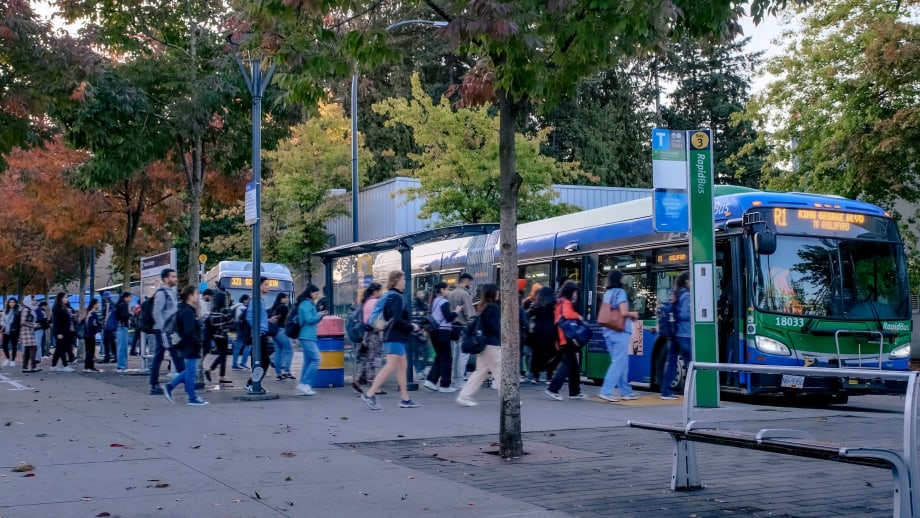
Photo: TransLink
2 min to read
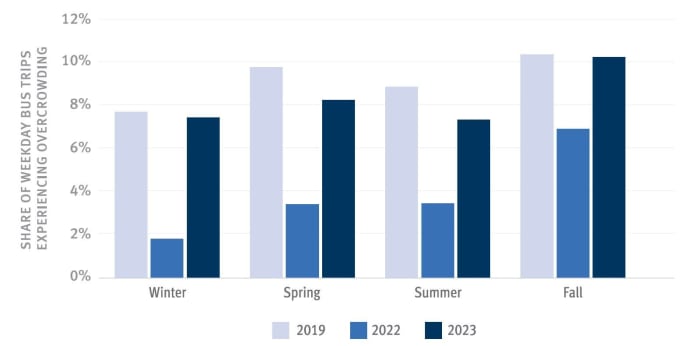
New data from TransLink shows that Metro Vancouver’s strong ridership recovery and population growth has led to unprecedented overcrowding for bus riders, which has now returned to what the region experienced prior to the pandemic.
The data is part of the newly released 2023 Transit Service Performance Review (TSPR), which details last year’s ridership trends across Metro Vancouver.
Ad Loading...
“Metro Vancouver’s population is growing rapidly, and so is crowding on our buses,” says TransLink CEO Kevin Quinn. “The 2024 Investment Plan will provide important short-term relief for customers, but we need commitments for long-term support that will help us keep up with population growth.”
TransLink's ridership by season.
Photo: TransLink
TransLink Addressing Bus Overcrowding
TransLink is addressing overcrowding in the short-term through the recently approved 2024 Investment Plan, which is a stopgap plan to increase bus service on the 60 most overcrowded bus routes, expand bus service hours, increase Canada Line frequencies, enhance late-night HandyDART service, and provide earlier SeaBus sailings.
Longer-term, the agency says more investment is needed to address TransLink’s structural funding gap and to progress major transit expansion through the 10-Year Access for Everyone Plan.
TransLink’s 2023 systemwide bus trends include:
The equivalent of one-third of Metro Vancouver’s population used transit at least once per week to move around the region.
Annual journeys across the system totaled 233.24 million in 2023, a 20.5% increase over 2022.
In fall 2023, TransLink served 430,000 different customers on an average weekday, and approximately 900,000 different customers per week.
Ad Loading...
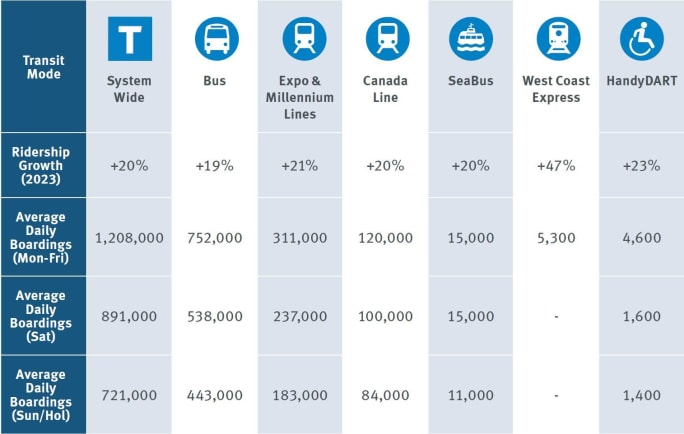
Ridership is up on every mode TransLink operates.
Photo: TransLink
HandyDART Paratransit Trends
TransLink is also releasing a separate deep dive into 2023 HandyDART service through the annual HandyDART Service Performance Review.
Some key findings include:
In 2023, 1,176,000 HandyDART trips were delivered, up 22% from 2022.
HandyDART customers continued using the service for critical services like dialysis treatments (14% of trips), day programs (35% of trips), or other medical appointments (16% of trips).
99.6% of trips requested by HandyDART customers were delivered in 2023.
HandyDART’s on-time performance continued to be strong, with 91% of all trips arriving on-time.
The agency is seeking manufacturers for 650 new CNG buses to replace aging vehicles, improve reliability, and advance its broader fleet modernization strategy.
John Hroncich discusses BAE Systems’ modular and scalable approach, lessons learned from decades of real-world operations, and how agencies can identify electrification strategies that fit their fleets.
LA Metro’s Obed Mejia discusses technician training, evolving maintenance technology, fleet replacement, and strategies for getting the most out of today’s transit fleets.
In METRO's latest installment, we take a look at recent news from Siemens, Prevost, Dodge, and more partnerships making headlines across the transportation sector.
In this edition, we also cover recent appointments and announcements at Pace, CamTran, MCI, and more, showcasing the individuals helping to shape the future of transportation.
Transit leaders and policymakers examine how standardized bus designs, streamlined procurement, and predictable funding could help agencies stretch budgets and deliver better service.
As chair of APTA’s Business Members Board of Governors, Ray Melleady explains how more than 850 business members are partnering with transit agencies to advance funding, innovation, and industry-wide collaboration.
Bus Business Consultants founder Brian Dickson shares lessons on leadership, organizational health, and creating options for long-term success in a changing transportation industry.
The award-winning partnership combines AI-powered detection with human oversight to improve bus reliability, accessibility, and enforcement efficiency.