



TriMet Board names single finalist in GM search
Doug Kelsey joined the agency in 2015 and quickly improved the overall on-time performance of the transit system.

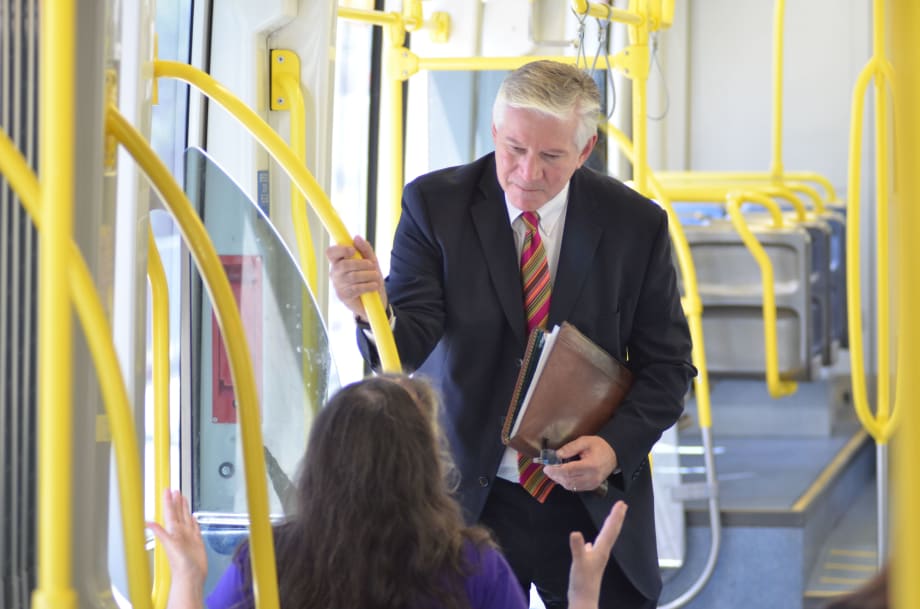
TriMet’s Board of Directors has named current TriMet COO Doug Kelsey as a single finalist in the search for a new GM. Photo: TriMet
TriMet’s Board of Directors has named current TriMet COO Doug Kelsey as a single finalist in the search for a new GM. Photo: TriMet
TriMet’s Board of Directors has named current TriMet COO Doug Kelsey as a single finalist in the search for a new GM. This comes after an international search, including interviews that narrowed the candidates down to Kelsey. At a special board meeting at the end of the month, the board will either authorize the Board Chair to negotiate a contract with Kelsey or choose to continue the GM search.
Current GM Neil McFarlane brought Kelsey to TriMet in late 2015 where he has quickly improved the overall on-time performance of the transit system.
Under Kelsey’s direction, TriMet implemented its first comprehensive strategic business plan. The rolling five-year plan lays the framework for TriMet to achieve overall strategic goals and objectives in response to projected regional population and employment growth while pursuing continuous improvement. Through this new approach, divisions across the agency have aligned priorities to better track progress, plan for future needs, match growth with performance and prioritize all efforts to meet customers’ needs, according to the agency.
With the additional funding provided by House Bill 2017 and the agency’s ability to expand service, Kelsey will take on a renewed role for the agency in shaping and managing the TriMet’s urban planning strategies in support of the region’s transportation and land-use policies.
Kelsey has spearheaded a focus on key performance indicators, integrating efforts across the agency to improve operations, emphasize accountability, and focus on the customer experience. He led the charge to improve MAX Light Rail on-time performance from 75% in November 2015 to more than 88% by November 2017. Much of the on-time performance improvement has come from tracking daily departures from rail yards to assure trains are starting service on time, providing added training for operators, putting Portable Data Devices in the train cabs so operators can track their time points, and coordinating with police, first responders and staff to speed up efforts to get and keep the tracks clear.
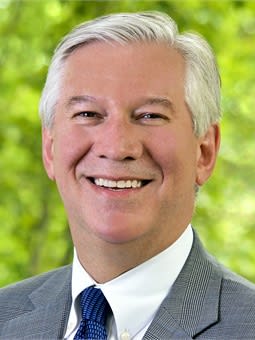
Doug Kelsey is a passionate believer in public transit and uses the TriMet system for his daily commute.
Kelsey has directed improvement in bus on-time performance as well, from 81% to 86% in one year’s time. He also launched a rail safety review that has led to a more than 200% reduction in rail rule violations in just a year.
Kelsey has placed an increased focus on enhancing diversity within TriMet operations during his tenure. Within operations, Kelsey increased utilization in 2017 for both women and minorities to 22.4% and 25.1%, respectively. This is generally representative of the community, where the workforce availability for women and minorities for operations positions is 23.2% and 24.6%, respectively. Kelsey’s progress in building diversity in TriMet’s operating departments is noteworthy given most positions there are filled solely by union seniority and given the historical challenge of building gender diversity within maintenance ranks.
Prior to his position at TriMet, Kelsey worked at TransLink, the regional transportation authority in the Vancouver, B.C. metro area, where he served in many capacities including COO. He also led subsidiary British Columbia Rapid Transit Co. Ltd. as president/GM, was president of subsidiary Coast Mountain Bus Co. and served as president/CEO of subsidiary West Coast Express. Prior to TransLink, Kelsey worked in executive, managerial and technical roles within the transportation, multi-unit retail, waste management, and oil industries.
Kelsey and his wife Janet live in the Johns Landing area and have three grown children. He enjoys spending time with his three grandkids whenever he gets the chance. He’s an avid basketball and football fan, enjoys cycling, taking his motorcycle out on weekend trips, and hiking. Kelsey is a passionate believer in public transit and takes the Line 35-Macadam/Greeley or 36-South Shore for his daily commute.
More Management

METRO Opens Submissions for 2026 Motorcoach Awards
Nominations are now being accepted for METRO Magazine’s Operator of the Year and Innovative Operator of the Year awards.
Read More →
New York MTA Advances Final Contract for Second Avenue Subway Expansion
Contract Four is the largest in the Second Avenue Subway Phase 2 project and includes construction of station infrastructure, tracks, and signals for the subway expansion, MTA officials said. Work on Contract Four will begin in 2027.
Read More →
Transit Agencies Highlight Safety Gains at National Summit
Leaders from 15 major transit systems shared crime-reduction results and safety initiatives while discussing the role of continued federal support.
Read More →

NITA Names New Leadership, Expands Reduced-Fare Program at First Board Meeting
The new regional transit authority appointed its first board chair and interim executive director while extending reduced fares across CTA, Metra, and Pace for eligible riders.
Read More →
Beyond the Checklist: A Structured Approach to Transit Maintenance
Reliability-Centered Maintenance helps transit agencies move beyond routine checklists to focus limited resources on the assets and failures that have the greatest impact on safety, reliability, and service.
Read More →
APTA 2026 Nominating Committee Selects Leadership Slate, Names Chair and Vice Chair Nominees
Leadership changes will help shape the association’s priorities and its representation of the transportation industry during the 2026–2027 term.
Read More →
DART Launches Major Security, Fare Enforcement Initiative
The 90-day demonstration will deploy coordinated security teams at five light rail stations while testing controlled access and gathering data to guide future investments.
Read More →
Advancing Fare Collection Through Technology and Innovation
Learn about delivering 1300 gates at 91 stations while managing fare evasion. Explore the large scale deployment, solution customization and real-world results that affect the region. Prepare for deployment in your region now.
Read More →
Game Day in Motion: Moving Millions During the 2026 World Cup
Between packed transit stations and team motorcoaches, see how agencies and operators across North America tackled the transportation demands of the 2026 FIFA World Cup.
Read More →
Surface Transportation Extension Averts Shutdown, Leaves Transit Funding Gap
The stopgap keeps federal transportation programs moving, but missing advance funding could complicate the transit and rail projects agencies are planning next.
Read More →