




RELATED: What works when passing a transportation ballot measure
Voters continue support for public transportation funding
Houston Metro and Cincinnati lead the trend with overwhelming success for ballot measures supporting growth and infrastructure.
November 6, 2019

Houston's approval signals the beginning of a process to develop the plan's projects.
Houston Metro
2 min to read
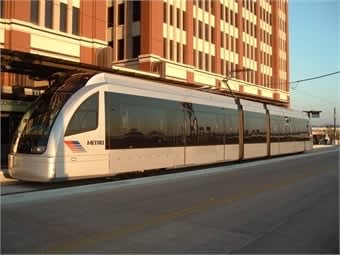
Houston's approval signals the beginning of a process to develop the plan's projects.
Houston Metro
Voters across the nation continued to vote for ballot measures that will at least partially fund public transportation and improve infrastructure.
In Houston, 68% of voters gave the green light to the METRONext Moving Forward Plan. The $3.5 billion bond referendum was largely based on community feedback gathered over the last three years at dozens of open houses and hundreds of other community meetings. The plan includes 500 miles of travel improvements.
The referendum's approval signals the beginning of a process to develop the plan's projects. Those include 290 miles of route enhancements and signature bus service, as well as accessibility and usability improvements for disabled and seniors and other projects such as, 75 miles of METRORapid bus service, 21 new or improved Park & Ride transit centers, and 16 miles of METRORail extensions, which include connections to Hobby Airport, the City of Houston Municipal Court House, and the North Shepard Park & Ride.
Meanwhile in Denver, voters were in favor of creating a new agency, which would manage the planning, design, construction, maintenance, and operation of the city’s transportation networks and take over responsibilities from the public works department. However, voters in the state voted in favor of a proposition that would retain excess revenue for transportation and education spending, instead of returning it to taxpayers.

In Denver, voters were in favor of creating a new agency, which would manage the planning, design, construction, maintenance, and operation of the city’s transportation networks and take over responsibilities from the public works department.
Denver RTD
In Cincinnati, voters approved a measure to conditionally repeal the county’s earnings tax for public transit if a countywide sales tax measure is passed to replace it this year. This is the first step for Hamilton County in revamping and increasing the county’s transit funding next year. Preliminary results revealed 76% voting “Yes” to 24% voting “No.”
Additional victories of note include:
Albuquerque, N.M., voters approved two measures, a receipts tax and a bond measure, to increase local public transit funding. Preliminary results show the receipts tax passing 65% to 35%, and the bond measure passing 58% to 42%.
Maine voters overwhelmingly approved a $105 million bond measure to benefit transportation, with a portion of the funds dedicated to public transit, ports, harbors, airports, railroads, and bicycle and pedestrian trails.
Lake County, Ohio voters approved a 0.25% sales tax for 10 years to support Laketran, by a count of 58% to 42%.
To see information on all of 2019’s transit-related ballot measures, click here.
More Management

METRO Opens Submissions for 2026 Motorcoach Awards
Nominations are now being accepted for METRO Magazine’s Operator of the Year and Innovative Operator of the Year awards.
Read More →
New York MTA Advances Final Contract for Second Avenue Subway Expansion
Contract Four is the largest in the Second Avenue Subway Phase 2 project and includes construction of station infrastructure, tracks, and signals for the subway expansion, MTA officials said. Work on Contract Four will begin in 2027.
Read More →
Transit Agencies Highlight Safety Gains at National Summit
Leaders from 15 major transit systems shared crime-reduction results and safety initiatives while discussing the role of continued federal support.
Read More →

NITA Names New Leadership, Expands Reduced-Fare Program at First Board Meeting
The new regional transit authority appointed its first board chair and interim executive director while extending reduced fares across CTA, Metra, and Pace for eligible riders.
Read More →
Beyond the Checklist: A Structured Approach to Transit Maintenance
Reliability-Centered Maintenance helps transit agencies move beyond routine checklists to focus limited resources on the assets and failures that have the greatest impact on safety, reliability, and service.
Read More →
APTA 2026 Nominating Committee Selects Leadership Slate, Names Chair and Vice Chair Nominees
Leadership changes will help shape the association’s priorities and its representation of the transportation industry during the 2026–2027 term.
Read More →
DART Launches Major Security, Fare Enforcement Initiative
The 90-day demonstration will deploy coordinated security teams at five light rail stations while testing controlled access and gathering data to guide future investments.
Read More →
Sponsored•September 9, 2026
Advancing Fare Collection Through Technology and Innovation
Learn about delivering 1300 gates at 91 stations while managing fare evasion. Explore the large scale deployment, solution customization and real-world results that affect the region. Prepare for deployment in your region now.
Read More →
Game Day in Motion: Moving Millions During the 2026 World Cup
Between packed transit stations and team motorcoaches, see how agencies and operators across North America tackled the transportation demands of the 2026 FIFA World Cup.
Read More →
Surface Transportation Extension Averts Shutdown, Leaves Transit Funding Gap
The stopgap keeps federal transportation programs moving, but missing advance funding could complicate the transit and rail projects agencies are planning next.
Read More →