



Web Extra: Carbon reduction, culture change top talk at green conference
From engaging employees to design and international innovations, the conference provided attendees with several options to make their operations greener.


Los Angeles' Mayor Antonio Villaraigosa’s America Fast Forward, or the 30/10 initiative, aims to reduce emissions through transit, land use and environmental planning in the next ten years. The city's Angels Flight funicular railway pictured.
[IMAGE]L-A-Downtown-Skyline-credit-John-Paul-Boomer-Iacoangelo--2.jpg[/IMAGE]Carbon reduction and culture change were some of the top topics at APTA's recent conference on sustainability, which provided attendees with several options to make their operations greener, from engaging employees to design and international innovations.
During the Sustainability & Public Transportation Workshop, held in Los Angeles July 31 to August 2, APTA President Bill Millar discussed the importance of engaging employees and other stakeholders in sustainable practices.
Speaker Art Leahy, CEO, Los Angeles County Metropolitan Transportation Authority, highlighted the agency’s many sustainability initiatives. He reported that the county's Measure R is supporting a dozen transit projects.
However, an ongoing challenge for Los Angeles has been managing sprawl, Romel Pasqual, deputy mayor for energy and the environment, said. “Seven large cities can fit into L.A.,” he said. “Our carbon footprint is as large as Sweden’s. Carbon reduction is vital.” As Pascual sees it, “Carmageddon,” the recent shutdown of the 405 freeway, reminded Angelenos how resourceful the city can be, and that L.A. is turning into a bike-friendly city.
[IMAGE]Angels-Flight-full-3.jpg[/IMAGE]
Additionally, Mayor Antonio Villaraigosa’s America Fast Forward, or the 30/10 initiative, aims to reduce emissions through transit, land use and environmental planning in the next ten years.
International update
In the Plenary Session, “International Perspectives,” Walter Hook, head of the Institution for Transportation Development Policy, said that bus rapid transit has become one of the most popular global and sustainable transportation trends. Hook focused on projects in China, India and South America and compared them with the top five U.S. systems.
Meanwhile, the U.S. needs an attitude adjustment, John Inglish, CEO, Utah Transit Authority (UTA), told the crowd. He listed key factors to changing the U.S. perspective on public transit.
“Citizens and cities would be worse off without transit,” Inglish said. “Transit brings everyone everywhere. In Europe, they make sure people know that, putting it in economic terms.”
People, planet, profit
The “Sustainable Business Practices” session offered attendees tools to use to get their employees and other stakeholders on board with green practices. Danielle Willis, planning team leader/sustainability coordinator, Greater Cleveland Regional Transit Authority (RTA), discussed the agency’s employee-driven program and how she used the agency’s “triple bottom line: People, Planet, Profit” to get buy-in from employees and the executive management team.
To establish a cultural change, RTA tells employees they are stakeholders, Willis said. The agency also gave executives sustainable gift bags with work plans, policies and procedures to build knowledge. Other steps toward sustainability RTA took included creating a 10-year carbon management plan; prioritizing objectives important to employees, such as composting and recycling; and getting vendors to be more sustainable.
Trish Webb director of corporate sustainability governance, TransLink, talked about how governance impacted sustainability at the agency. The agency conducted a multi-year program to pilot more sustainable technology, green fuels and measuring greenhouse gas emissions, and saved $500 million.
[IMAGE]NewFlyerAmyMiller-2.jpg[/IMAGE] Amy Miller, director of marketing, New Flyer shared bus manufacturer’s sustainable slogan, “A better product, a better workplace, a better world.” New Flyer designed its Xcelsior model bus, which received an Altoona fuel economy rating of 5.88 mpg.
To further improve the workplace and create a “better world,” the manufacturer implemented an “Operation Excellence” initiative, using “5S: Sort, Standardize, Straighten, Shine, Sustain;” began only bringing in supplies at point of use; and changed copy machines to default to double-sided printing. Miller said that the measures saved New Flyer millions of dollars and labor efficiency increased 7.5 percent in 2010.
Design for green living
In the Green Design, Sustainable Indicators, and Infrastructure session, Catherine Calvert, VIA Architecture, shared sustainable design strategies that bring value through long-term energy savings, and reduced lifecycle cost and energy consumption. For example, instead of using cooling stations, the firm designed a transit station in Putrajaya, Malaysia in a scoop formation so cool air would settle in the station at night, when transit traffic is at its highest in the challenging tropical climate.
Tiffany Ledesma-Groll, consultant, CDM-Wilbur Smith Associates discussed creating a “living bus shelter” to more sustainably manage storm water as part of the City of Philadelphia’s plan to transform the health of its creeks and rivers. The city’s first green bus shelter, located across from one of the busiest intersections in the city, was unveiled in June. Additionally, Mayor Michael Nutter is partnering with Titan to create a package for advertisers to adopt a living shelter.
Agencies making impact
[IMAGE]Dutta-2.jpg[/IMAGE]On Tuesday, Eric Hesse chair, APTA Standards Climate Change Working Group and strategic planning analyst, moderated the "Transit and Greenhouse Gas Emissions: Making Public Transportation Prominent on Climate Action" session, featuring representatives from Chicago, New York and San Francisco.
Using the unorthodox to grab the attention of the morning crowd, Projjal K. Dutta, AIA LEED AP, director, initiatives, for the New York Metropolitan Transportation Authority, showed a clip from 1984's "Who Framed Roger Rabbit?" The clip, which featured the characters discussing the growth of the freeway system in Los Angeles and the pending usage of automobiles, was used by Dutta to discuss the rise in the nation's obesity rate since 1984 when vehicle miles traveled (VMT) numbers began to rise. He also pointed out the impact public transportation is having on the climate in major cities, including New York and Los Angeles, and stressed the necessity for Americans to choose to use their vehicles sparingly.
"If you want to take [your vehicle] out on the weekend, shine it and take the family out for a ride, that is great," said Dutta. "But if you use it every day for every commute, you are in trouble and so is the planet around you."
Federal programs
Walter Kulyk, director, office of mobility innovation for the FTA, led a session on the department's Transit Investments for Greenhouse Gas and Energy Reduction (TIGGER) program.
The session began with an overview of the program by Kulyk, who was also joined by Matthew Lesh, transportation program specialist, office of mobility innovation, at the FTA, and the National Renewable Energy Lab's Leslie Eudy, senior program manager of the TIGGER Assessment Program, who spoke about applying for the program and the selection process, respectively.
To date, 300 agencies and/or departments of transportation have applied with 20 to 40 set to receive money for projects that will either reduce energy consumption of public transportation or reduce greenhouse gas emissions with a focus on innovation. Proposals are currently being accepted until August 23 for a new round of awards.
[IMAGE]DSC-8525-2.jpg[/IMAGE]Also, a celebration was held during Tuesday's luncheon for the Federal Partnership for Sustainable Communities, which brings together for the first time the U.S. Department of Housing and Urban Development (HUD), the U.S. Department of Transportation (U.S. DOT) and the Environmental Protection Agency (EPA) to support innovative strategies that connect housing and transportation to jobs, health care and educational opportunities.
On hand for the event were FTA Deputy Administrator McMillan, as well as California representatives for the three groups: Leslie Rogers, regional administrator of the FTA; Ophelia B. Basgal, regional administrator of HUD; and Enrique Manzanilla, director, communities and ecosystems division, of the EPA.
McMillan as well as each member of the panel discussed the importance of the program in fulfilling President Obama's vision for a more integrated national transportation network and how the groups work and plan on continue working together in the future. The possibility of interacting with more federal government agencies was also discussed; with the group stressing the door is always open for further collaboration in the future.
The day wrapped up with the "Value of Sustainability" closing session, which featured panel members from public transit, the business sector and grassroots organizations discussing how to truly measure and communicate the value of sustainability from a transit industry perspective.
More Bus

Report: Transit Bus Manufacturing Supports 34,100 Jobs, $5.1B in GDP
The “Buses Mean Business” report examines the transit bus manufacturing industry’s economic footprint, supply chain, and rising demand for vehicle replacements.
Read More →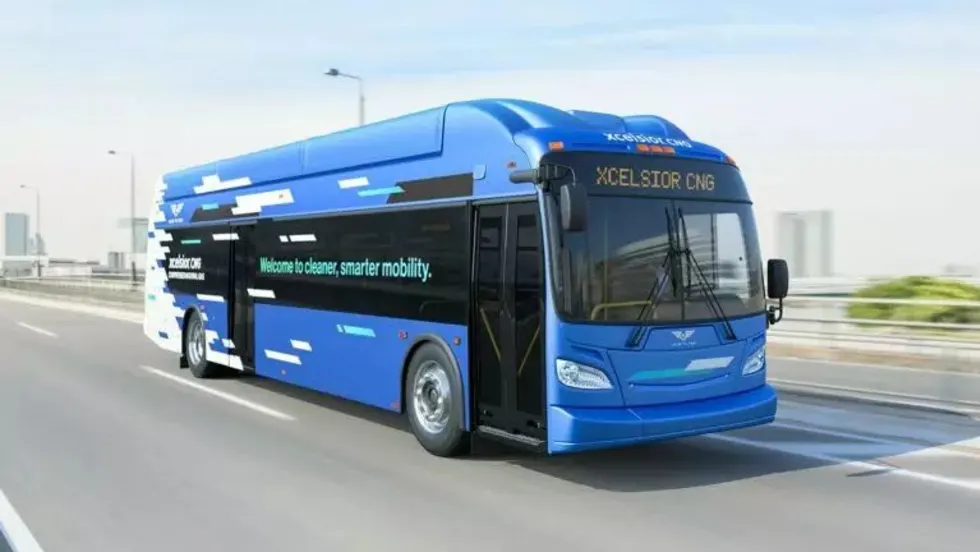
Biz Briefs: New Flyer Delivers in Columbus, Houston, Beep and Freebee Merge, and More
In this edition of Biz Briefs, we spotlight the latest developments shaping the future of mobility.
Read More →
People Movement: Dan Dipert Coaches Adds Third-Generation Leader, Keolis Names New Valley Metro VP/GM, and More
In this edition, we also cover recent appointments and announcements at the Wabtec, SilverRide, HNTB, and more, showcasing the individuals helping to shape the future of transportation.
Read More →
New York MTA Plans Largest Bus Fleet Upgrade in More Than a Decade
The agency is seeking manufacturers for 650 new CNG buses to replace aging vehicles, improve reliability, and advance its broader fleet modernization strategy.
Read More →
Building a Flexible Path to Transit Electrification
John Hroncich discusses BAE Systems’ modular and scalable approach, lessons learned from decades of real-world operations, and how agencies can identify electrification strategies that fit their fleets.
Read More →
Bus Tech Talk: Keeping Transit Technicians Ahead of the Technology Curve
LA Metro’s Obed Mejia discusses technician training, evolving maintenance technology, fleet replacement, and strategies for getting the most out of today’s transit fleets.
Read More →
Biz Briefs: RIPTA Unveils New Frontrunners, Clevland RTA Adds New Siemens, and More
In METRO's latest installment, we take a look at recent news from Siemens, Prevost, Dodge, and more partnerships making headlines across the transportation sector.
Read More →
People Movement: Holly Arnold Joins Transdev and More
In this edition, we also cover recent appointments and announcements at Pace, CamTran, MCI, and more, showcasing the individuals helping to shape the future of transportation.
Read More →
The High Cost of Transit Buses: Industry Leaders Look to Procurement Reform
Transit leaders and policymakers examine how standardized bus designs, streamlined procurement, and predictable funding could help agencies stretch budgets and deliver better service.
Read More →
The Business Voice Behind Public Transportation
As chair of APTA’s Business Members Board of Governors, Ray Melleady explains how more than 850 business members are partnering with transit agencies to advance funding, innovation, and industry-wide collaboration.
Read More →