




The Subway Action Plan, launched by Governor Andrew Cuomo and then MTA Chairman Joe Lhota, has provided a surge of additional union personnel, outside contractors, and new tools and methods for the maintaining and improving the system.
NYC subway on-time performance passes 80% for first time in 6 years
A contributing factor to the reduction in delays has been the significant progress made in reducing track debris fires.
July 11, 2019
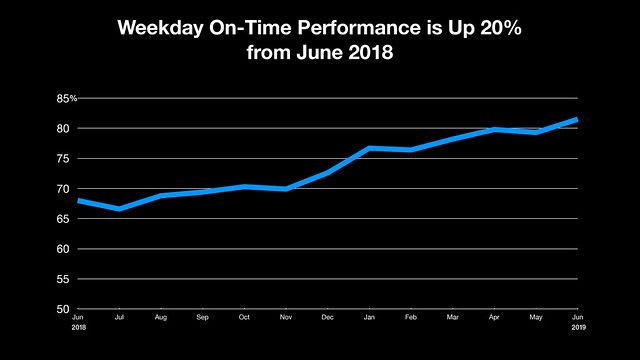
New York City Transit subway on-time performance hit 81.5% in June — the first time it’s been above 80% in almost six years.
NY MTA
3 min to read
New York City Transit subway on-time performance hit 81.5% in June — the first time it’s been above 80% in almost six years.
NY MTA
New York Metropolitan Transportation Authority (MTA) officials announced new statistics showing the continued dramatic subway performance improvements that have been achieved since the launch of the Subway Action Plan (SAP) and the Save Safe Seconds campaign. Most notably, subway on-time performance hit 81.5% in June — the first time it’s been above 80% in almost six years.
Overall subway performance continued its steady improvement in June 2019, with every weekday metric better than both June 2018 and the average of the past 12 months. On-time performance has continued to improve, and major incidents have declined to the lowest number since this record has been kept, and other customer-centric performance numbers are also pointing higher.
Weekday on-time performance (OTP) for June was approximately 81.5%, the highest figure since August of 2013. Weekday major incidents decreased 27.4% from June 2018, dropping from 62 to 45 in June 2019. Furthermore, weekday train delays decreased 45.9% from last June, from 56,233 to 30,434, which is the lowest level of delays since September 2013.
A contributing factor to the reduction in delays has been the significant progress made in reducing track debris fires, which are significantly down since NYCT started attacking this problem with new equipment in 2017. This has included clearing debris at an unprecedented rate using new platform-based mobile vacs, and vacuum trains that move around the system picking up trash. Year to date, track fires are down 61 from 185 to 124, and they are down 130 for the previous 12 months, from 410 to 280.
During the Subway Action Plan, launched at the direction of Governor Cuomo in July 2017, MTA workers and outside contractors have:
Cleared more than 55,000 street grates to prevent ingress of litter and leaves that build up on the track, causing fires and clogging drains
Sealed more than 6,300 leaks to prevent water ingress that causes power and signal problems, deterioration of track and other equipment resulting in unplanned service changes, delays and track fires
Installed 51 miles of Continuous Welded Rail (CWR) across the system, replacing jointed rail, which is more prone to rail defects that delay trains
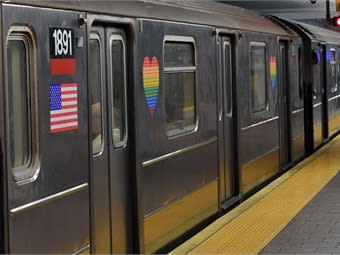
As part of the New York MTA's Subway Action Plan, a deep cleaning initiative of over 2,500 car interiors and over 2,700 car exteriors was performed.
Marc A. Hermann- MTA New York City Transit
Repaired almost 25,000 minor track defects that if not repaired can cause delays
Performed 79 miles of track rail grinding to improve ride quality and reduce defects
Repaired or rebuilt more than 1,700 signal components, drastically reducing the backlog of issues that can disrupt service
Completed 1,200 priority maintenance and repair tasks to improve reliability of signal and switch equipment
Rebuilt and modernized more than 300 signal stops to be moisture proof and avoid service interruption
Conducted a comprehensive inspection of door components across all fleets
Made maintenance practices more efficient so cars can be put back into service more quickly
Repaired door control units on over 1,000 cars in our oldest fleets to improve reliability of this critical component that cause 40 percent of car breakdowns
Overhauled more than 2,600 cars in an accelerated major car overhaul program, where the overhaul cycle changed from 7 years to 6 years
Conducted a deep cleaning initiative of over 2,500 car interiors and over 2,700 car exteriors
Conducted a deep cleaning initiative of over 100 subway stations
Enhanced 130 stations via a focused cleaning and repair campaign led by Group Station Managers
More Rail

New York MTA Advances Final Contract for Second Avenue Subway Expansion
Contract Four is the largest in the Second Avenue Subway Phase 2 project and includes construction of station infrastructure, tracks, and signals for the subway expansion, MTA officials said. Work on Contract Four will begin in 2027.
Read More →
San Diego MTS Breaks Monthly Trolley Ridership Record
Agency officials said July’s ridership indicates MTS’s continued recovery from the pandemic.
Read More →
Report Examines NJ TRANSIT Reliability, Funding Challenges
The Garden State Initiative analysis examines the roles of Amtrak infrastructure, fleet management, and agency operations while recommending a more performance-based approach to improving reliability.
Read More →
Stadler, CapMetro Sign Long-Term Rail Fleet Support Agreement
Beginning in 2027, Stadler will provide on-site technical expertise, spare parts support, training, and obsolescence management to help extend the reliability and longevity of CapMetro’s GTW fleet.
Read More →
Biz Briefs: Alstom Lands Canadian Contract, LYT to Supply California TSP, and More
In METRO's latest installment, we take a look at recent news from Complete Coach Works, Beep, FlixBus, and more partnerships making headlines across the transportation sector.
Read More →
CATS Gold Line Marks 5 Years of Service, 2.8M Passenger Trips
With a six-mile expansion planned, the Charlotte streetcar is positioned to connect more neighborhoods and major transit hubs across the region.
Read More →
Why Simulating Pedestrian Movement Has Become Essential for Modern Rail Stations
Pedestrian microsimulation is helping rail planners identify bottlenecks, test station designs, and prepare complex transit hubs for growing passenger volumes.
Read More →
Amtrak Begins Major Construction at New York’s Sunnyside Yard
The new maintenance facility will support Amtrak’s Airo trainsets while improving maintenance efficiency and turnaround times in New York.
Read More →
Chicago Leaders Unveil Plans for O’Hare Airport Express Train
The privately developed project would offer a 15-minute trip between downtown and O’Hare’s Terminal 2, with trains operating every 15 minutes on a dedicated track. The service would use battery-electric trains and three existing freight rail rights-of-way.
Read More →
OCTA Maps Out 30-Year Strategy to Protect Coastal Rail Corridor
The draft feasibility report identifies strategies to protect the coastal rail line for decades as the agency continues near-term stabilization and sand placement efforts.
Read More →