




RELATED: Solar roof initiative to generate energy, revenue for MTA
New York MTA issues RFP for purchase of Renewable Natural Gas
It represents the first step any heavy-duty vehicle fleet in New York City has taken toward adopting RNG.
May 17, 2019

The RNG that MTA plans to purchase will put over 650,000 tons of organic waste to beneficial use
Marc A. Hermann
2 min to read
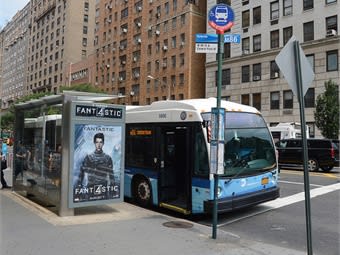
The RNG that MTA plans to purchase will put over 650,000 tons of organic waste to beneficial use
Marc A. Hermann
The Metropolitan Transportation Authority (MTA) issued a request for proposals (RFP) to purchase ultra-low-carbon renewable natural gas (RNG) to fuel some 800 New York City buses currently running on CNG. It represents the first step any heavy duty vehicle fleet in New York City has taken toward adopting RNG. To run MTA’s CNG buses on RNG, MTA must replace the equivalent of 12 to 14 million gallons of CNG a year with RNG.
RNG is chemically the same as CNG, but better in other respects. Its production requires no fracking or other types of drilling. It is a renewable fuel made from a renewable resource: organic wastes such as food waste or municipal wastewater. By capturing and refining the methane biogases emitted as organic materials decay, RNG production prevents these gases from escaping into the atmosphere, where they would have a powerful climate-warming impact.
According to the California Air Resources Board (CARB), RNG is the lowest carbon vehicle fuel available today. In fact, when made in anaerobic digesters from food wastes or manures, and used as a transportation fuel, CARB found RNG is net carbon-negative over its lifecycle. That means making and using RNG is a net gain for the climate, resulting in less greenhouse gas in the atmosphere than if it were never made or used in the first place. As a transportation fuel, RNG can reduce emissions up to 300% compared to diesel.
The RNG that MTA plans to purchase will put over 650,000 tons of organic waste to beneficial use: reducing lifecycle carbon emissions of MTA’s CNG buses by some 40,000 tons a year, and helping New York State meet its climate goal of cutting greenhouse gas emissions 80% below 1990 levels by 2050.
The benefit comes at no added cost to the fleet and may save it money, since RNG requires no conversion of buses, engines, or fueling infrastructure. RNG MTA purchases will be transported through existing natural gas pipelines. Depending on the price of the winning bid for an RNG purchase agreement, it will either cost the same as conventional CNG, or possibly, less.
More Technology

ETA CEO John Maglio on Transit Technology, Innovation, and Building Agency Trust
ETA founder and CEO John Maglio explores the evolution of transit technology, the importance of reliable systems, and how stronger partnerships can help agencies improve operations and the passenger experience.
Read More →
Lextran, Via Team for On Demand, HDR to Work on Twin Cities BRT, and More
In METRO's latest installment, we also take a look at recent news from Keolis, Complete Coach Works, Anchor Transportation, and more partnerships making headlines across the transportation sector.
Read More →
Caltrain’s Electrification Drives a New Era of Ridership Growth
The railroad’s shift to electric service has brought more frequent trains, stronger customer satisfaction, and increased ridership, earning it APTA’s Outstanding Public Transportation System award.
Read More →
Video Surveillance in Public Transit: What Riders Really Think
As video surveillance gains public acceptance, new research from Axis Communications reveals what transit riders expect from agencies when it comes to safety, privacy, and AI.
Read More →
New York MTA Launches Historic $1.9B Signal, Track Modernization Project
Funded in part by congestion pricing revenue, the project will replace nearly century-old signals along the A and C lines in Brooklyn and Queens.
Read More →
Biz Briefs: New Electric Offering from Alexander Dennis/Volvo, Transdev in Boston, and More
In METRO's latest installment, we also take a look at recent news from STV, WSP, Prevost, and more partnerships making headlines across the transportation sector.
Read More →
Roman Cornell on ABC Companies’ Evolution and the Future of Passenger Transportation
The company’s CEO discusses carrying forward a third-generation family legacy, ABC’s continued evolution in passenger transportation, support for increasingly complex fleets, and how technology and continued investment could help operators improve uptime.
Read More →
ETA CEO John Maglio on Transit Technology, Innovation, and Building Agency Trust
ETA founder and CEO John Maglio explores the evolution of transit technology, the importance of reliable systems, and how stronger partnerships can help agencies improve operations and the passenger experience.
Read More →
Frontrunner Bus Group Introduces XF Low-Floor Bus with Enhanced Accessibility
The new mid-sized bus features a full flat-floor design, eight-inch curbside step-in height, and zero-entry rear ramp to improve passenger access and operational flexibility.
Read More →
Building a Flexible Path to Transit Electrification with BAE's John Hroncich
John Hroncich discusses BAE Systems’ modular and scalable approach, lessons learned from decades of real-world operations, and how agencies can identify electrification strategies that fit their fleets.
Read More →