



LA Metro plan to tackle traffic reduction, evaluate new mobility options
Agency also focused on achieving greater equity for all users on the transportation system.


L.A. Metro is also focused on achieving greater equity for all users on the transportation system.
L.A. Metro

L.A. Metro is also focused on achieving greater equity for all users on the transportation system.
L.A. Metro
The Los Angeles County Metropolitan Transportation Authority (Metro), is now aggressively pursuing a range of initiatives aimed at pushing the envelope to advance new mobility platforms, including the agency’s new Traffic Reduction Program, New Mobility Regional Roadmap, and a gender-based transit equity study. The new moves were announced by the agency in conjunction with this year’s CoMotion LA event, which was held Nov. 14 to 15.
First among these is Metro’s new Traffic Reduction Program, which seeks to introduce a package of transportation improvements, including more public transit services, affordable ride-sharing, carpooling, and safer walking and bicycling options, coupled with congestion pricing strategies, as part of a pilot program to improve mobility in a congested area of L.A. County. The program emerged as part of Metro’s Vision 2028 Plan, a strategic roadmap for making mobility work for everyone in L.A. County in the next decade.

Metro’s new Traffic Reduction Program, seeks to introduce a package of transportation improvements, including more public transit services, affordable ride-sharing, carpooling, and safer walking and bicycling option.
L.A. Metro
Metro recently awarded two contracts totaling more than $5.5 million for technical services and outreach to investigate the feasibility and framework for testing and implementing this Traffic Reduction Program.
The study will actively seek public input to evaluate potential new transit services and other transportation options, as well as various congestion pricing models.
It will also identify a location for a potential pilot and establish an implementation plan with the goals of providing more travel options, improving equity, and increasing environmental benefits.
The congestion-pricing element of Metro’s Traffic Reduction Program has proven successful in mitigating congestion in other major cities worldwide, and many more cities are now considering this option. The Los Angeles region is in the unique position of being able to look at pricing as part of a holistic traffic reduction strategy, according to the agency.
Mobility is changing rapidly today, with a wealth of new providers such as ride-hailing, ride-sharing, scooter, bike-share, and courier network services entering the transportation market. Metro is working to help manage countywide interactions with these new mobility providers through its New Mobility Roadmap that is now under development. While each of these services provide increased access to opportunity and connections for users, they can also place additional burdens on the transportation system, adding to congestion, competing for pedestrian rights-of-way, conflicting with public transit, and creating new safety, security, and equity concerns.
Metro proposes to build a countywide coalition of city, county, and other municipal partners to thoughtfully evaluate a range of legislative and regulatory strategies for transportation network companies and micromobility providers to address these issues.
Metro plans to convene a series of working group meetings to further develop its roadmap and achieve regional consensus on the best path forward for managing these new providers.
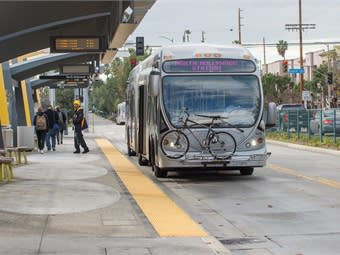
L.A. Metro is working with micromobility and other transportation providers to maximize the impact of public transit.
Steve Hymon
Metro is also focused on achieving greater equity for all users on the transportation system. The agency has taken this issue one step further by recently completing a groundbreaking study titled “Understanding How Women Travel.” The study is an in-depth examination of how women and their children use the Metro system and the unique challenges they face daily. This is believed to be the first study of its kind conducted by a U.S. transit agency and it takes an unflinching look at how women — who make up more than half of Metro’s riders — experience the system.
Results have revealed opportunities for Metro to make improvements in security and safety, service hours, and even vehicle designs to address these challenges.
Metro will use these results to develop a Gender Action Plan that will outline specific policy, operational, and service improvements that could be put into action to help create a more equitable transit system.
“We are looking at all of our projects and programs through the lens of equity,” said Metro CEO Phillip A. Washington. “We must make sure that the transportation revolution we are now leading is equally available to all. Only then we will create equal access to opportunity for everyone to enjoy the world-class transportation system we are now building.”
More New Mobility

From Hardware to Digital Partner: Luminator Charts Its Next Chapter
CEO Magnus Friberg discusses Luminator’s shift toward becoming a digital partner, the growing importance of software and interoperability, and how AI can help agencies improve operations and passenger experience.
Read More →
Biz Briefs: Alstom Lands Canadian Contract, LYT to Supply California TSP, and More
In METRO's latest installment, we take a look at recent news from Complete Coach Works, Beep, FlixBus, and more partnerships making headlines across the transportation sector.
Read More →
CharterUP’s Armir Harris on Technology, AI, and the Future of Group Mobility
In a recent episode of METROspectives, CharterUP Founder/CEO Armir Harris discussed the company’s evolution from an online charter bus marketplace into a technology platform supporting public- and private-sector mobility and much more.
Read More →
Jacksonville’s NAVI Project Charts a New Course for Autonomous Public Transportation
Through its NAVI program, JTA is showing how autonomous vehicles, intelligent infrastructure, and coordinated operations can work together to deliver everyday public transportation.
Read More →
Biz Briefs: Luminator Marks Milestone and More
From manufacturers and suppliers to transit agencies and motorcoach operators, these updates offer a snapshot of the projects, partnerships and business moves driving the industry forward.
Read More →
New Tricks for Old Bureaucracies: Joshua Schank on Making Transit Innovation Stick
Former LA Metro Chief Innovation Officer Joshua Schank discusses why good ideas aren't enough, how transit agencies can overcome resistance to change, and why today's challenges demand more innovation.
Read More →
How DART's GoPass Is Redefining Regional Mobility
Serving 14 transit agencies, GoPass simplifies multimodal travel by allowing riders to plan, pay for, and manage an entire trip through one app.
Read More →
Biz Briefs: OCTA Taps Clean Energy for Hydrogen Station, Stadler to Supply Via Rail Vehicles, and More
From manufacturers and suppliers to transit agencies and motorcoach operators, these updates offer a snapshot of the projects, partnerships and business moves driving the industry forward.
Read More →CharterUP Expands Into New Mobility and Autonomous Transportation
Vice President of New Mobility Stephen Joos discusses how CharterUP is leveraging its nationwide transportation network, technology platform, and autonomous vehicle partnerships to expand into workforce mobility, campus shuttles, and transit solutions.
Read More →
METRO Magazine Announces 2026 Innovative Solutions Awards Winners
Projects Recognized for Advancing Mobility Through Technology, Accessibility, Workforce Innovation, and Operational Excellence
Read More →