



Chicago's Metra, California's Metrolink to Purchase Greener Rail Vehicles
Metrolink received about $148 million from the South Coast AQMD to purchase new railcars, while Metra tapped Stadler for zero-emission, battery-powered trainsets.

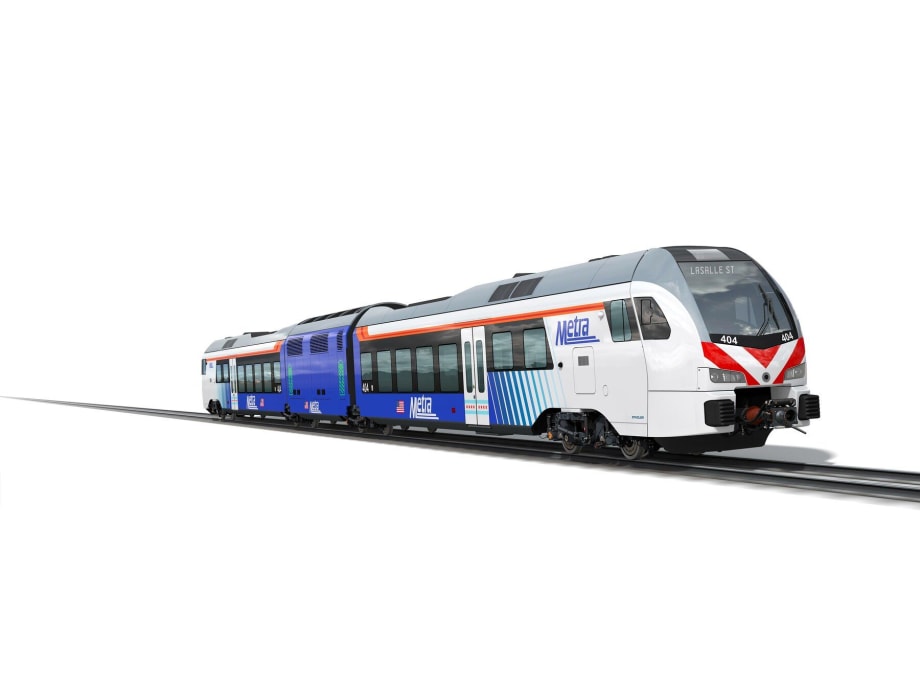
Metra trainsets will have low-level boarding and will be equipped with lifts to make them ADA-compliant.
Photo: Metra/Stadler
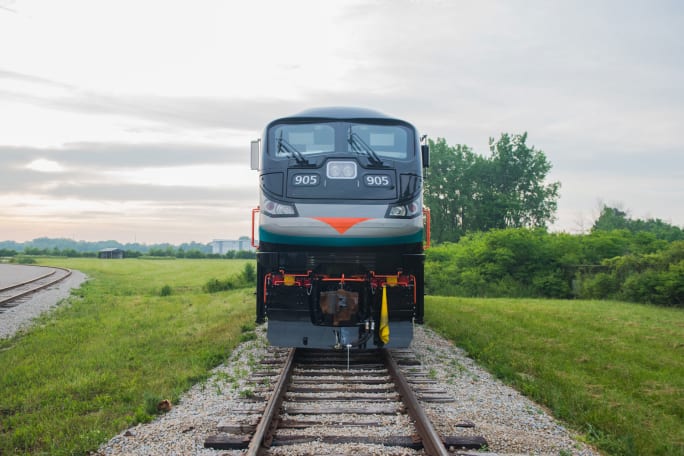
South Coast AQMD was instrumental in bringing Tier 4 technology to Southern California, contributing $110 million in grant funds between 2013 and 2017 to help Metrolink purchase its existing fleet of 40 Tier 4 locomotives.
Photo: Metrolink
Fresh off the FTA’s announcement of $631 million to three agencies through its Rail Vehicle Replacement Program, the California South Coast Air Quality Management District (South Coast AQMD) Governing Board approved up to $59.3 million in funding through the Carl Moyer Program for Metrolink to purchase two cutting-edge, zero-emission rail vehicles, while Chicago’s Metra approved a contract to buy zero-emission, battery-powered trainsets from Stadler.
The board also approved up to $87.4 million from South Coast AQMD’s contingency grant award list to replace 12 earlier-generation Metrolink locomotives with lower-emission Tier 4 locomotives. The awards will advance Metrolink’s ambitious emission-reduction goals outlined in the organization’s 2021 Climate Action Plan.
Metrolink’s Drive to Zero
In 2017, Metrolink became the first U.S. passenger rail service to operate Tier 4 locomotives, which meet the EPA’s strictest standards and significantly reduce smog-forming emissions and particulate matter.
South Coast AQMD was instrumental in bringing Tier 4 technology to Southern California, contributing $110 million in grant funds between 2013 and 2017 to help Metrolink purchase its existing fleet of 40 Tier 4 locomotives. The additional 12 Tier 4 locomotives will replace older Tier 2 models that are still in service.
Support from South Coast AQMD will once again allow Metrolink to pioneer new sustainable technology as the agency pursues a zero-emissions future. Funding will be used to procure two zero-emissions rail vehicles, and Metrolink will initiate a process to solicit manufacturer proposals.
The pilot program comes on the heels of a Zero Emission Technical Analysis presented to the Metrolink board in 2023 and will help determine the effectiveness of a broader transition to zero-emissions technology.
Metra’s Zero Emissions Leap
Metra’s contract with Stadler U.S. includes a $154 million base order for eight two-car, battery-powered trainsets, including engineering, training, and spare parts, with options costing up to an additional $181.4 million for eight more trainsets and up to 32 trailer cars, which could be added to the two-car trainsets to create three- or four-car trainsets.
Metra received a $169.3 million federal Congestion Mitigation and Air Quality Improvement (CMAQ) grant for the trainset purchase, which will cover the base order and some of the options. Funds from the state PAYGO program will pay for the grant’s required local match of 20%.
The trainsets will have low-level boarding and will be equipped with lifts to make them ADA-compliant. Each two-car set will seat 112 people, and each additional trailer car will provide seating for about 46 people. The single-level sets will have open gangways so riders can move freely from car to car.
The vehicles will also include such features as passenger information signs, bike racks, luggage racks, and USB outlets. Half of the trailer cars, if purchased, would include ADA-accessible bathrooms.
Benefits of Metra’s Switch
Metra believes the battery-powered trainsets could be a more economical and environmentally friendly way to provide the same level of service or better, particularly during off-peak times. The first sets are expected to be delivered in 2027-2028.
A fully charged trainset is expected to have a range of 45 to 65 miles. Charging time will vary but going from a 20% charge to 80% — enough for the trainset to operate — is expected to take about 20 to 30 minutes. The exact charging infrastructure and its cost is yet to be determined.
Metra plans to introduce the trainsets between LaSalle St. and Blue Island on the Beverly Branch of the Rock Island Line, a distance of 16.4 miles, which would directly benefit the air quality in economically disadvantaged neighborhoods on the South Side of Chicago and in the near south suburbs.
Buying the trainsets would also allow Metra to retire some of its oldest, most polluting diesel locomotives, which are well beyond their useful life and eliminate tons of carbon emissions. It would also allow Metra to retire some of its oldest railcars.
The procurement will meet Buy America requirements, with final assembly in Stadler’s Salt Lake City plant. Stadler has built and is building similar FLIRT (Fast, Light, Innovative, Regional, Train) trainsets for three other U.S. transit agencies, but those are powered by diesel engine gensets or hydrogen fuel cells rather than batteries.
More Rail

New York MTA Advances Final Contract for Second Avenue Subway Expansion
Contract Four is the largest in the Second Avenue Subway Phase 2 project and includes construction of station infrastructure, tracks, and signals for the subway expansion, MTA officials said. Work on Contract Four will begin in 2027.
Read More →
San Diego MTS Breaks Monthly Trolley Ridership Record
Agency officials said July’s ridership indicates MTS’s continued recovery from the pandemic.
Read More →
Report Examines NJ TRANSIT Reliability, Funding Challenges
The Garden State Initiative analysis examines the roles of Amtrak infrastructure, fleet management, and agency operations while recommending a more performance-based approach to improving reliability.
Read More →
Stadler, CapMetro Sign Long-Term Rail Fleet Support Agreement
Beginning in 2027, Stadler will provide on-site technical expertise, spare parts support, training, and obsolescence management to help extend the reliability and longevity of CapMetro’s GTW fleet.
Read More →
Biz Briefs: Alstom Lands Canadian Contract, LYT to Supply California TSP, and More
In METRO's latest installment, we take a look at recent news from Complete Coach Works, Beep, FlixBus, and more partnerships making headlines across the transportation sector.
Read More →
CATS Gold Line Marks 5 Years of Service, 2.8M Passenger Trips
With a six-mile expansion planned, the Charlotte streetcar is positioned to connect more neighborhoods and major transit hubs across the region.
Read More →
Why Simulating Pedestrian Movement Has Become Essential for Modern Rail Stations
Pedestrian microsimulation is helping rail planners identify bottlenecks, test station designs, and prepare complex transit hubs for growing passenger volumes.
Read More →
Amtrak Begins Major Construction at New York’s Sunnyside Yard
The new maintenance facility will support Amtrak’s Airo trainsets while improving maintenance efficiency and turnaround times in New York.
Read More →
Chicago Leaders Unveil Plans for O’Hare Airport Express Train
The privately developed project would offer a 15-minute trip between downtown and O’Hare’s Terminal 2, with trains operating every 15 minutes on a dedicated track. The service would use battery-electric trains and three existing freight rail rights-of-way.
Read More →
OCTA Maps Out 30-Year Strategy to Protect Coastal Rail Corridor
The draft feasibility report identifies strategies to protect the coastal rail line for decades as the agency continues near-term stabilization and sand placement efforts.
Read More →