



New York Details Metro-North Railroad Capital Improvement Benefits
There is major capital work underway to fortify and improve the Metro-North network.

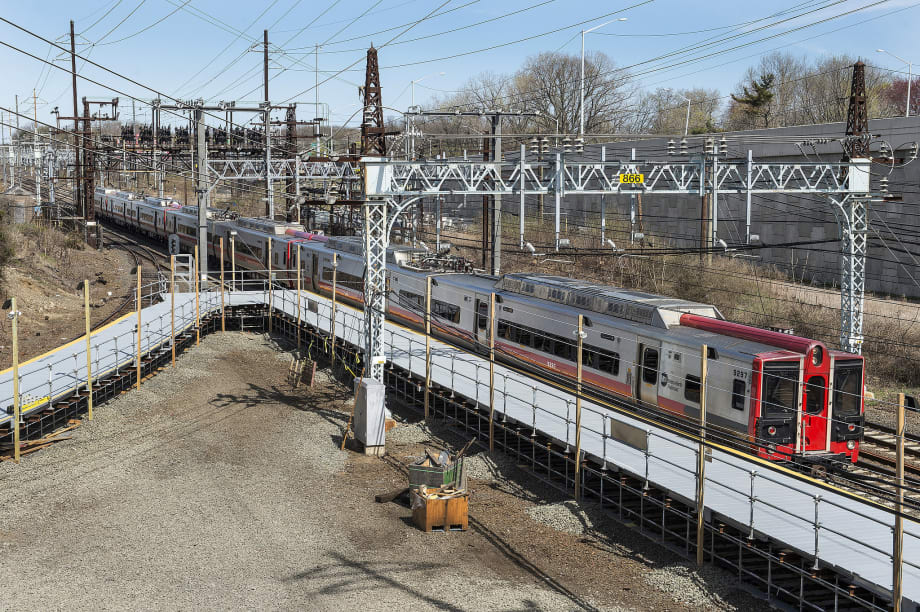
The MTA is also making targeted investments to improve the resiliency of the Metro-North network.
Photo: Patrick Cashin
Gov. Kathy Hochul announced accomplishments achieved by New York’s Metropolitan Transportation Authority (MTA) for Metro-North Railroad riders in 2024 and gave a glimpse of major upcoming improvements allowed by the MTA Capital Plan, including strengthening ridership, accessibility projects, service increases, an enhanced passenger experience, and an overall more sustainable, reliable transit system.
“Metro-North is part of the heart of the Hudson Valley,” said Gov. Hochul. “We will continue to invest in both its present and future by modernizing infrastructure and promoting safety. A modern railroad will provide an excellent customer experience every trip with modern amenities at stations that are fully accessible, safe, and protected from climate change.”
Work Underway
There is major capital work underway to fortify and improve the Metro-North network.
MTA Construction & Development is replacing and rehabilitating major segments of the 130-year-old Park Avenue Viaduct, which carries 98% of all Metro-North trains traveling along the Hudson, Harlem, and New Haven lines serving the Harlem-125th Street Station and Grand Central Terminal.
The first segment of the viaduct was replaced in June using innovative building techniques that will help deliver the project on time with minimal disruption to Metro-North service.
Work began to replace deteriorating sections of the roof of Metro-North’s deteriorating train shed underneath Park Avenue at 48 and 47 Streets in Manhattan.
The 2025-29 Capital Plan heavily focuses investment for continued replacement of the Train Shed roof and fortification of Grand Central Terminal for the future.
Work on Metro-North stations was in full force in 2024 with work at Garrison that included: replacement of three-foot wide portions of all the platforms, new railing, tactile strips, expansion joints, and miscellaneous concrete repairs with new staircases.
A future project will install PODs (Police Observational Devices), which include security cameras.
Three stations were made fully ADA accessible in 2024: Hartsdale, Scarsdale, and Purdy’s, bringing the total of accessible Metro-North stations to 124.
Addressing Rolling Stock
The MTA is also making targeted investments to improve the resiliency of the Metro-North network. More than half of the 74-mile-long Hudson Line is vulnerable to coastal surge risk and Garrison Train station sits just feet from the Hudson River.
The proposed 2025-29 MTA Capital Plan focuses on addressing erosion hot spots, stabilizing upland slopes, and upgrading drainage in the most vulnerable and highest-ridership segments of the line, protecting more than 20 miles of the Hudson Line.
Investments in rolling stock will also support the reliability of Metro-North’s service. Metro-North recently took delivery of the first two of 33 new state-of-the-art 4,200-horsepower locomotives that will replace the existing fleet of locomotives used for trains serving Poughkeepsie, Southeast, Danbury, and Waterbury.
Manufactured by Siemens Mobility and known by the model number SC42-DM, the new locomotives will provide customers with more reliable service and will be friendlier to the environment. The new locomotives are expected to operate in electric mode the entire 102 miles of Metro-North’s third rail territory, which extends to Croton-Harmon, Southeast, and Pelham.
The new locomotives are rated Tier IV compliant, reducing airborne pollutants by more than 85%.
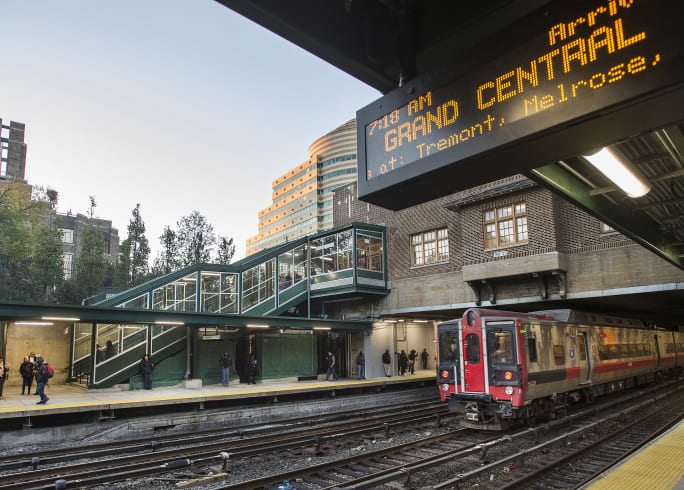
Work on Metro-North stations was in full force in 2024.
Photo: Patrick Cashin
Improving Performance
All of these capital investments are occurring at the same time as Metro-North is delivering outstanding service and experiencing strong ridership.
Metro-North service is strong with On Time Performance (OTP) at 99% and the Mean Distance Between Failures (MDBF) consistently running above its 2024 target of 200,000 miles.
Metro-North continues to shatter pre-COVID ridership records carrying 6.5 million riders in October, an increase of 13% from September and a 16.2% increase from October 2023.
Metro-North’s average weekday ridership of 230,449 is a post-pandemic record, at 79.2% of pre-COVID levels in October 2019, reflecting robust return-to-work ridership; average weekend ridership of 131,666 is 2.2% higher than pre-COVID levels in October 2019.
More Rail

New York MTA Advances Final Contract for Second Avenue Subway Expansion
Contract Four is the largest in the Second Avenue Subway Phase 2 project and includes construction of station infrastructure, tracks, and signals for the subway expansion, MTA officials said. Work on Contract Four will begin in 2027.
Read More →
San Diego MTS Breaks Monthly Trolley Ridership Record
Agency officials said July’s ridership indicates MTS’s continued recovery from the pandemic.
Read More →
Report Examines NJ TRANSIT Reliability, Funding Challenges
The Garden State Initiative analysis examines the roles of Amtrak infrastructure, fleet management, and agency operations while recommending a more performance-based approach to improving reliability.
Read More →
Stadler, CapMetro Sign Long-Term Rail Fleet Support Agreement
Beginning in 2027, Stadler will provide on-site technical expertise, spare parts support, training, and obsolescence management to help extend the reliability and longevity of CapMetro’s GTW fleet.
Read More →
Biz Briefs: Alstom Lands Canadian Contract, LYT to Supply California TSP, and More
In METRO's latest installment, we take a look at recent news from Complete Coach Works, Beep, FlixBus, and more partnerships making headlines across the transportation sector.
Read More →
CATS Gold Line Marks 5 Years of Service, 2.8M Passenger Trips
With a six-mile expansion planned, the Charlotte streetcar is positioned to connect more neighborhoods and major transit hubs across the region.
Read More →
Why Simulating Pedestrian Movement Has Become Essential for Modern Rail Stations
Pedestrian microsimulation is helping rail planners identify bottlenecks, test station designs, and prepare complex transit hubs for growing passenger volumes.
Read More →
Amtrak Begins Major Construction at New York’s Sunnyside Yard
The new maintenance facility will support Amtrak’s Airo trainsets while improving maintenance efficiency and turnaround times in New York.
Read More →
Chicago Leaders Unveil Plans for O’Hare Airport Express Train
The privately developed project would offer a 15-minute trip between downtown and O’Hare’s Terminal 2, with trains operating every 15 minutes on a dedicated track. The service would use battery-electric trains and three existing freight rail rights-of-way.
Read More →
OCTA Maps Out 30-Year Strategy to Protect Coastal Rail Corridor
The draft feasibility report identifies strategies to protect the coastal rail line for decades as the agency continues near-term stabilization and sand placement efforts.
Read More →