



Upcoming Election Serves As A Crucial Moment to Modernize Transportation Networks
As the nation faces eventual political change this winter, the direction of America's transportation infrastructure and planning is at an important milestone.


The upcoming election presents a unique opportunity to rethink and reshape how the country approaches transportation development.
Photo: METRO
As the nation faces eventual political change this winter, the direction of America's transportation infrastructure and planning is at an important milestone.
The upcoming election presents a unique opportunity to rethink and reshape how the country approaches transportation development.
The Infrastructure Investment and Jobs Act (IIJA), passed in 2021, has played a key role in revitalizing the nation's infrastructure, injecting $110 billion into much-needed road and bridge improvements.
The funding has kick-started many long-delayed projects. However, rising inflation — particularly in highway construction — has diminished the value of these investments.
As a result, there is increasing recognition that America's transportation strategy must shift focus, moving beyond simply expanding roadways to address broader, more sustainable solutions.
Where America Stands With Road Projects
The IIJA has given a major increase to America's transportation infrastructure.
Over five years, an additional $110 billion was injected into infrastructure spending, supplementing the $305 billion from the previous five-year plan. This significant funding increase has allowed states to resume or initiate vital road construction projects.
In Oklahoma, IIJA funding has helped restart a long-delayed highway interchange project.
Texas is using the funds to extend part of Interstate 14 between Austin and Waco, and Minnesota has revived an interchange reconstruction near Duluth.
These projects, largely backed by federal funds, have gained momentum thanks to the 2021 legislation, enabling states to address long-standing infrastructure needs.
However, despite the IIJA’s impact, economic conditions have posed challenges.
Inflation, especially in the highway construction sector, has reduced the buying power of these funds. Rising costs of materials, labor, and equipment have stretched state budgets thin, raising concerns about how transportation investments should be prioritized in the future.
What’s more, traffic in today’s cities and urban regions has reached and even surpassed pre-pandemic frustration levels, meaning many of our inner-city roads and local commercial arteries are not necessarily benefitting from the highway projects mentioned about.
The new administration must therefore think differently and use transportation investment funds differently in a more modernized fashion.
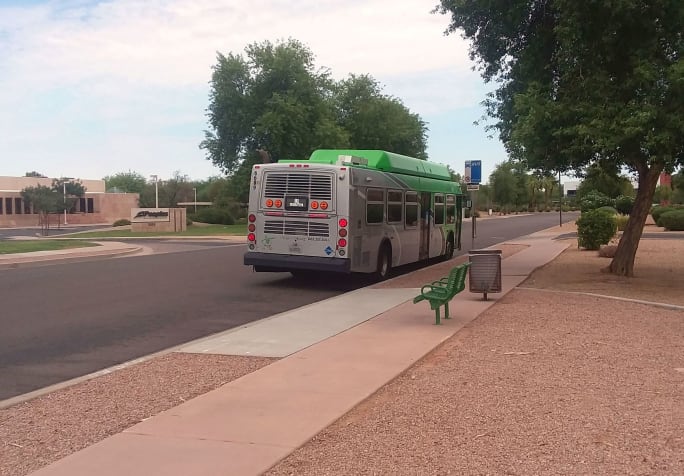
Transportation is one of the largest sources of greenhouse gas emissions in the U.S., and reducing these emissions is critical to combating climate change.
Photo: METRO
Prioritizing A Changing Strategy
With a new administration set to take office in January, there is a pivotal opportunity to reshape America’s transportation strategy.
Historically, efforts have centered around expanding road networks to accommodate growing vehicle numbers. However, this car-dependent model is increasingly seen as unsustainable and counterproductive in addressing long-term transportation challenges.
While the IIJA's focus on road and bridge construction has earned praise from state officials and transportation planners for addressing critical infrastructure needs, it has also faced criticism.
Climate advocates and public transit supporters argue that prioritizing car infrastructure — though beneficial in the short term — will only deepen the nation’s reliance on automobiles, leading to higher greenhouse gas emissions, worsening traffic congestion, and further deteriorating urban environments by limiting access to more sustainable transit options.
There is a growing demand for a strategic shift toward modernizing public transit systems with advanced technologies.
Rather than continuing to expand highways and bridges, the next administration has an opportunity to invest in innovative, sustainable transportation solutions that transform how Americans navigate cities and towns. Several progressive cities, such as Portland, Seattle, Boston, and San Jose, are already leading the way, providing a model for nationwide change.
Revitalizing Transportation Using Modern Resources
A key opportunity for the future of transportation lies in the integration of cutting-edge technologies into transit systems.
By investing in innovations such as edge computing, connected transit networks, and transit prioritization systems, the U.S. can transform the flow of traffic in urban centers. These technologies have the potential to revolutionize how personal vehicles, ride-sharing services, buses, rail systems, emergency vehicles, commercial fleets, and even pedestrian traffic move through cities.
Interconnected Transit Infrastructure: The implementation of connected systems, where vehicles and infrastructure communicate in real time, can greatly improve both efficiency and safety in urban transportation. For example, connected vehicles — whether personal or commercial — can receive live updates on road conditions, traffic patterns, and emergencies, helping drivers make smarter decisions to avoid delays. Similarly, connected infrastructure like railways, traffic lights, and pedestrian signals can dynamically adjust to real-time conditions, prioritizing public transit vehicles or emergency responders and enhancing the overall effectiveness of the transportation network.
Transit Prioritization Systems: Transit prioritization technology, which gives preference to public transit vehicles such as buses and trams at intersections and along key routes, can dramatically improve the reliability and speed of public transportation. By reducing idle time for these vehicles in traffic, these systems not only enhance the rider experience but also contribute to lower fuel consumption and reduced emissions, making urban transit both more efficient and environmentally friendly.
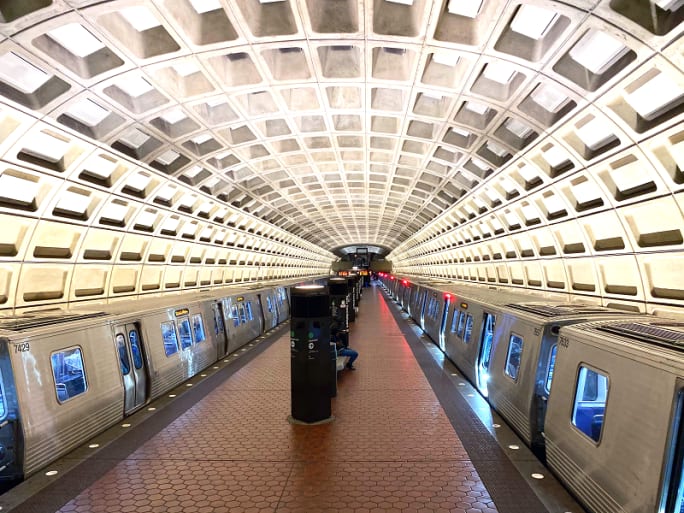
With a new administration set to take office in January, there is a pivotal opportunity to reshape America’s transportation strategy.
Photo: Larry Levine
Benefitting Climate Change
A shift toward technology-driven transit modernization is not just a matter of improving mobility — it is also an environmental imperative.
Transportation is one of the largest sources of greenhouse gas emissions in the U.S., and reducing these emissions is critical to combating climate change.
By focusing on technologies that reduce the time vehicles spend idling in traffic, optimize fuel efficiency, and encourage the use of public transit, the next administration can make significant strides toward a more sustainable transportation system.
In addition to reducing emissions, a technology-focused approach can help to mitigate the negative impacts of road construction on urban environments.
By prioritizing the modernization of existing infrastructure rather than the expansion of road networks, cities can preserve green spaces, reduce noise pollution, and create more livable urban environments.
The U.S, Department of Transportation (USDOT) has already taken steps in this direction with the recent announcement for the Saving Lives with Connectivity: A Plan to Accelerate V2X Deployment.
The plan will guide the implementation of vehicle-to-everything technologies across the nation and support USDOT’s commitment to pursue a comprehensive approach to reduce the number of roadway fatalities to zero.
A Vision for the Future
The potential shift in America’s transportation strategy represents a critical moment in the nation's history.
The IIJA has provided a much-needed boost to infrastructure projects across the country, but the future demands more than just roads and bridges.
With a new administration, there is an opportunity to embrace a forward-looking vision that prioritizes technology, sustainability, and modernized transit systems. This approach will not only address the current challenges facing America's transportation network but also set the stage for a future where mobility is smarter, greener, and more efficient.
By investing in advanced technologies and rethinking how we move through our urban spaces, America can build a transportation system that meets the needs of the 21st century — one that enhances mobility, reduces environmental impact, and improves the quality of life for all citizens.
About The Author:Timothy Menard is the Founder and CEO of LYT, provider of cloud-based open-architecture smart traffic solutions.
More Management

METRO Opens Submissions for 2026 Motorcoach Awards
Nominations are now being accepted for METRO Magazine’s Operator of the Year and Innovative Operator of the Year awards.
Read More →
New York MTA Advances Final Contract for Second Avenue Subway Expansion
Contract Four is the largest in the Second Avenue Subway Phase 2 project and includes construction of station infrastructure, tracks, and signals for the subway expansion, MTA officials said. Work on Contract Four will begin in 2027.
Read More →
Transit Agencies Highlight Safety Gains at National Summit
Leaders from 15 major transit systems shared crime-reduction results and safety initiatives while discussing the role of continued federal support.
Read More →

NITA Names New Leadership, Expands Reduced-Fare Program at First Board Meeting
The new regional transit authority appointed its first board chair and interim executive director while extending reduced fares across CTA, Metra, and Pace for eligible riders.
Read More →
Beyond the Checklist: A Structured Approach to Transit Maintenance
Reliability-Centered Maintenance helps transit agencies move beyond routine checklists to focus limited resources on the assets and failures that have the greatest impact on safety, reliability, and service.
Read More →
APTA 2026 Nominating Committee Selects Leadership Slate, Names Chair and Vice Chair Nominees
Leadership changes will help shape the association’s priorities and its representation of the transportation industry during the 2026–2027 term.
Read More →
DART Launches Major Security, Fare Enforcement Initiative
The 90-day demonstration will deploy coordinated security teams at five light rail stations while testing controlled access and gathering data to guide future investments.
Read More →
Advancing Fare Collection Through Technology and Innovation
Learn about delivering 1300 gates at 91 stations while managing fare evasion. Explore the large scale deployment, solution customization and real-world results that affect the region. Prepare for deployment in your region now.
Read More →
Game Day in Motion: Moving Millions During the 2026 World Cup
Between packed transit stations and team motorcoaches, see how agencies and operators across North America tackled the transportation demands of the 2026 FIFA World Cup.
Read More →
Surface Transportation Extension Averts Shutdown, Leaves Transit Funding Gap
The stopgap keeps federal transportation programs moving, but missing advance funding could complicate the transit and rail projects agencies are planning next.
Read More →