



How AI is Redefining Transit Operations and Signal Priority
In a recent episode of METROspectives, LYT CEO Timothy Menard discusses how artificial intelligence, cloud connectivity, and real-time data are transforming traffic management, boosting bus reliability, and enabling system-wide transit optimization across cities.

Unlike legacy TSP systems, which depend on static detection and outdated hardware, LYT’s cloud-based system learns over time using machine learning.
Credit: METRO
In the latest episode of METROspectives, METRO Magazine Executive Editor Alex Roman sat down with Timothy Menard, Founder and CEO of LYT, to explore how artificial intelligence (AI), cloud computing, and real-time data are reshaping the way cities manage traffic, prioritize transit, and support the return to public transportation post-pandemic.
From transit signal optimization to real-world success stories in places like Portland, Oregon, and San Jose, California, Menard explained why the next generation of transit signal priority (TSP) goes beyond simply reacting to traffic — and instead anticipates it.
Solving Real-World Challenges with Real-Time Precision
LYT, which marks its 10th anniversary this year, began with a clear mission: to use data and predictive analytics to make public transit faster and more reliable.
According to Menard, the company’s approach to TSP isn't just about green lights; it’s about accurately predicting bus arrivals and making traffic systems smarter.
In Portland, LYT’s technology was deployed along TriMet’s FX bus rapid transit line. On opening day, the difference between the two demonstration buses — one prioritized and one not — was dramatic.
“The first bus moved like a train,” Menard recalled. “We were only stopping at bus stops, not at lights. That’s the kind of impact we’re creating.”
Unlike legacy TSP systems, which depend on static detection and outdated hardware, LYT’s cloud-based system learns over time using machine learning. It uses fleet data, location tracking, and operational inputs to dynamically adjust signal timing, improving speed, reducing delays, and ultimately transforming the rider experience.
Transit Is Back and Changing
Menard also shared insights from agency partners, including Santa Clara VTA in San Jose, noting a clear post-COVID ridership shift, particularly evident in weekday commutes and weekend event travel.
“People are coming back to the office — and we're seeing it in the data,” he said. “Weekend ridership is also surging thanks to more frequent, comfortable service.”
He cited Caltrain’s electrification and Amtrak’s new Acela service as evidence that when transit is fast, clean, and reliable, people will choose it.
“Nobody wants to drive into downtown San Francisco or fly between Boston and New York if there’s a better option,” he said.
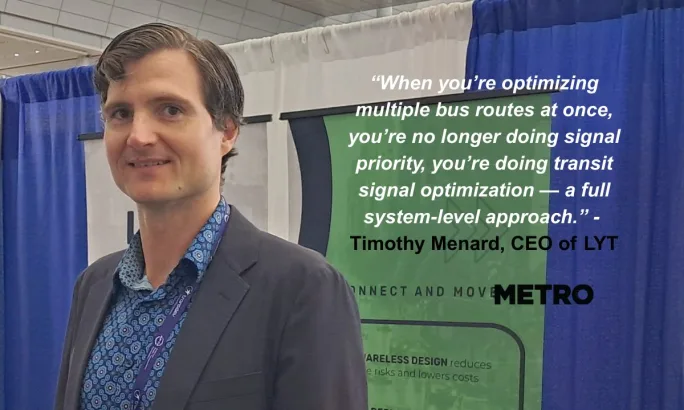
Agencies should come into projects with a mindset for success and embrace a more transparent, collaborative approach to vendor relationships, said LYT's Timothy Menard.
Credit: METRO
From Prioritization to Optimization
LYT’s long-term vision goes beyond simple priority.
“When you’re optimizing multiple bus routes at once, you’re no longer doing signal priority,” Menard said. “You’re doing transit signal optimization — a full system-level approach.”
This approach is already underway in San Jose, where VTA has prioritized all 29 citywide routes, creating conditions for multiple buses to move through intersections without delay.
Menard noted that this scale of deployment pushes agencies to adapt quickly, rethink scheduling, and align planning with real-time operations.
Implementation: It’s Not the Tech, It’s the Teamwork
Menard emphasized that the biggest hurdle isn’t technology, it’s coordination. Transit agencies don’t own traffic signals, so success depends on early alignment among transit, traffic, and IT teams.
“We act as the Rosetta Stone between emergency services, transit, and traffic departments,” he said. “The faster everyone agrees on a shared vision and goals, the faster we can implement.”
Menard also advised agencies to start small: choose one corridor, identify pain points, and pilot the solution before expanding.
“We’re not here to sell you cool tech,” he said. “We’re here to solve real problems like lost service hours, fuel costs, and schedule delays.”
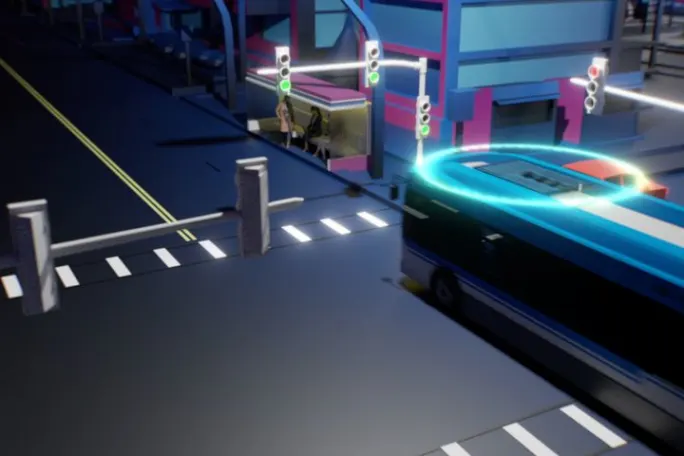
LYT, which marks its 10th anniversary this year, began with a clear mission: to use data and predictive analytics to make public transit faster and more reliable.
Credit: LYT
The Future: Interoperability and Digital Twins
Looking ahead, Menard is most excited about the growing potential for interconnected systems and digital simulations.
“We can now model 95% of a deployment in a digital environment before we even touch a traffic light,” he said. This shift enables agencies to test, iterate, and plan more effectively and faster.
He also predicted more ecosystem-level collaboration across software providers, vendors, and public agencies.
“We’re finally seeing true interoperability in transportation tech,” he said. “That’s going to unlock incredible gains in efficiency and rider experience.”
Advice to Agencies: Be Ready, Be Open, Be Collaborative
Menard closed the conversation with a call to action: agencies should come into projects with a mindset for success and embrace a more transparent, collaborative approach to vendor relationships.
“Bring everyone to the table, including vendors, third parties, and your own teams,” he said. “Know what problem you want to solve and be ready to define success. That’s how we move faster and make transit better for everyone.”
This article, generated using OpenAI, was edited for accuracy and style and based on an episode of METROspectives
More Technology

From Hardware to Digital Partner: Luminator Charts Its Next Chapter
CEO Magnus Friberg discusses Luminator’s shift toward becoming a digital partner, the growing importance of software and interoperability, and how AI can help agencies improve operations and passenger experience.
Read More →
Beyond the Checklist: A Structured Approach to Transit Maintenance
Reliability-Centered Maintenance helps transit agencies move beyond routine checklists to focus limited resources on the assets and failures that have the greatest impact on safety, reliability, and service.
Read More →
NJ TRANSIT Advances Bus Technology Upgrades Across Statewide Fleet
More than 1,500 buses now feature upgraded technology designed to improve arrival predictions and provide free Wi-Fi, with deployment expected to reach nearly 2,000 buses by the end of 2026.
Read More →

Building a Flexible Path to Transit Electrification
John Hroncich discusses BAE Systems’ modular and scalable approach, lessons learned from decades of real-world operations, and how agencies can identify electrification strategies that fit their fleets.
Read More →
Biz Briefs: Alstom Lands Canadian Contract, LYT to Supply California TSP, and More
In METRO's latest installment, we take a look at recent news from Complete Coach Works, Beep, FlixBus, and more partnerships making headlines across the transportation sector.
Read More →
From Legacy Silos to Conversational Intelligence
What if transit leaders could ask any operational question and get a trusted answer in seconds? Conversational AI is transforming how agencies use their data.
Read More →
USDOT Announces Rail Vehicle Replacement Grants, Chattanooga AV Shuttle Funding
More than $191 million in federal funding will help three transit agencies replace aging rail vehicles and support a new autonomous shuttle service in Chattanooga.
Read More →
Bus Tech Talk: Keeping Transit Technicians Ahead of the Technology Curve
LA Metro’s Obed Mejia discusses technician training, evolving maintenance technology, fleet replacement, and strategies for getting the most out of today’s transit fleets.
Read More →
Biz Briefs: RIPTA Unveils New Frontrunners, Clevland RTA Adds New Siemens, and More
In METRO's latest installment, we take a look at recent news from Siemens, Prevost, Dodge, and more partnerships making headlines across the transportation sector.
Read More →
Why Simulating Pedestrian Movement Has Become Essential for Modern Rail Stations
Pedestrian microsimulation is helping rail planners identify bottlenecks, test station designs, and prepare complex transit hubs for growing passenger volumes.
Read More →