



7 Best Management Practices for Commercial Wash Systems
It's important that managers implement best management practices to conserve water, comply with state and federal regulations, and reduce pollution.
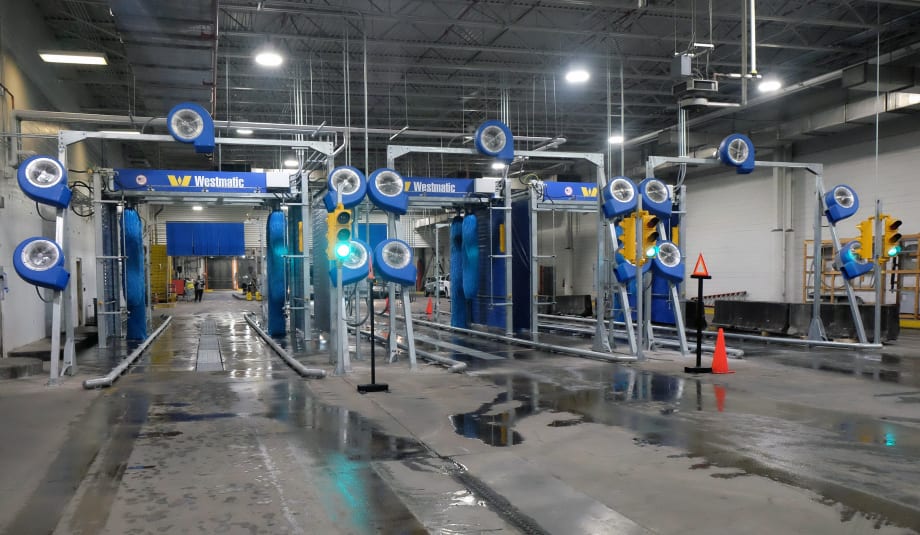
It’s important that you designate specific areas for washing, as well as areas for other maintenance tasks such as cleaning engines or changing oil.
Photo: Westmatic
Transit agencies face a number of challenges including keeping the fleet clean. Commercial wash systems offer an effective solution, but it’s important that managers implement best management practices (BMPs) to conserve water, comply with state and federal regulations, and reduce pollution, all while simultaneously keeping operating costs as low as possible.
Follow these essential BMPs to keep your commercial wash system running safely and efficiently.
1. Use Eco-Friendly Cleaning Agents
As more and more suppliers recognize the importance of offering environmentally-friendly cleaning solutions, it’s crucial you take the time to learn about the latest transit technology and product options available on the market. You should only use biodegradable water-based cleaners that are low in phosphate.
Whenever possible, check each cleaning products’ MSDS sheet, and avoid products that contain aromatic or chlorinated hydrocarbons, halogenated compounds, phenolics, or petroleum.
2. Dispose of Wastewater Properly
You should never dispose of wastewater into storm drains. Even if you use eco-friendly cleaners (or no detergents at all) the wastewater will be contaminated by sediment, brake dust residue, road grime, and other microscopic debris.
Before you start washing, be sure to cover your storm drains temporarily with a leak-proof storm drain seal cover. As you wash your fleet, the wastewater should pool around the cover. When you’re done washing the vehicles, you can use a wet/dry vac to dispose of the wastewater in an acceptable receptacle.
A compliant transit wash system should be connected to a sanitary sewer, allowing you to be able to simply pour the wastewater down the drain of a sink or toilet (or a sanitary sewer clean-out). After disposing of all wastewater, you can simply use a broom or wet/dry vacuum to clean the remaining debris.
There are other disposal methods available as well, such as portable wash pads and broom systems that may be ideal, depending on your organization’s unique needs. Recirculating wash systems that filter and reuse wastewater are another option. These water reclamation systems are especially suitable when public sewer systems aren’t readily available.
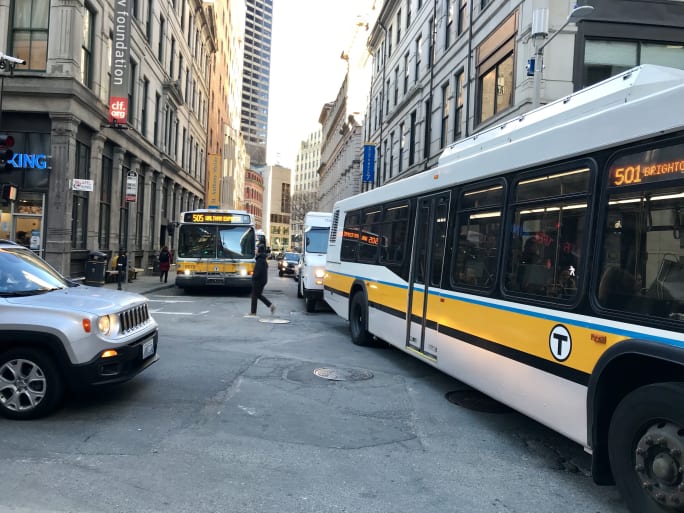
Transit agencies face a number of challenges including keeping the fleet clean.
Photo: Janna Starcic
3. Consider a Waterless Wash System
Some transit organizations may find that waterless wash systems are an excellent sustainable transit solution. There are eco-friendly formulas that are designed to be used with little-to-no water; instead, you simply spray the formula on the vehicle and then wipe down with microfiber towels.
This approach is more labor-intensive, so it’s not necessarily a viable solution for all transit agencies. Waterless wash systems are typically used for small to medium fleets of cars, SUVs, and vans. If you regularly wash large vehicles such as trains, a commercial washer may be more efficient.
Even if you don’t use a completely waterless system, there are plenty of high-pressure/low-volume washing techniques and equipment that can drastically reduce how much wastewater you produce in the first place. For example, using foam is a great way to reduce the amount of water you depend on.
4. Designate Specific Wash Areas
It’s important that you designate specific areas for washing, as well as areas for other maintenance tasks such as cleaning engines or changing oil. Be sure to have plenty of visible signage so there’s no confusion among employees of what is washed or contained where. You may also need to look into separate wastewater disposal options if you dispose of non-hazardous materials in the sewer.
5. Replace and Repair Equipment Regularly
Over time, your once-compliant vehicle wash equipment may be compromised by regular wear and tear. Proper maintenance is vital in keeping your commercial wash system running safely, effectively, and according to state and federal regulations. You should have a qualified technician check for leaks, malfunctions, and other issues on a regular basis.
Some equipment may also need to be replaced on a consistent schedule, even if it appears to be functioning properly. For example, spray nozzles should be replaced annually. Be aware of the “shelf life” of your equipment and then replace parts as needed. Additionally, leaks and other malfunctions should be repaired immediately, or as soon as they’re noticed.
This method of preemptive maintenance may seem costly, but you could run into significantly higher costs in the long run if your equipment breaks down, damages a vehicle, or, worse, harms an employee. Proper maintenance keeps your equipment running safely and efficiently, saving you money in the long run.
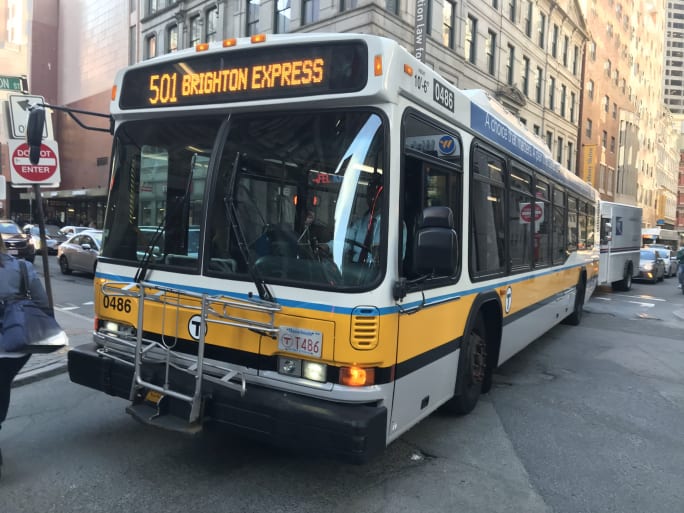
Not only will taking the time to educate your staff promote a safer work environment, but it will also improve company efficiency and productivity.
Photo: Janna Starcic
6. Educate Your Staff
It’s paramount that your whole team is always on the same page. You should have a protocol in place for any situation. Additionally, it’s important that you hold a company meeting every time you make a change such as installing new equipment or implementing a new procedure.
Beyond just keeping your employees apprised of any changes, it’s important that your team knows how to handle unforeseen problems such as spills. You should also have reporting procedures in place so employees can feel comfortable bringing up issues.
Never underestimate the value in well-trained employees. Not only will taking the time to educate your staff promote a safer work environment, but it will also improve company efficiency and productivity.
7. Focus on the Big Picture
As the manager of a fleet of vehicles, it’s vital transit agencies consider the long-term implications of washing equipment and procedures. For example, trace amounts of hazardous materials in the storm drain may not seem like a big deal, but if it keeps happening for days, months, or even years, the resulting damage may be irreversible.
One of the most critical BMPs of a commercial wash system is to simply be aware and on top of your duties. Vehicle wash systems require ongoing attentiveness — that’s the key to keeping your bottom line up without compromising safety and compliance. Always be looking for the latest and greatest solutions available to you, from upgrading your equipment to replacing your detergent to more eco-friendly, efficient alternatives.
Finally, it’s difficult (often impossible) to handle everything yourself. Good managers know how to delegate. Put trustworthy employees in charge of various strategies and procedures, and then check in from time to time. Over time, your team should operate like a well-oiled machine, and ongoing maintenance will become second nature.
Jordan McDowell is a writer and content strategist. He specializes in technically-oriented B2B and B2C content for a number of digital companies.
Vehicle Wash Systems Roundup
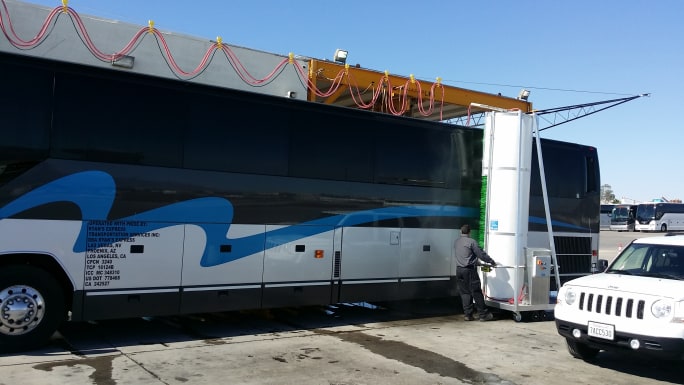
Awash Systems
Awash calls its Tower Wash System the most ecological and economical washing system in the industry. The only system with a metered soap injector, direct to the machine, using only one ounce of soap per minute.
Awash’s system total cost, maintenance, and soap for the next 10 years will only cost the user $2 “awash.”
Bitimec
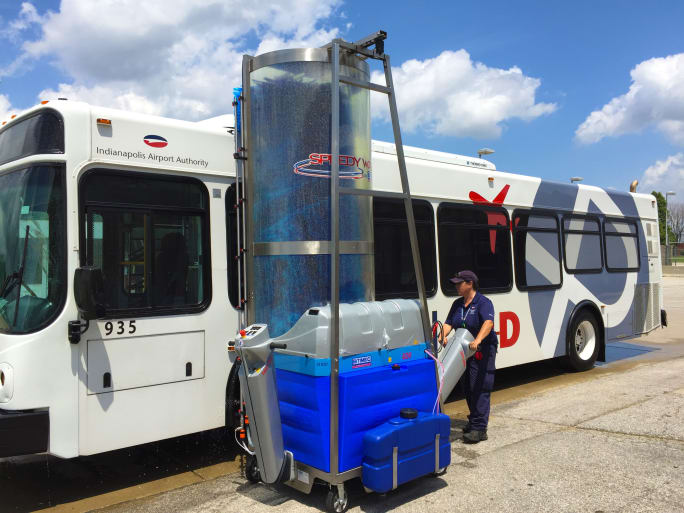
Bitimec’s Wash-Bots are advanced, affordable bus wash systems delivering positive ROI to public transit fleets worldwide. A single operator can wash up to 40 buses in one shift — each bus in six to eight minutes. The 15-square-foot machines do not need a dedicated building and can be tucked out of the way when not in use.
N/S Wash Systems
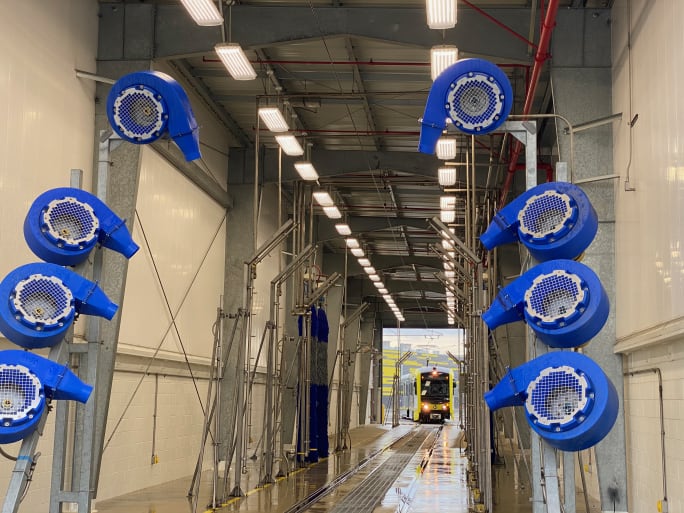
From schools to the transportation sector, running and maintaining large commercial vehicles is a huge undertaking. Keeping them clean and running well is a positive reflection on your organization. Though commercial car washes are common sights, the systems and components that make up a transit car wash comprise a niche market. When you need a system that can reliably tackle the grime that attaches to buses, trains, and other large commercial vehicles, N/S Wash wants you to turn to them.
Ross and White Co.
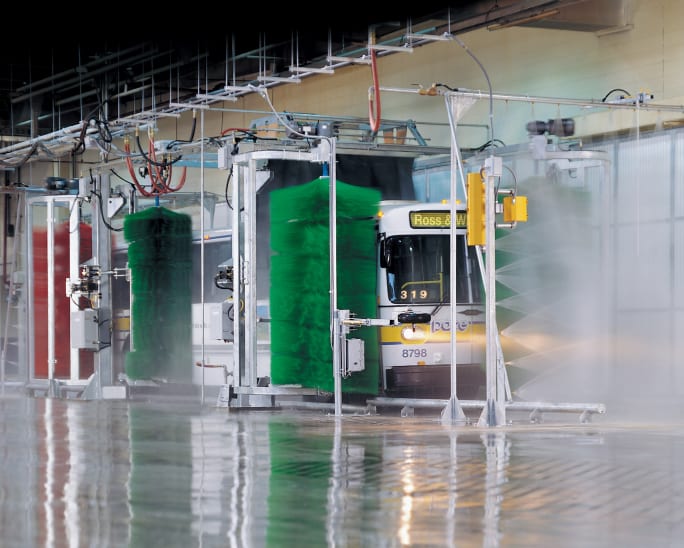
Since 1933, the Ross and White Company has manufactured, installed, and serviced vehicle wash and interior cleaning systems for the transit industry. Products include, bus wash, paratransit wash, touchless wash, undercarriage wash, commuter train wash, LRV wash, water recycling systems, and bus interior cyclone cleaning systems.
Westmatic
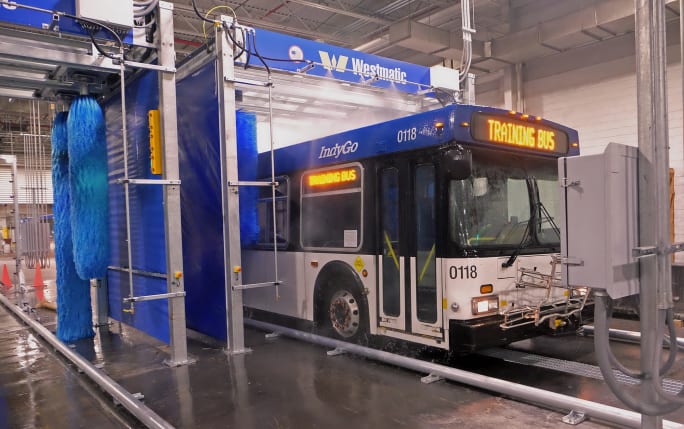
The 4-Brush Drive-Through Transit-Master bus wash system is designed for fleets with a high-volume wash schedule. The system is configured with two sets of vertical brushes. One set of brushes are full length and the second set is half-length. The front, sides, and rear of the vehicle are scrubbed with the first set of vertical brushes, using Westmatic’s overlapping brush movements. The second set of half-length brushes are used for washing above the front mounted bicycle rack. Westmatic’s brushes are electronically controlled and eliminate the need for costly, high-maintenance pneumatic air cylinder components.
More Management

METRO Opens Submissions for 2026 Motorcoach Awards
Nominations are now being accepted for METRO Magazine’s Operator of the Year and Innovative Operator of the Year awards.
Read More →
New York MTA Advances Final Contract for Second Avenue Subway Expansion
Contract Four is the largest in the Second Avenue Subway Phase 2 project and includes construction of station infrastructure, tracks, and signals for the subway expansion, MTA officials said. Work on Contract Four will begin in 2027.
Read More →
Transit Agencies Highlight Safety Gains at National Summit
Leaders from 15 major transit systems shared crime-reduction results and safety initiatives while discussing the role of continued federal support.
Read More →

NITA Names New Leadership, Expands Reduced-Fare Program at First Board Meeting
The new regional transit authority appointed its first board chair and interim executive director while extending reduced fares across CTA, Metra, and Pace for eligible riders.
Read More →
Beyond the Checklist: A Structured Approach to Transit Maintenance
Reliability-Centered Maintenance helps transit agencies move beyond routine checklists to focus limited resources on the assets and failures that have the greatest impact on safety, reliability, and service.
Read More →
APTA 2026 Nominating Committee Selects Leadership Slate, Names Chair and Vice Chair Nominees
Leadership changes will help shape the association’s priorities and its representation of the transportation industry during the 2026–2027 term.
Read More →
DART Launches Major Security, Fare Enforcement Initiative
The 90-day demonstration will deploy coordinated security teams at five light rail stations while testing controlled access and gathering data to guide future investments.
Read More →
Advancing Fare Collection Through Technology and Innovation
Learn about delivering 1300 gates at 91 stations while managing fare evasion. Explore the large scale deployment, solution customization and real-world results that affect the region. Prepare for deployment in your region now.
Read More →
Game Day in Motion: Moving Millions During the 2026 World Cup
Between packed transit stations and team motorcoaches, see how agencies and operators across North America tackled the transportation demands of the 2026 FIFA World Cup.
Read More →
Surface Transportation Extension Averts Shutdown, Leaves Transit Funding Gap
The stopgap keeps federal transportation programs moving, but missing advance funding could complicate the transit and rail projects agencies are planning next.
Read More →