PRIDE Industries now manufactures 46 parts for InterMotive — 24 cable assemblies and 18 mid- to high-volume PCBAs. About half of PRIDE Industries’ employees have a disclosed disability.
by Darelyn Pazdel
October 26, 2023
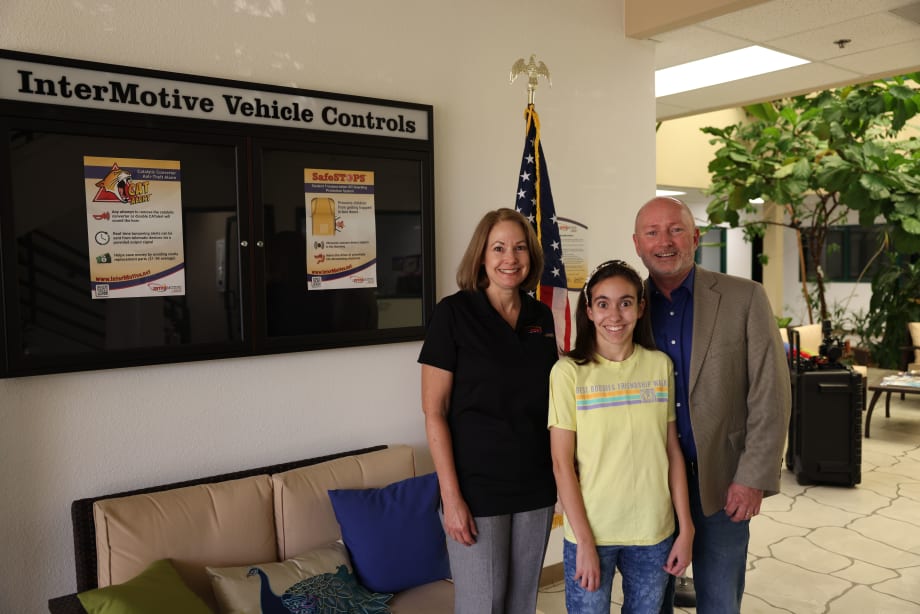
InterMotive Vehicle Controls Co-Founders Linda and Greg Schafer were searching for an outsourcing partner to manufacture the company's PCBAs in 2008 and discovered PRIDE Industries.
Photo: PRIDE Industries
4 min to read
October is National Disability Employment Awareness Month, and it’s a terrific opportunity to call attention to one of the most underutilized talent pools in the country — people with disabilities. Especially in the automotive industry, where 56% of manufacturers face a labor shortage.
InterMotive Vehicle Controls in Auburn, Calif., is ahead of the game. Co-founders Linda and Greg Schafer, CEO and president, respectively, were searching for an outsourcing partner to manufacture the company's PCBAs in 2008 and discovered PRIDE Industries, a contract electronics manufacturer with a mission to create employment for people with disabilities.
Ad Loading...
"The company's capabilities blew me away," said Greg Schafer, who spent the better part of a decade as an engineer at Ford Motor Company before founding InterMotive. "The people, the processes, and the technology are state-of-the-art. But what sets the company apart are the people — I'd never seen a manufacturing floor where employees were so happy to be there."
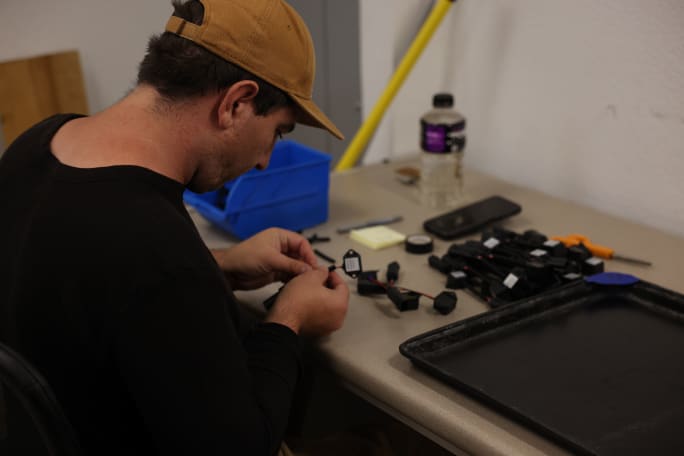
Fast-forward 15 years, and PRIDE Industries now manufactures 46 parts for InterMotive — 24 cable assemblies and 18 mid- to high-volume PCBAs. About half of PRIDE Industries’ employees have a disclosed disability.
“The workforce is skilled, stable, and continuously improves,” said Greg Schafer.
n the years since the pandemic, disability employment-to-population ratio for people with disabilities has risen to record highs, reaching 37.9% percent in August, according to the monthly National Trends in Disability Employment (nTIDE) report published by the Kessler Foundation and the University of New Hampshire.
Photo: PRIDE Industries
Assessment, Training, and Support
"We have directly hired people with disabilities and outsourced to PRIDE Industries' teams for going on two decades now," said Linda Schafer. "When you take someone with an intellectual or physical disability, and assess their skills and interests, give them the training and support they need, you'll be amazed at what they can do and how much they can contribute."
"I have employees with disabilities who started after high school and are now married and buying homes," said Greg Schafer. "They love their jobs, show up on time every day, and are proud of their work. They really enhance our workforce."
Coincidentally, one of InterMotive's flagship products is a wheelchair interlock — a mechanism that immobilizes wheelchair-accessible vehicles when the wheelchair ramp deploys.
"Some of our employees come to work in vehicles with our products on board," said Linda Schafer. “Products they may have helped build."
InterMotive is the largest manufacturer of wheelchair interlocks in North America.
One of InterMotive's flagship products is a wheelchair interlock — a mechanism that immobilizes wheelchair-accessible vehicles when the wheelchair ramp deploys.
Photo: PRIDE Industries
Hiding in Plain Sight
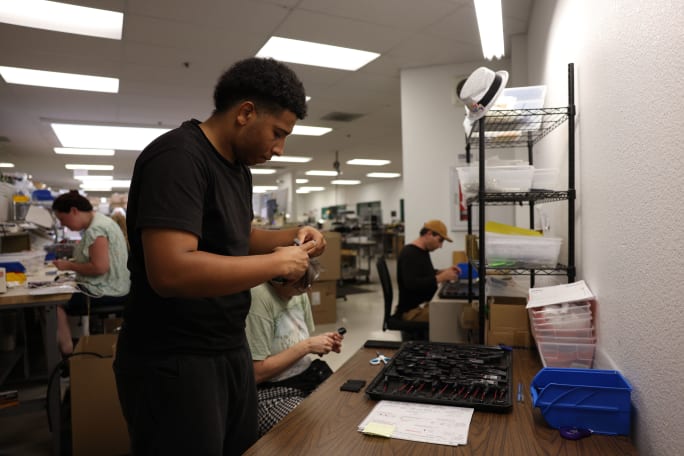
More and more companies are finding skilled, reliable, loyal talent in the disability community. More than 10% of working-age Americans have a disability. Historically, the workforce participation rate for working-age adults with disabilities was around 30%, while the rate for persons without a disability in the same age group was 75%.
Ad Loading...
But that’s changing fast. In the years since the pandemic, disability employment-to-population ratio for people with disabilities has risen to record highs, reaching 37.9% percent in August, according to the monthly National Trends in Disability Employment (nTIDE) report published by the Kessler Foundation and the University of New Hampshire.
The organizations cite newfound openness to remote work and a growing awareness of the benefits of a diverse workforce as a driver for increased hiring. Research published by the National Institutes of Health found that the benefits of hiring people with disabilities included improvements in profitability from lower employee turnover and long-term retention, reliability, punctuality, productivity, and customer loyalty and satisfaction.
More and more companies are finding skilled, reliable, loyal talent in the disability community.
Photo: PRIDE Industries
Overcoming Misconceptions
Misconceptions keep retailers and employers from turning to people with disabilities to address labor shortages. The Society for Human Resources Managers (SHRM) cites three "myths" to break:
People with disabilities aren't qualified applicants.
Reasonable accommodation is expensive.
Managers can't expect the same level of performance from employees with disabilities.
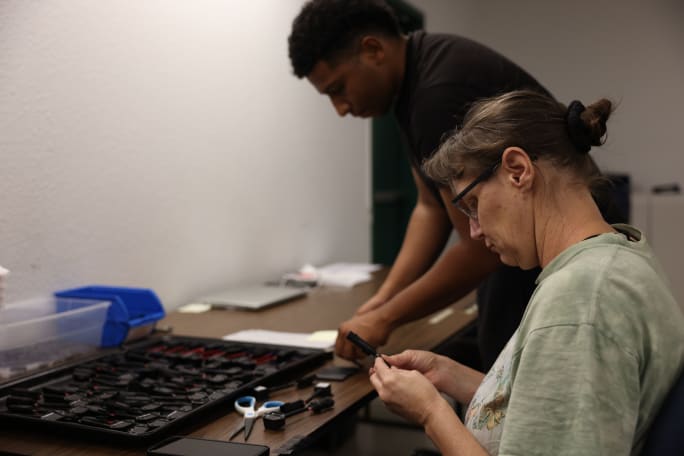
Keys to InterMotive's success with employees with disabilities are consistent assessment, training, development, and feedback — processes the company has invested in for employees of all abilities for decades.
Ad Loading...
"In many ways, these employees are just like any other that walk through our doors," said Linda Schafer. "We identify their skills and interests, find the right role for them, and give them the training and support they need to be successful and find a career path here."
InterMotive began hiring employees with disabilities long before DEI became trendy.
"We aren't doing this because someone told us we had to," said Greg Schafer. "We're doing it because it makes us a better business." And he cautions companies against hiring from underrepresented communities to "check a box." He said it requires investment, but once you make it, "you realize you are more alike than different."
"They want to work. They want to contribute. Their joy is a gift," said Linda Schafer.
About the Author: Darelyn Pazdel is VP, Workforce Inclusion, at PRIDE Industries
Contract Four is the largest in the Second Avenue Subway Phase 2 project and includes construction of station infrastructure, tracks, and signals for the subway expansion, MTA officials said. Work on Contract Four will begin in 2027.
The new regional transit authority appointed its first board chair and interim executive director while extending reduced fares across CTA, Metra, and Pace for eligible riders.
Reliability-Centered Maintenance helps transit agencies move beyond routine checklists to focus limited resources on the assets and failures that have the greatest impact on safety, reliability, and service.
The 90-day demonstration will deploy coordinated security teams at five light rail stations while testing controlled access and gathering data to guide future investments.
Learn about delivering 1300 gates at 91 stations while managing fare evasion. Explore the large scale deployment, solution customization and real-world results that affect the region. Prepare for deployment in your region now.
Between packed transit stations and team motorcoaches, see how agencies and operators across North America tackled the transportation demands of the 2026 FIFA World Cup.
The stopgap keeps federal transportation programs moving, but missing advance funding could complicate the transit and rail projects agencies are planning next.