BetterFleet CEO Talks Toronto Partnership, Bus Charging, and More
METRO spoke to Daniel Hilson about the company's recent TTC project, the current issues with implementing electric charging infrastructure, and much more.
"Working with PowerON, the TTC and ABB E-mobility has been a tremendous opportunity for BetterFleet to showcase the efficiency and impact of dynamic load management and sequential charging," said Daniel Hilson, CEO of BetterFleet
Photo: BetterFleet
6 min to read
In November, the Toronto Transit Commission (TTC) and PowerON Energy Solutions, in collaboration with BetterFleet, announced the successful implementation of a smart charge management solution for the TTC's electric buses.
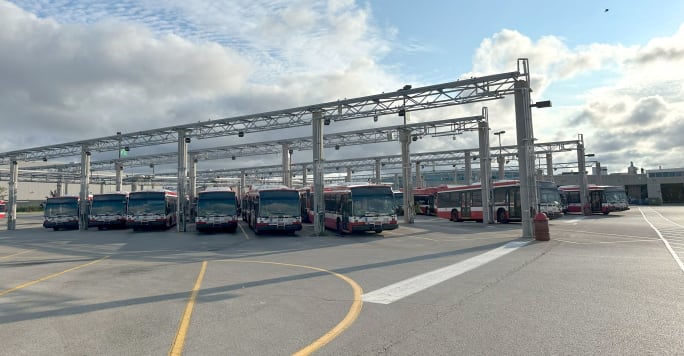
The collaboration enhances the TTC's ability to optimize its electric bus charging operations, supporting the agency's goal of transitioning to a 100% zero-emission bus fleet by 2040.
Ad Loading...
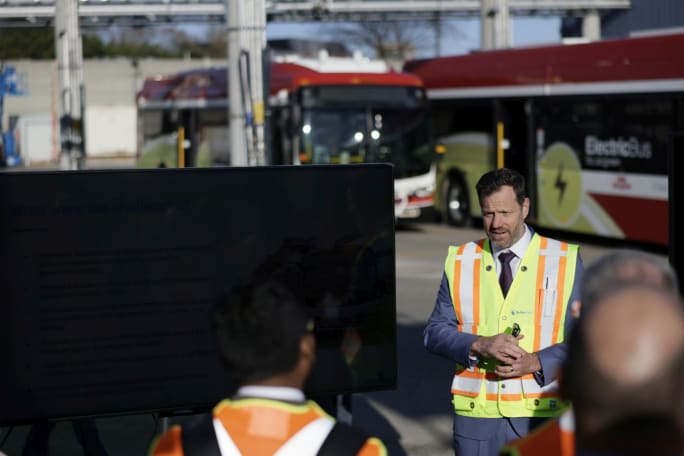
The new charge management system leverages the BetterFleet charge management platform integrated with ABB E-mobility chargers and will enable optimized charging sequences and dynamic load management.
The technology will ensure that power is allocated efficiently to the right electric buses, helping to meet operational needs while minimizing energy costs. The system was supported by Natural Resources Canada through a $2.5 million contribution under the Electric Vehicle Infrastructure Demonstration Program.
"Working with PowerON, the TTC and ABB E-mobility has been a tremendous opportunity for BetterFleet to showcase the efficiency and impact of dynamic load management and sequential charging," said Daniel Hilson, CEO of BetterFleet, when the partnership was announced. "This project sets a new standard for transit agencies across North America working toward zero-emission goals."
METRO spoke to Hilson about the TTC project, the current issues with implementing electric charging infrastructure, and much more.
The new charge management system leverages the BetterFleet charge management platform integrated with ABB E-mobility chargers and will enable optimized charging sequences and dynamic load management.
Photo: TTC
About the TTC Partnership
How did this partnership come about?
The TTC, in partnership with PowerON Energy Solutions, were in search of a provider that could rapidly deploy a proven charge management system for their fleet of electric buses. They had a tight timeline that was in part driven by a government grant they were awarded from Natural Resources Canada (NRCan) under their Electric Vehicle Infrastructure Demonstration Program.
Ad Loading...
TTC and PowerON went through a competitive procurement process and selected BetterFleet based on a combination of factors including software capabilities and features, experience working with complex fleets, integration capabilities, and overall the ability to deliver an integrated solution that met their operational needs.
How can these types of multiple partner private/public partnerships benefit the industry?
Partnerships like these are essential because, let’s face it, fleet electrification is no easy task. It’s incredibly challenging for any one organization to tackle every aspect on its own, and the transit industry has experienced firsthand the hurdles and struggles that can arise. This deployment showcases the power of uniting the best providers in the field, leveraging their expertise, and collaborating closely to create an integrated solution that meets the customer’s needs.
What kind of issues was the TTC trying to address and how is BetterFleet’s solution able to help solve that challenge?
The TTC faced complex challenges in managing its transition to fleet electrification.
The number one priority is always ensuring that they can deliver the service for the public who need to use the services to keep the community running. There is still uncertainty in the deployment of electric buses, so providing a way to ensure every vehicle is charged to meet every duty is the top priority.
As more vehicles are added this becomes more and more complex, and we have to move from providing clarity and information to providing recommendations and insights and delivering automation.
Ad Loading...
Part of reliability comes from dealing with situations where the grid is unreliable, so PowerON Energy Solutions is deploying multiple backup options. These same back-up infrastructures can be used to manage power costs along with adjusting charging schedules to avoid peak costs.
In Ontario, this is even more important as there is a global adjustment factor — which sets demand costs based on peak power usage during the most congested hours of the year.
Beyond these requirements is the need to preserve battery life, and features that optimize this have also been implemented. Managing incidents such as charger malfunctions is also critical, and link back to service reliability. A comprehensive incident management system in the BetterFleet platform is key to dealing with these situations.
Finally — for continual improvement comprehensive reporting is required. This can be used to watch trendlines over time in terms of vehicle and charger performance, which inform future procurements and warranty management.
The collaboration enhances the TTC's ability to optimize its electric bus charging operations, supporting the agency's goal of transitioning to a 100% zero-emission bus fleet by 2040.
Photo: BetterFleet
Helping the TTC Reach Its 100% Zero-Emissions Goal
Can you talk about the overall benefits of BetterFleet’s system and how it can/will help TTC and other agencies as they scale toward 100% zero emissions?
As agencies scale, many of the initial challenges become more pronounced. When you have a significant number of vehicles in a depot you need to be able to orchestrate dispatch and provide depot staff with insights and automation.
Ad Loading...
For example, on a particularly cold day or on a very hilly route, the buses will not perform at the same efficiency, so the system needs to adjust to take weather and topography into account.
BetterFleet has a unique digital twin that will recalculate vehicle charging requirements around these changes, also taking into account things like the impact of regenerative braking on different routes and the learned behavior of charging.
This last point we call our time to charge algorithm, needed because different chargers will charge at different rates, and to make recommendations around dispatch, we use machine learning to determine when the vehicle will be available.
Operators will also need to know the state of charge en-route, so they can see if any specific conditions will cause vehicles to run out of charge when in the field.
At scale, any incidents, such as chargers being unavailable or unexpected interruptions to charging, become even more critical, so an advanced workflow-based incident management system is needed to quickly recognize the issue and make sure it is escalated to the right party.
Ad Loading...
Ultimately operators will also want to feed data back into their planning processes, and BetterFleet has a unique planning module that enables bus scheduling departments to take the data we provide and use it when re-planning their routes or doing long-term electrification planning exercises.
The holistic approach empowers agencies to make data-driven decisions, optimize fleet performance, and achieve their zero-emissions goals with confidence.
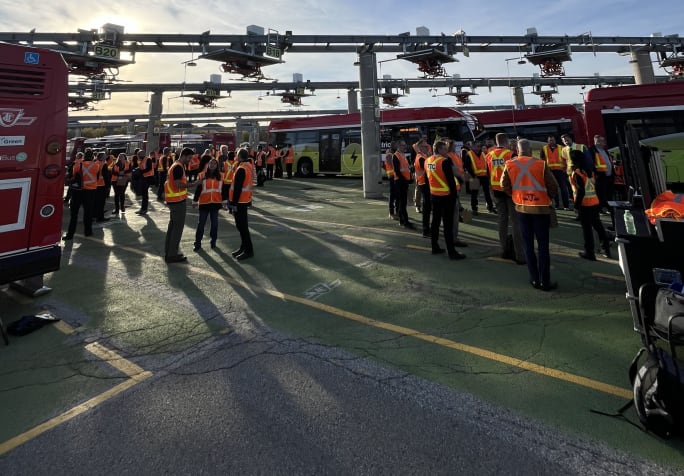
The partnership and TTC hosted an Open House for the project during this year's CUTA Fall Conference.
Photo: BetterFleet
Hurdles Facing the Industry
What are the hurdles transit agencies need to overcome as they go from small pilots to eventually hitting full scale?
Transit agencies face significant hurdles as they scale from small pilots to full fleet electrification.
One major challenge is the lengthy process of upgrading utility infrastructure to provide sufficient power for an entire fleet of EVs. Charge management software helps address this by optimizing energy use, allowing fleets to deploy more vehicles at existing sites while waiting for upgrades, accelerating progress toward zero emissions.
As fleets grow, energy management becomes critical, with demand charges escalating significantly as the number of vehicles increases. Effective software can coordinate charging to avoid peak times, minimize costs, and ensure vehicles are charged to meet operational needs.
Ad Loading...
Additionally, scaling introduces logistical complexities at depots, where densely packed vehicles must be charged in the right sequence to be ready for service. Charge management software with depot emulation capabilities is essential for navigating these challenges efficiently, orchestrating the depot, and keeping fleets running smoothly.
Integrating multiple systems from different suppliers and brands can be another challenge, which is where the benefits of using a vendor-agnostic CMS comes in that can integrate with many different types of hardware to provide a unified view for the agency, enabling them to utilize the best technology available for their specific application.
Something I may have missed that you’d like to add?
One key to making this deployment successful is close collaboration between the parties involved, enabling the ability to put solutions into testing, have a quick feedback loop, and rapidly iterate to ensure proper functionality before going live in operations across an entire depot or multiple depots.
With any new technology, the ability to be flexible, react quickly, and work well together can be the difference between a successful deployment and an unsuccessful one.
See how three Gillig battery-electric buses powered festival stages while the agency’s new Park & Ride service carried approximately 1,000 attendees, demonstrating another potential use for transit agencies’ electric fleets.
The new name represents a renewed vision for the nonprofit focused on advancing clean, equitable, and affordable transportation solutions that move people and goods.
John Hroncich discusses BAE Systems’ modular and scalable approach, lessons learned from decades of real-world operations, and how agencies can identify electrification strategies that fit their fleets.
UB, transportation solutions provider WeDriveU, and fleet electrification specialist Zenobē marked the deployment in the presence of students, university administrators, and local officials.
From manufacturers and suppliers to transit agencies and motorcoach operators, these updates offer a snapshot of the projects, partnerships and business moves driving the industry forward.
The agency’s maintenance chief discusses leadership, workforce development, zero-emission technology, and preparing technicians for the future of public transportation.
The firm will work with CTDOT and RVT to define the facility layout, operational requirements, and long-term flexibility for RVT’s growing electric fleet.
The fast-charging infrastructure will help extend electric bus range, improve fleet utilization, and support DASH's goal of transitioning to a fully zero-emission fleet.