



Fleet Solutions: Tips for Designing a CNG Fueling Station
You've made the decision to transition to compressed natural gas (CNG) for your vehicle fleet - understanding CNG station options is your next step.
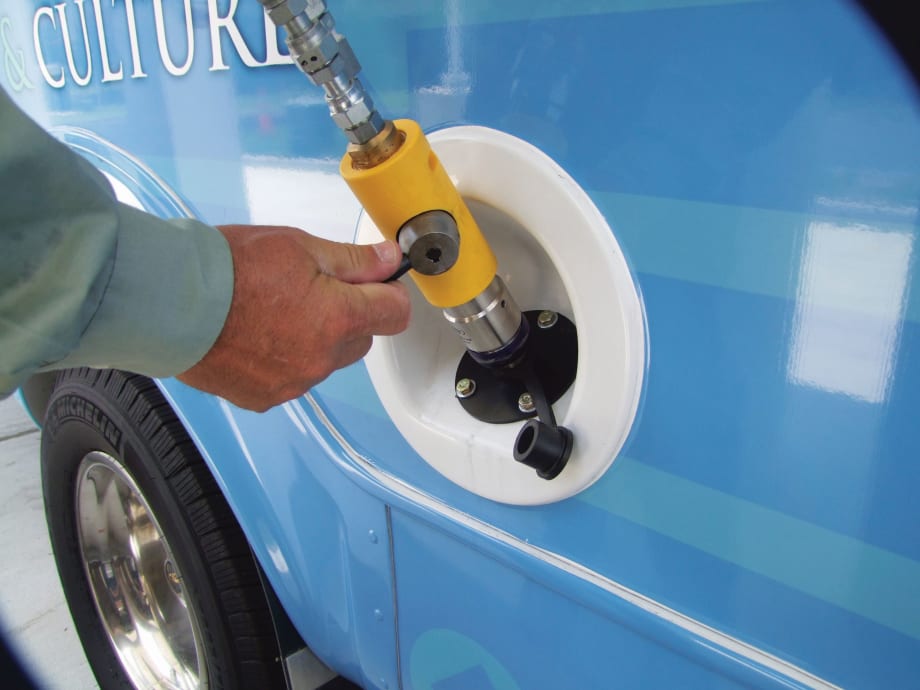
The "NGV1" nozzle shown is designed to fast fill small- to medium-sized vehicles including this shuttle bus. Time fill dispensers use a simpler version of the "NGV1" nozzle.
Compressed natural gas (CNG) is considered one of the cleanest, safest and lowest cost vehicle fuels, and it's produced in North America. However, it isn't as simple to handle as conventional fuels such as gasoline and diesel. Not only are there added vehicle costs, the decision to construct a CNG fueling station is a major factor in switching a fleet.
CNG stations are a significant capital and operating commitment that should be given full consideration before purchasing decisions are made. Here are some of the things you have to consider.
Make a Plan for Transition
Develop a plan for CNG transition early, as it is necessary to think ahead about facility design. It is possible to oversize a facility, but it is more common to undersize equipment, particularly the compressor. Small compressors can lead to slow or incomplete fueling.
First, assemble current fueling records:
Gallons of fuel consumed per day by vehicles that will operate on CNG. Average fuel consumption for the fleet should be used, not the maximum or the tank capacity.
Number of vehicles to be fueled per day, noting that CNG vehicles often carry less fuel than liquid-fueled vehicles, and therefore, may require more frequent fueling. Also note the fleet spare ratio must be known and applied to fuel consumption.
Fueling patterns and timing at the site. For example, do vehicles return to the yard for several hours a day or come only for fueling?
Will vehicles be bi-fuel CNG/gasoline or dedicated CNG? This will impact the level of redundancy required in the CNG station.
Some vehicles may not be immediate candidates for CNG. These include older vehicles scheduled for disposal in the near term and low-use vehicles. Diesel vehicles are often difficult to satisfactorily convert to CNG, so it may be advisable to wait until the next trading cycle and replace them with OEMdedicated CNG engines in new vehicles.
The CNG station facility should be planned and constructed to allow for CNG fleet growth by designing it for the ultimate fleet needs even though some equipment — additional compressors or storage — may not be installed at the outset.
Useful Facts
1 GGE (gasoline gallon equivalent) is defined by National Institute of Standards and Technology (NIST) as 5.660 pounds of natural gas. It is the equivalent energy to a gallon of gasoline. It is approximately 120 to 125 standard cubic feet (scf) of natural gas.
1 DGE (diesel gallon equivalent) is not legally defined, yet it is the equivalent energy to a gallon of diesel fuel and is approximately 135 to 140 scf of natural gas.
Diesel engines are more fuel efficient than CNG since they operate at higher compression ratios, thus sizing calculations should add 7% to 15% to CNG fuel consumption to account for this reduced efficiency.
CNG vehicles emit approximately 20% to 25% less CO2 than gasoline and diesel vehicles.
Determine Station Type
There are three styles of CNG stations in wide use today. These are time-fill — also called slow-fill — cascaded fast-fill and buffer fast-fill.
1. Time-Fill Station
In a time-fill station, gas is first dried to reduce the moisture. Then, after compression, CNG is dispensed through a manifold to all vehicles simultaneously. This system is simple and can be the most cost-effective method because the compressor is often smaller than required for fast-fill, and there is no storage or cascading required. There may be manpower savings as drivers connect to the manifold and walk away, with no time lost in fueling.
Time-fill has several limitations. It is applicable only when fleet vehicles return to a common facility for several hours, preferably overnight. Also, while it is possible to accurately measure fuel dispensed to each vehicle, it is generally cost prohibitive and complicated.
Time-fill stations are well suited to trash collection vehicles, school buses and other vehicles that domicile overnight in a home base.
2. Cascade Fast-Fill Station
One answer to the problems of a time-fill station is a cascaded fast-fill station.
The primary difference between time-fill and cascade fast-fill is the use of a group of high-pressure vessels divided into banks (usually three), which are automatically “sequenced” or “cascaded” to fill a vehicle.
The cascade fast-fill provides higher flows than the compressor alone, so vehicles fuel in a similar time to liquid-fueled vehicles. Individual metering is easy, and fast-fill accommodates fleets that do not stay in a yard.
Capital cost can be a deterrent from using fast-fill.
Note that as storage is depleted (below 60% to 70% of stored volume), fill times increase, particularly with marginal or undersized compressors.
Cascade stations are versatile and can fuel a wide variety of vehicle and fleet types.
3. Buffer Fast-Fill Station
For applications where sustained fast fueling of high fuel use vehicles is required, buffer fast-fill may be the best option.
The primary difference between buffer and cascade fast-fill is that with a buffer system, vehicles are filled directly from large compressors rather from the storage. The buffer storage is used to allow the compressors to keep pumping even when no vehicles are fueling — this gas then supplements compressor flow when vehicle fueling resumes.
The buffer fast-fill provides high flow rates because large compressors are used, so even large vehicles fuel in a similar time to liquid-fueled vehicles. Individual metering is easy, and fills do not slow down after fueling several vehicles as is common with cascade systems.
Capital cost of buffer stations is high because of the large equipment but they are well suited to transit bus operations.
Understand Station Components
The following is a brief overview of station equipment:
1. Gas dryers
Gas dryers are needed to reduce the moisture content of the gas.
Usually, station inlet drying is preferred over high-pressure drying as it is safe, reliable and effective.
To reduce capital and maintenance costs, a single tower dryer with a manual regeneration system can be used in many small to medium-sized CNG stations.
2. Gas Compressors
Compressors are the heart of the station. Many styles and manufacturers exist, but all are reciprocating compressors — that is, they contain pistons that run in cylinders. Variations are due to differences in the heritage of the machine.
The “package” — equipment on the skid supporting the compressor — can be more critical than the compressor block design. Some block manufacturers have several “packagers” with varying quality and capabilities. Don’t assume that one compressor package is equal to the next because they share a common block manufacturer.
In machines with 50 hp or less, the lowest-cost compressors tend to be converted air compressors. This usually limits suction pressure to 5 lbs. to 15 lbs. per square inch gauge (PSIG) and most are lubricated design.
Above 50 hp, industrial and gas patch adaptations become more common. These machines are more complex than converted air compressors but tend to be more rugged.
At least one compressor manufacturer markets a “nonlubricated” compressor, meaning the cylinders receive no lubrication. This can simplify the machine and possibly eliminate oil carryover to the vehicle. However, there are drawbacks to nonlube compressors, including potentially lower life of internal wear items in the compressor, including rings and piston rod seals, and a need to run compressors slower and cooler. Purchasers should check to ensure the machines have been used successfully on CNG applications for several years.
If you are using a lubricated compressor, it should utilize synthetic oil that will not vaporize. This oil can be effectively removed from the gas stream using a properly designed filter system. The compressor supplier must ensure that the synthetic oil is compatible with any equipment or oil that might be in the system.
Air-cooled compressors have proven their durability and are the industry standard.
Horizontally opposed designs are proving popular above 50 hp with their inherent balance (low vibration) and ease of service, and they can be used at very high horsepower applications. Other configurations for compressors less than 300 hp include V and W cylinder arrangements.
A CNG compressor generates 90 to 100 dBA noise at three feet, so it may be necessary to provide an acoustical enclosure. A properly engineered enclosure is costly, but it is the most effective noise control on the site and facilitates installation of equipment near property lines or buildings. In climates where temperatures drop below 30°F, enclosures and compressors can be equipped with heaters.
Higher utility gas service pressure will reduce the compressor size, cost and horsepower. See if this is offered by the local gas utility. The higher the inlet pressure, the fewer stages and the lower horsepower is required to produce the same standard cubic feet per minute (scfm) of flow. For example, based on 100 scfm and 4,500 PSIG discharge pressure, 5 PSIG suction requires five stages at 60 hp; 100 PSIG suction requires four stages at 36 hp; and 300 psig suction requires three stages at 26 hp.
The U.S. CNG industry has standardized on 3,600 PSIG vehicle pressure, which implies dispensed pressures of up to 4,500 PSIG. Compressors should be rated for continuous operation with a discharge pressure of 4,500 PSIG.
Most new CNG stations use electric motors to power the compressor rather than the natural gas engines sometimes used in the past. Electric motors are simple, compact, create no on-site emissions, and are very reliable.
3. Gas Storage
Gas storage is used on fast-fill stations only. Several configurations — small tubes, large tubes and spheres — are available. Fleets can use cost as the main selection criterion.
For cascade stations, storage should be set up in three banks. Storage vessels should have a minimum design pressure of 5,500 PSIG —the most common current storage design pressure — and should be equipped with condensate drains. Generously sized storage will improve station performance and reliability.
4. Gas dispensers
Gas dispensers vary widely depending on application; however, the following are general guidelines:
Time-fill
NGV1 time-fill type connectors.
3/8-inch conductive CNG hose rated at 5,000 PSIG — the most common current rating — with hose retractors and inline breakaways.
Coalescing filters for each manifold.
Fast-fill Cascade or Buffer
The following typical design will provide maximum reliability and performance for light and medium-duty vehicle applications:
NGV1 or CT5000 fast-fill type connectors (depending on flow requirements).
3/8-inch or 3/4-inch conductive CNG hose rated at 5,000 PSIG with hose retractors and inline breakaways.
Coalescing filters for each line.
Mass flow meter and electronic display compatible with fuel management systems for each hose.
Electronically controlled priority fill (to control gas flow from compressor to storage) and sequencing (gas flow control from storage to vehicle); or electronically controlled buffer control valve panel.
Electronic temperature compensation adjusts vehicle fill pressures to compensate for ambient temperature changes and “heat of compression,” the temperature rise in the vehicle tank during a fastfill operation. The system should be designed for a reference pressure of 3,600 PSIG.
Station Reliability Considerations
Station electronic controls should be integrated to maximize safety and performance. Remote network monitoring should be provided to reduce downtime and repair costs.
If dedicated CNG vehicles are used, and if no other acceptable local fueling options exist, fleets often include one additional (redundant) compressor to ensure that they can meet fueling needs with one compressor down for service. Similarly, station owners also often include standby power (generator) to provide power for half or more of their compressors in an extended power outage.
Benefits Often Outweigh Costs
Design and selection of a CNG fueling station is more involved than gasoline or diesel fueling stations. A properly sized and designed station will reliably serve a fleet for many years, allowing the fleet to comply with federal and local clean air mandates, while enjoying the benefits of a relatively inexpensive domestic vehicle fuel.
More Management

Bringing Austin’s First Light Rail System to Life
Austin Transit Partnership CEO Greg Canally discusses the city's nearly 10-mile light rail project, its collaborative approach to project delivery, the importance of community engagement, and the milestones ahead as construction approaches in 2027.
Read More →
ETA CEO John Maglio on Transit Technology, Innovation, and Building Agency Trust
ETA founder and CEO John Maglio explores the evolution of transit technology, the importance of reliable systems, and how stronger partnerships can help agencies improve operations and the passenger experience.
Read More →
Metra Draft Plan Outlines Costs, Service Improvements for Regional Rail
The Systemwide Network Plan identifies infrastructure needs and potential investments to expand all-day, bidirectional rail service across the Chicago region.
Read More →
New Orleans RTA Names Augustine III as New CEO
In this edition, we also spotlight recent personnel moves at HDR, PATH, STV, and more, highlighting the people taking on new roles across the transportation industry.
Read More →
How Transit Agencies Are Using Free Rides to Improve Voting Access
Transit agencies are using fare-free service, trip-planning tools, and targeted rides to improve voting access. See what other agencies can learn from these efforts.
Read More →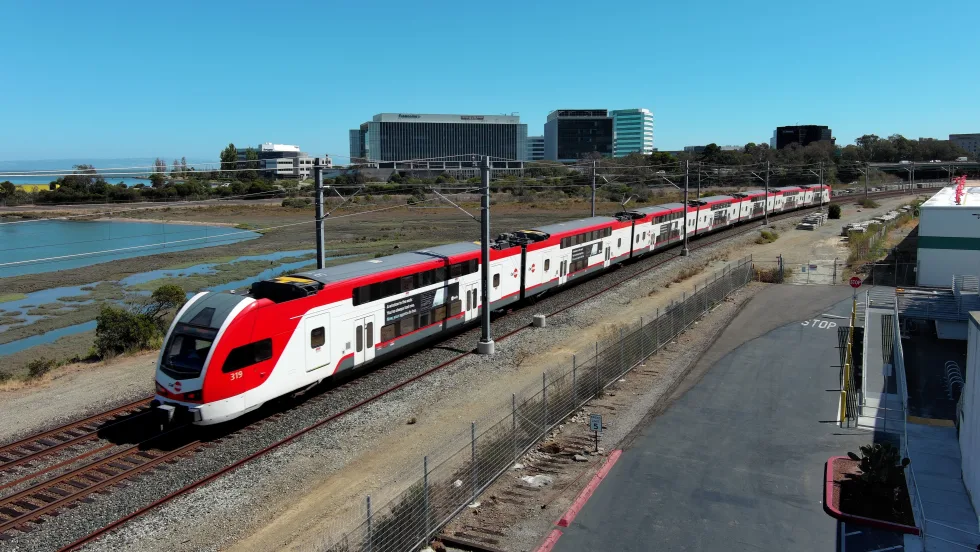
Caltrain’s Electrification Drives a New Era of Ridership Growth
The railroad’s shift to electric service has brought more frequent trains, stronger customer satisfaction, and increased ridership, earning it APTA’s Outstanding Public Transportation System award.
Read More →
Chicago, Charlotte Transit Agencies Expand Rider Support Programs
CTA launched crisis intervention teams as CATS prepares to deploy fare ambassadors, expanding customer assistance and security efforts across both systems.
Read More →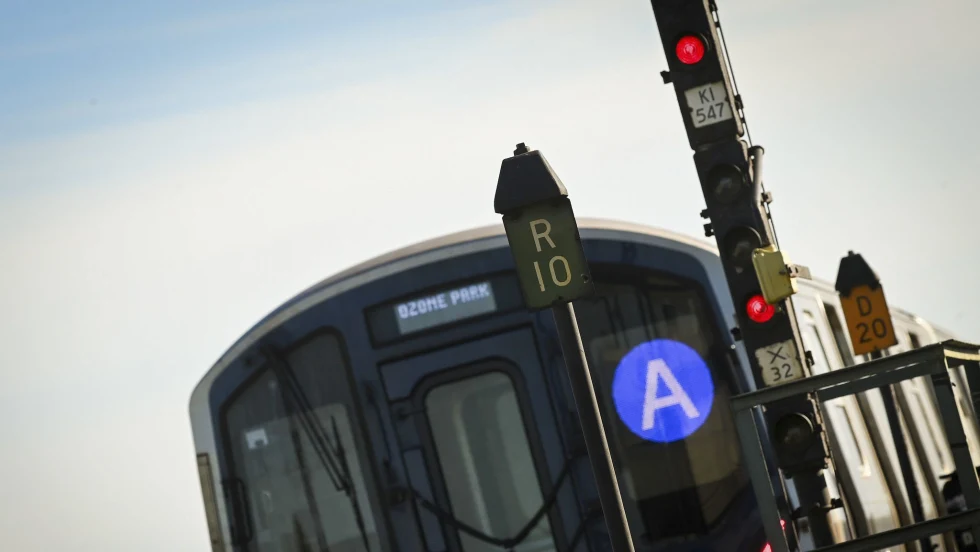
New York MTA Launches Historic $1.9B Signal, Track Modernization Project
Funded in part by congestion pricing revenue, the project will replace nearly century-old signals along the A and C lines in Brooklyn and Queens.
Read More →
Brian Dickson on Building Stronger, More Resilient Transportation Organizations
Bus Business Consultants Founder Brian Dickson discusses the leadership principles, operational discipline, and strategic planning that separate transportation companies positioned for long-term success from those stuck in survival mode.
Read More →
LA Metro Breaks Ground on Vermont BRT Project
The 12.4-mile corridor is projected to serve 66,200 daily riders, reduce travel times by up to 24%, and create the nation's busiest bus rapid transit corridor.
Read More →