



From Michigan’s Country Roads to City Highways, Propane Vehicles Handle It All
No matter the locale — rural or urban — transit and paratransit vehicles utilizing alternative fuels have to be ready for anything in Michigan’s diverse terrain.

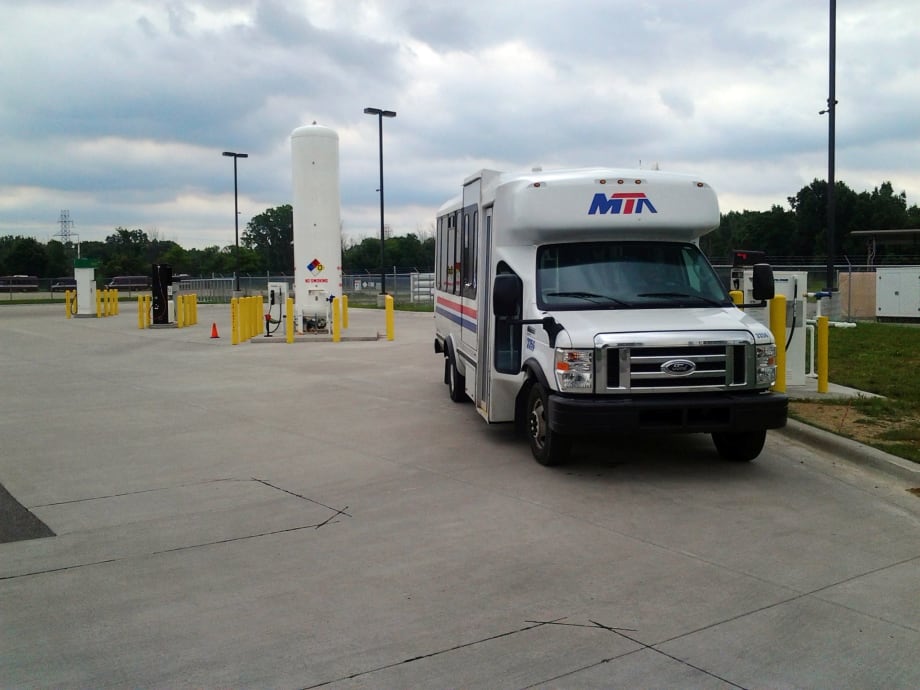
Flint Mass Transportation Authority operates well over 100 Ford E-450s and more than 50 Blue Bird Vision commercial buses.
- Propane vehicles are equipped to navigate both rural and urban areas within Michigan.
- Michigan's diverse terrain demands adaptable transit and paratransit vehicles using alternative fuels.
- Alternative fuel vehicles in Michigan prove capable across varied geographic conditions.
*Summarized by AI
No matter the locale — rural or urban — transit and paratransit vehicles powered by alternative fuels must be ready for anything in Michigan’s diverse terrain.
Urban applications often have limited space for fueling, while rural applications have plenty of space, yet some drivers experience range anxiety with fuels other than gasoline and diesel.
What fuel should be chosen to slash emissions and manage costs? According to Whitney Ehresman, transportation director for Allegan County Transportation, a reservation-based bus system located in rural western Michigan, there are plenty of alternatives, each with its own merits.
But in doing her homework, one fuel stood out — propane autogas.
“Whether an agency decides to transition to propane autogas, CNG, or another fuel source, there is a lot of support and encouragement,” said Ehresman. “No alternative fuel source is better than the other. Each has its own set of benefits, and for us, propane was a natural fit.”
Allegan County Transportation, which is located south of Grand Rapids on Lake Michigan, operates seven Ford E-450 propane autogas buses. That adds up to a quarter of the agency’s fleet.
In their first eight months, starting in mid-2023, the buses traveled a combined 75,000 miles, saving the agency more than $150,000 in fuel costs.
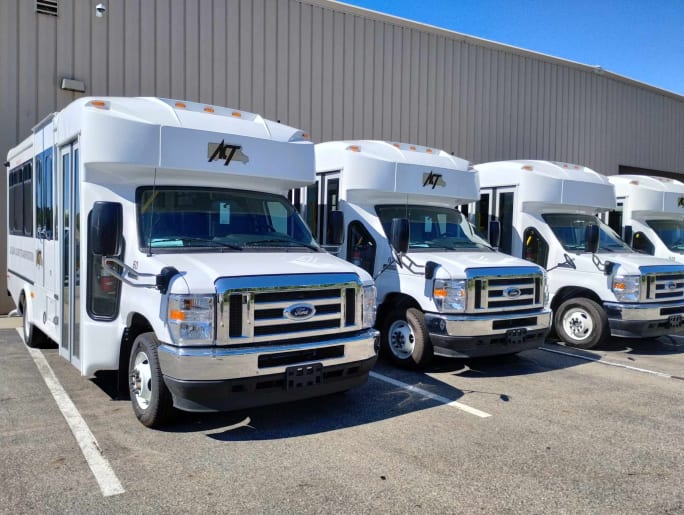
Allegan County Transportation, which is located south of Grand Rapids on Lake Michigan, operates seven Ford E-450 propane autogas buses.
Overcoming Propane Misconceptions
Ehresman said there have been public misconceptions about propane.
“We have received a lot of questions from individuals regarding safety,” she said. “There is a high level of safety measures in place with the propane fuel systems, including a tank that is 20 times more puncture-resistant than its gasoline or diesel counterparts. Through our planning processes at the county, we are committed to being proactive, rather than reactive, when it comes to safety.”
Another misconception the agency has heard is about cost, a vital issue for all transportation agencies, rural or urban. Allegan County Transportation was able to lock in a low propane rate.
The county estimates savings of about 50% on fuel costs and 70% on maintenance costs.
“Initially, we received some questions about the local propane supply, but once we got out there and began researching, we found that there are a lot of local and regional options for propane, which is encouraging from a planning standpoint,” said Ehresman. “Our long-term plans involve having a fueling site at our transportation facility, which is an option a lot of agencies have been investing in due to a federal rebate that is available to encourage on-site refueling.”
There are also misconceptions about range and driveability.
Ehresman and her team wanted to ensure drivers were comfortable operating propane autogas vehicles, particularly given the distance.
“Our drivers are excited,” she said. “These vehicles are quieter and warm up faster during the winter months, which is really an essential feature in regions that experience more frigid temperatures seasonally.”
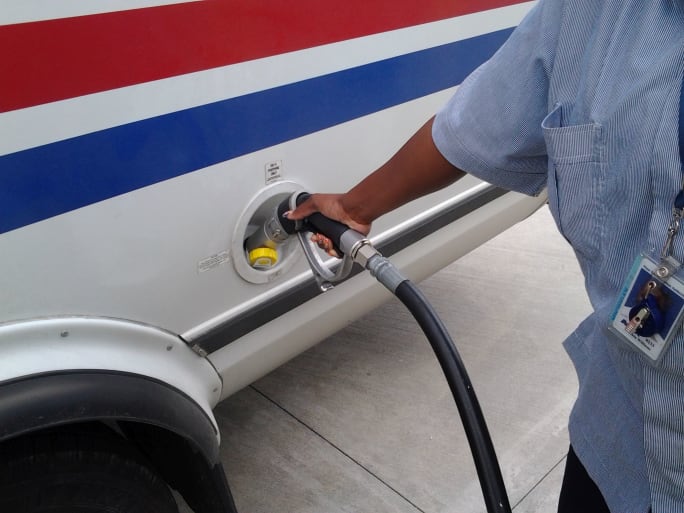
There are more than 7,000 transit buses equipped with propane autogas fuel systems in operation across North America. Roughly 500 are in Michigan.
Cost Savings for Urban Agencies
There are more than 7,000 transit buses equipped with propane autogas fuel systems in operation across North America. Roughly 500 are in Michigan, and it’s not just rural transit agencies that are using them.
For example, Flint Mass Transportation Authority (MTA) operates well over 100 Ford E-450s and more than 50 Blue Bird Vision commercial buses.
For GM Edgar H. Benning, cost savings are key.
“Propane is the ideal fuel to drive down operational costs and to carry our commitment to reducing our exposure to unstable imported fuel prices,” Benning explained.
Benning has received inquiries from transit agencies around the nation and even internationally about its propane program.
Over five years, Flint MTA saved more than $4 million by using propane.
“With propane, we’re saving almost as much in preventative maintenance as we are with the fuel,” said Benning.
Grand Rapids is a hotbed for propane transit activity.
Peter Varga is the CEO of The Rapid, which operates 47 Ford E-450s, the go-to vehicle for transit agencies throughout the state.
“We know propane works in our climate, and the vehicles have a very similar engine, so the maintenance program is the same,” said Varga. “It is also important that propane is produced here in the United States, supporting American jobs and reducing dependency on foreign oil.”
Steven Clapp, director of fleet maintenance, added that if one were to compare The Rapid’s 100% propane paratransit fleet to a gasoline fleet, The Rapid would save 1.7 million kg of CO2 every 18 months.
Across town, Hope Network Transportation operates 25 Ford E-450 propane buses.
The agency saved about $35,000 by owning its own propane tank on its lot. And regarding the practical aspects of getting from Point A to Point B and back again, one driver says, “With this propane vehicle, it’s quieter, smoother, and a lot more enjoyable.”
Propane ROI is “Astronomical”
Returning to the countryside, Clinton Transit in St. Johns, north of the state capital of Lansing, is enjoying up to 30% in fuel cost savings.
“We’ve been running on propane for approximately six years, and the return on investment is astronomical,” said Clinton Transit’s Operations Manager Ty Piontek. “Not just for the environment, but for the people funding the transit authority.”
Another major advantage of Clinton Transit is fueling. A driver’s ability to drive up to an on-site fueling station and complete that task in minutes was a game-changer.
Getting an on-site fueling station isn’t hard, he said. “Oftentimes, you’ll find that your propane provider will provide you with a tank and a fueling station under a lease agreement, which behooves both parties for a long-term contract,” said Piontek.
Charlevoix County Transit has had the same experience.
The agency, based in Boyne City, in the cold far north of the lower peninsula, operates 13 Ford E-450 buses. It worked with its propane provider to install an on-site fueling station in exchange for a fuel contract that locks in the cost.
For agencies without a budget or space for an on-site fueling station, mobile fueling is an option. A local propane provider’s bobtail truck will arrive at a fleet site and refuel the buses one by one.
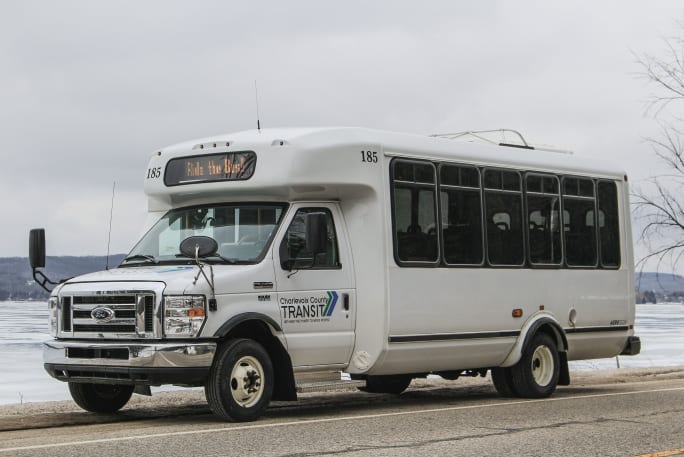
Based in Boyne City, in the cold far north of the lower peninsula, Charlevoix County Transit operates 13 Ford E-450 buses.
Immediate Payback and Healthier Environment
Of course, if you’re talking about propane transit vehicles in Michigan, you can’t leave out its biggest urban center — Detroit.
SMART, or Suburban Mobility Authority for Regional Transportation, operates 114 Ford E-450s, and they’ve made a big difference locally, according to director of maintenance Keith Taylor.
“I would encourage every transit agency to explore the benefits of a propane autogas-fueled fleet,” said Taylor, who noted that SMART utilizes an onsite fueling station. “You’ll get an immediate payback in lower fuel costs and a healthier environment.”
There’s another important aspect of using propane in Michigan and across the nation.
Not only is propane autogas the leading alternative fuel in the U.S., but more than 90% of the U.S. propane autogas supply is also produced domestically, with an additional 7% from Canada.
Additionally, more renewable propane is entering the marketplace.
Renewable propane, or biopropane, is made from feedstocks like wood waste, plants, and animal fats. While conventional propane offers ultra-low emissions, renewable propane offers even lower emissions.
“We’re reaping the benefits of propane daily,” said Taylor. “Not only were we interested in the cost savings of the fuel and lower maintenance costs, but we also wanted to help make an impact on the environment with clean propane autogas.”
Quick Answers
Propane vehicles are versatile, which allows them to effectively navigate both rural and urban areas, making them ideal for Michigan's varied landscapes.
*Summarized by AI
More Technology

From Hardware to Digital Partner: Luminator Charts Its Next Chapter
CEO Magnus Friberg discusses Luminator’s shift toward becoming a digital partner, the growing importance of software and interoperability, and how AI can help agencies improve operations and passenger experience.
Read More →
Beyond the Checklist: A Structured Approach to Transit Maintenance
Reliability-Centered Maintenance helps transit agencies move beyond routine checklists to focus limited resources on the assets and failures that have the greatest impact on safety, reliability, and service.
Read More →
NJ TRANSIT Advances Bus Technology Upgrades Across Statewide Fleet
More than 1,500 buses now feature upgraded technology designed to improve arrival predictions and provide free Wi-Fi, with deployment expected to reach nearly 2,000 buses by the end of 2026.
Read More →

Building a Flexible Path to Transit Electrification
John Hroncich discusses BAE Systems’ modular and scalable approach, lessons learned from decades of real-world operations, and how agencies can identify electrification strategies that fit their fleets.
Read More →
Biz Briefs: Alstom Lands Canadian Contract, LYT to Supply California TSP, and More
In METRO's latest installment, we take a look at recent news from Complete Coach Works, Beep, FlixBus, and more partnerships making headlines across the transportation sector.
Read More →
From Legacy Silos to Conversational Intelligence
What if transit leaders could ask any operational question and get a trusted answer in seconds? Conversational AI is transforming how agencies use their data.
Read More →
USDOT Announces Rail Vehicle Replacement Grants, Chattanooga AV Shuttle Funding
More than $191 million in federal funding will help three transit agencies replace aging rail vehicles and support a new autonomous shuttle service in Chattanooga.
Read More →
Bus Tech Talk: Keeping Transit Technicians Ahead of the Technology Curve
LA Metro’s Obed Mejia discusses technician training, evolving maintenance technology, fleet replacement, and strategies for getting the most out of today’s transit fleets.
Read More →
Biz Briefs: RIPTA Unveils New Frontrunners, Clevland RTA Adds New Siemens, and More
In METRO's latest installment, we take a look at recent news from Siemens, Prevost, Dodge, and more partnerships making headlines across the transportation sector.
Read More →
Why Simulating Pedestrian Movement Has Become Essential for Modern Rail Stations
Pedestrian microsimulation is helping rail planners identify bottlenecks, test station designs, and prepare complex transit hubs for growing passenger volumes.
Read More →