




Related: When Preparing for Zero-Emission Buses Time and Planning are Key
How Agencies Can Improve Sustainability
Konstantin Spasov, VP at Modeshift, discussed ways transit agencies can work with their respective cities to work toward a sustainable future.
May 23, 2023

Recent sustainability efforts from companies show the push for a sustainable future is happening now.
Photo: Canva
4 min to read
More transit agencies are making a push toward zero-emission fleets and creating other sustainability initiatives for a greener future, and Modeshift is playing a role in that sustainable future.
Recent sustainability efforts from companies show the push for a sustainable future is happening now.
May Mobility and Via announced they plan to deploy more AVs globally for public transit in the next three years.
May Mobility will have access to Via’s Remix software. With Remix, May Mobility will further optimize its AV routes and advance sustainability and equity goals.
Flix, a global mobility provider also shared its sustainability effort after recently announcing its climate strategy. The strategy rests on four major principles – avoid, reduce, offset, and engage – and provides a framework for action within the company’s vision of offering sustainable collective travel solutions, with full decarbonization as its long-term goal.
Modeshift enables transit agencies to provide intelligent transportation services, and the company shared how more agencies can push cities to turn public transportation into a force for sustainable development.
Modeshift’s Advice for Agencies
A report released in January by UITP, “The Road to Sustainability: Transition to Renewable Energy in Public Transport,” provided guidance on how public transport undertakings can achieve a successful energy transition to their decarbonization goals.
For the sector to meet its decarbonization objectives, the report said it must invest in new green fleets to ensure they have access to green and renewable sources of energy.
For agencies looking to be proactive in pushing for more sustainability,d more ways to Modeshift share push their cities into the future.
The first piece of advice for agencies is to be mindful of natural resource scarcity.
“When we talk about sustainable public transit, the first thought that comes to mind are electric buses, light rail, and other modes that do not rely directly on fossil fuels,” said Konstantin Spasov, VP at Modeshift. “While this is a step in the right direction, using electricity still has a carbon footprint and it is not yet cost-effective. Transit agencies and cities need to demand proof of the origin of the electricity they consume, which may push governments to further invest in renewable sources.”
Agencies can also adopt policies incentivizing vehicle drivers to shift to sustainable public transit.
“Collaborate with urban planners to shift the attention from highways to green areas, and from streets without sidewalks to micromobility lanes and pedestrian zones,” Spasov said.
Finally, agencies should leverage micromobility and MaaS platforms, according to Modeshift.
“While these solutions are not enough to eradicate the carbon footprint of a city’s transportation network, it is one of the key factors that can help city management tackle this daunting task,” Spasov said. “By facilitating its use and creating dedicated infrastructure, public transit agencies can invite growth without compromising the environment and the transit service.”
Outlook on Sustainable Future
Modeshift has worked with more than 10 U.S.-based agencies over the past five years and expressed confidence in a sustainable future for transit.
“We can say with certainty that innovative fare collection technology solutions are driving the agencies’ aspirations toward sustainability efforts,” Spasov said. “Such solutions not only simplify the ticketing process for riders, and, as a result, increase ridership, but also provide adequate, sustainability-oriented service.”
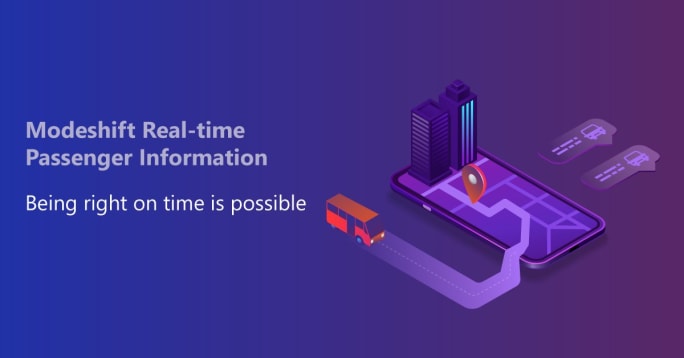
Modeshift has worked with more than 10 U.S.-based agencies over the past five years.
Photo: Modeshift
How Modeshift Helps Drive Sustainability
Modeshift provides digital mobility infrastructure for transit agencies, and Spasov found three ways that help local authorities drive sustainability.
Encouraging increased ridership. Cities must ensure there are enough riders utilizing public transportation to achieve the least amount of greenhouse gas emissions possible.
Establishing cost-effective and intuitive ticketing solutions. By utilizing vending machines, kiosks, and onboard validators, purchasing a ticket becomes increasingly more accessible and, in turn, riders are highly incentivized to use public transportation.
Optimizing fleets and routes. On-demand green transport works by substituting the buses’ predefined routes with a map based on rider demand. This solution reduces the use of personal vehicles, trains, and buses, and enables lower greenhouse gas emissions.
More than a Marketing Ploy
While agencies genuinely want to push for sustainability, Modeshift warns about others who may make promises as a “marketing ploy.”
Spasov explained how to tell when an agency is looking to make real change in the transit industry.
“I’d say when we see that the agency understands the real problem and is ready to fight it. In most cases, this is frequency and on-time performance. Sustainability requires a rather holistic approach,” Spasov said.
Modeshift added that it would like to see more agencies investing in improving their channels of communication.
“Sharing real-time information for availability and transparency of fare policies that in general make transit more accessible and the service more predictable,” Spasov said.
Subscribe to Our Newsletter
More Zero Emissions
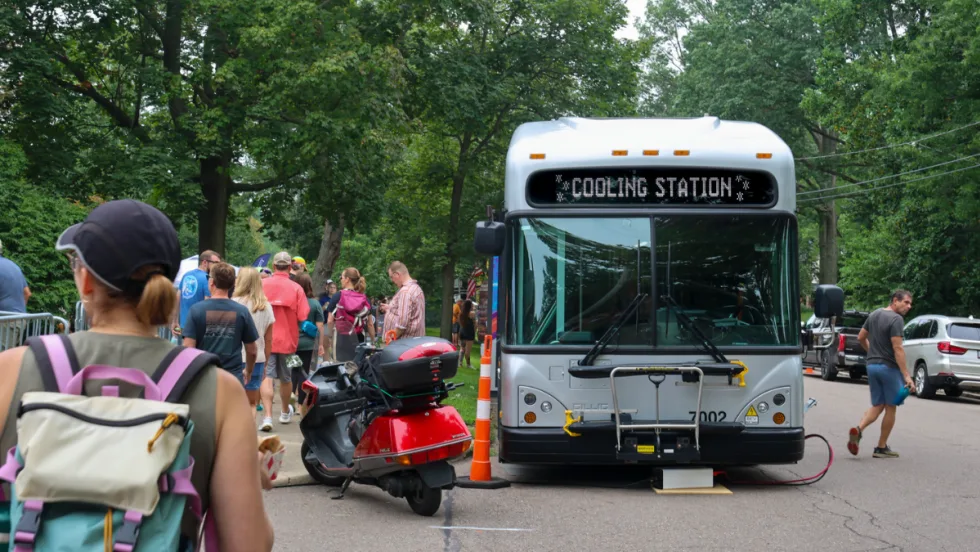
Ohio’s METRO RTA Turns Electric Buses into Mobile Power Sources at PorchROKR
See how three Gillig battery-electric buses powered festival stages while the agency’s new Park & Ride service carried approximately 1,000 attendees, demonstrating another potential use for transit agencies’ electric fleets.
Read More →
CALSTART and Forth Combine to Form Catalyst Mobility
The new name represents a renewed vision for the nonprofit focused on advancing clean, equitable, and affordable transportation solutions that move people and goods.
Read More →
Building a Flexible Path to Transit Electrification
John Hroncich discusses BAE Systems’ modular and scalable approach, lessons learned from decades of real-world operations, and how agencies can identify electrification strategies that fit their fleets.
Read More →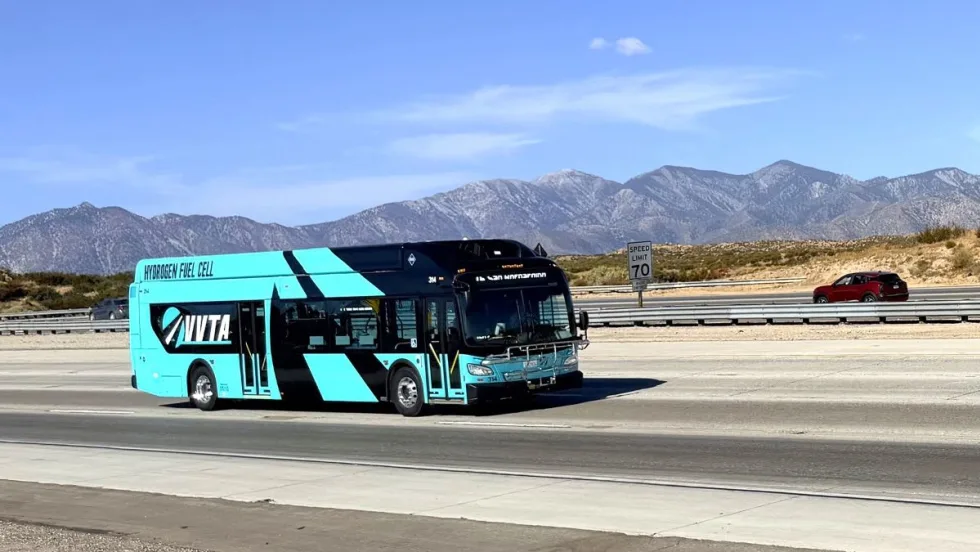
California's VVTA Begins Phased Rollout of Hydrogen Fuel Cell Buses
The agency is introducing 13 zero-emission buses into revenue service while evaluating performance across its urban, rural, and long-distance routes.
Read More →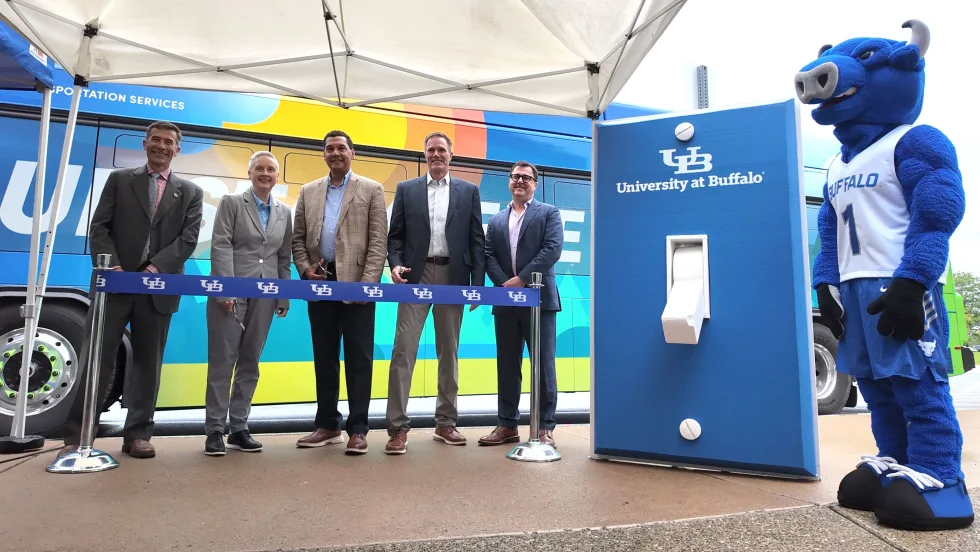
Inside Look: University at Buffalo Puts First 8 Electric Buses Into Stampede Service
UB, transportation solutions provider WeDriveU, and fleet electrification specialist Zenobē marked the deployment in the presence of students, university administrators, and local officials.
Read More →
Biz Briefs: OCTA Taps Clean Energy for Hydrogen Station, Stadler to Supply Via Rail Vehicles, and More
From manufacturers and suppliers to transit agencies and motorcoach operators, these updates offer a snapshot of the projects, partnerships and business moves driving the industry forward.
Read More →
AC Transit’s Cecil Blandon on Building the Next Generation of Transit Maintenance Leaders
The agency’s maintenance chief discusses leadership, workforce development, zero-emission technology, and preparing technicians for the future of public transportation.
Read More →
CTDOT Taps STV for Electric Bus Facility Design
The firm will work with CTDOT and RVT to define the facility layout, operational requirements, and long-term flexibility for RVT’s growing electric fleet.
Read More →
Chicago’s Pace Deploys 24 Hybrid-Electric Buses in Will County
The new buses reduce emissions and fuel consumption while advancing the agency's long-term goal of transitioning to a fully zero-emission fleet.
Read More →
DASH Breaks Ground on First On-Route Electric Bus Chargers in D.C. Region
The fast-charging infrastructure will help extend electric bus range, improve fleet utilization, and support DASH's goal of transitioning to a fully zero-emission fleet.
Read More →