



How to Succeed in Implementing New Fare Technology
With a phased approach, agencies can make a smooth transition and also increase passenger convenience and flexibility, as well as boost ridership.
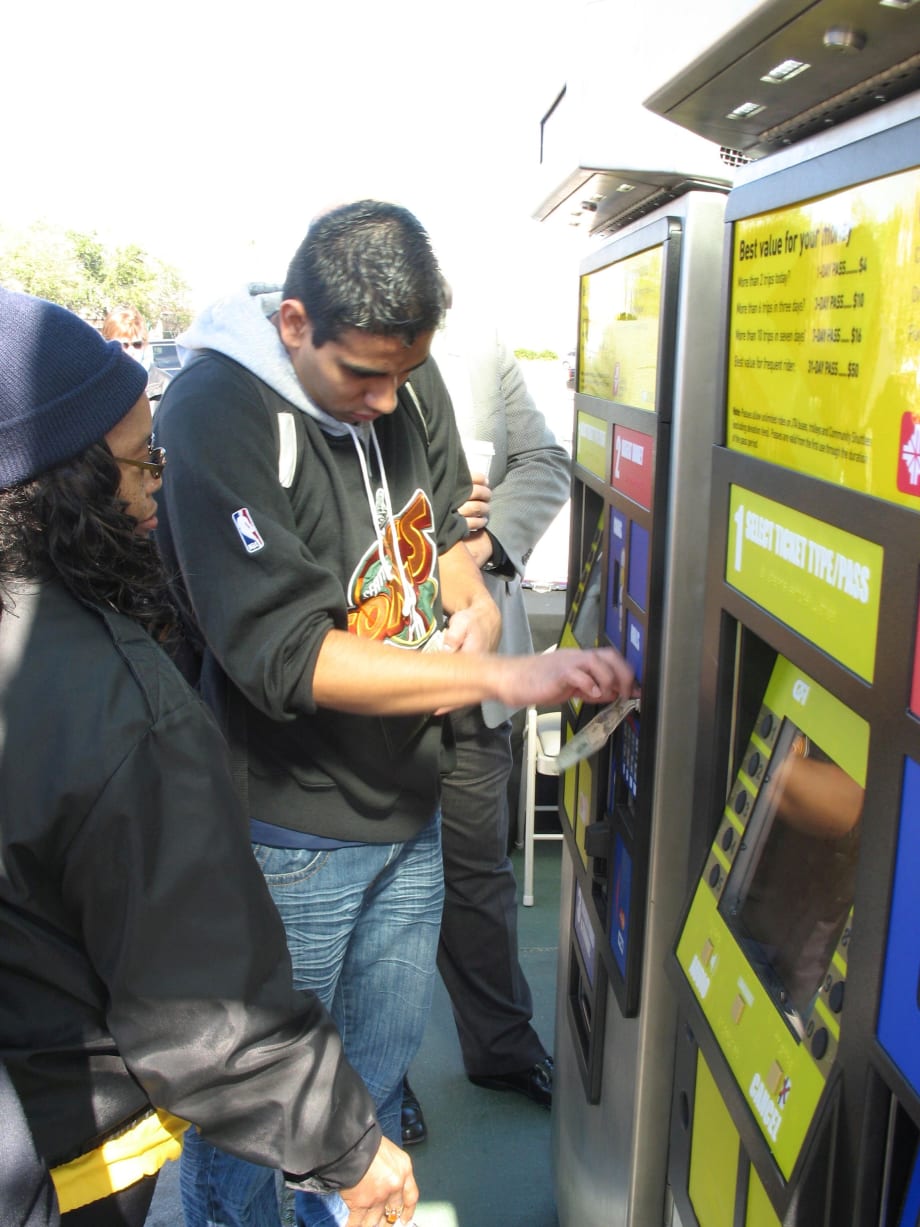
Jacksonville Transportation Authority
Jacksonville Transportation Authority
Every transit agency is tasked with the challenge of keeping up with the record pace of new fare collection technology while making sure its passengers can also seamlessly adapt when changes are made. With a phased approach, agencies can make a smooth transition and also increase passenger convenience and flexibility, as well as boost ridership.
“When it comes to implementing new technology fare systems, a phased approach is one of the most successful ways to ensure you cover all of the critical components of an implementation program,” says Kim Green, president of SPX Genfare. “The most effective and successful new system implementations allow agencies to maintain their current fare collection operation and phase in the new features and functionality over time in a carefully controlled way.”
This approach allows passengers and employees the opportunity to get acquainted with the technology and accept the new processes and procedures. It also ensures everything is running smoothly before adding the next phase of functionality to the fare system, Green adds.
“With proper education and rollout, everyone will see the added convenience that a new fare system can bring to your overall operation,” says Green.
To help you embark on a phased fare collection implementation, METRO spoke to several transit agencies and industry professionals about how best to go about it.
Develop a plan
All new fare systems require careful planning upfront. This not only provides you with a clear direction, it also helps you identify and define all of the key steps that will lead to passenger, operator and agency employee acceptance.
For many agencies, outsourcing help from consulting companies is a good starting point to assist in implementing a new fare system.
Consultants can also provide a short- and long-term vision to set a direction.
“We create a short document, about 25 pages, that paints the vision of where the agency is going to be in about five years,” says Julie Green, PE, VP, revenue systems and technology, for LTK Engineering Services.
The company is currently assisting Dallas Area Rapid Transit, the Washington Metropolitan Area Transit Authority and the Southeastern Pennsylvania Transportation Authority (SEPTA), as well as a host of smaller agencies, switch to an updated form of fare collection.
When the Albany, N.Y.-based Capital District Transportation Authority (CDTA) decided to phase out its magnetic stripe cards and move to a smart card system, the agency engaged LTK to make sure the details were ironed out to provide an accurate timeline.
“It’s sort of like having a crystal ball before. We had a good understanding of what we needed and who we wanted at each step of the process,” says Thomas Guggisberg, director, information technology, at CDTA, of the planning.
Granted there may be unexpected obstacles that pop up, such as governmental constraints, but for the most part, a structured plan should be set.
“The best approach is to plan for it, rather than to let it happen after the project is underway,” says Lynn Brumfield, director, business development, for consulting firm Lumenor, which is currently working with San Antonio’s VIA Metropolitan Transit.
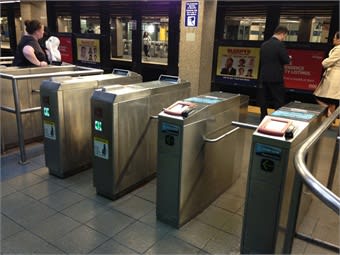
SEPTA hopes its chip-enabled “Key” system will be available to bus, trolley, subway and trackless trolley riders sometime this year for the first phase of its rollout.
Research other agencies
An invaluable resource can be other similar-sized, or even larger, transit agencies.
“All agencies stand on the shoulders of their peer agencies and learn from each other’s successes,” says Julie Green.
Florida-based Jacksonville Transportation Authority (JTA) extended its research beyond neighboring agencies and traveled coast-to-coast to collect information
“We traveled to New York and Los Angeles to get a better sense of how these agencies were collecting fares, before making our decision,” says Bursey Armstrong, project manager for JTA.
However, he adds, it’s important to keep in mind that what is a viable option for some transit agencies might not be a good fit for others.
Educate staff, stakeholders
Although JTA decided on a system that offered more streamlined processes internally, it also required retraining staff on how to retrieve reports and collect data, which can be a challenge.
“Educating the JTA staff was just as important as it was to inform our customers,” explains JTA CEO Nathaniel P. Ford Sr. “The benefit of a phased approach is that there is sufficient time to create awareness and train internal and external stakeholders on how this change will affect them.”
JTA launched its new electronic fare media system with their STAR card system (Simply Tap and Ride) in 2012, with the implementation set for its paratransit operations scheduled for launch this year.
CDTA is switching from a cash-based system to a smart card system that is Web-based. This called for more people within the organization to get involved in fare processing when it came to credit card transactions.
“We have sold fare cards online using credit cards, but not to this extent,” says Guggisberg. “There are a lot of different staff members that now need to be involved to support a process like that.”
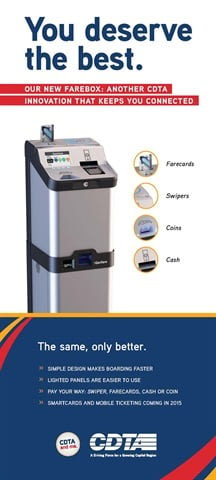
CDTA developed promotional materials (shown) to educate customers about its new fare system.
Testing, testing
At this point, the technology has been tested internally, public education has been provided and the infrastructure is ready to start being put in use.
The timeframe to run pilot testing can vary. JTA’s pilot testing phase lasted a mere 30 days, due to strict deadlines.
“We initiated the pilot during Christmas,” Armstrong says. “The fareboxes and equipment were tested in advance; therefore, we were confident in the success of the pilot.”
CDTA took a different approach and is running through five phases of pilot testing and doesn’t discount the possibility of a sixth phase.
“Our approach is a little unique. It involved different functions of the system, also provided by SPX Genfare, coming on-line before others,” said Guggisberg. “As each one comes on-line, we will be running through individual testing. There will be pilot testing, public testing and beta testing, before we put it out in a live sense.”
CDTA is scheduled to begin pilot testing its new smart card and mobile ticketing fare system later this year.
SEPTA is in what Julie Green calls “heavy test mode” and is piloting the software, as well as overseeing the installation of more equipment.
SEPTA hopes its chip-enabled “Key” system will be available to bus, trolley, subway and trackless trolleys riders sometime this year for the first phase of rollout. Phase two of the rollout will include its regional rail network and the paratransit system, all of which was provided by Xerox.
Transition
Each agency should utilize the implementation approach that works best for their stakeholders and that is the only standard practice.
“The amount of time it takes to phase in new technology is completely dependent on the size and complexity of the system to be implemented as well as the size of the agency,” says Brumfield.
Regardless of what phase a transit agency is in, there needs to be a stable fare payment system that doesn’t inconvenience the customer.
SEPTA is in the midst of its transition and has replaced 25% of the existing fare gates with the new ones. SEPTA’s new turnstiles accept the existing magnetic cards, as well as the new media, to accommodate thorough testing and a gradual transition. JTA also ran its new technology parallel with the existing infrastructure in place.
Stay focused
Most likely, the process of implementing new fare technology will be a multi-year endeavor and during this time motivation can dwindle.
“It’s critically important to keep everyone focused on the milestones and goals,” says Julie Green. “There is a lifecycle in senior staff, so you need to help keep them focused through implementation.”
The final tip is to take note of the little successes at each phase of the process. Every “win,” even as small as implementing a few pieces of infrastructure or successfully testing a subset of functionality, results in agency confidence to take that next step.
More Management

METRO Opens Submissions for 2026 Motorcoach Awards
Nominations are now being accepted for METRO Magazine’s Operator of the Year and Innovative Operator of the Year awards.
Read More →
New York MTA Advances Final Contract for Second Avenue Subway Expansion
Contract Four is the largest in the Second Avenue Subway Phase 2 project and includes construction of station infrastructure, tracks, and signals for the subway expansion, MTA officials said. Work on Contract Four will begin in 2027.
Read More →
Transit Agencies Highlight Safety Gains at National Summit
Leaders from 15 major transit systems shared crime-reduction results and safety initiatives while discussing the role of continued federal support.
Read More →

NITA Names New Leadership, Expands Reduced-Fare Program at First Board Meeting
The new regional transit authority appointed its first board chair and interim executive director while extending reduced fares across CTA, Metra, and Pace for eligible riders.
Read More →
Beyond the Checklist: A Structured Approach to Transit Maintenance
Reliability-Centered Maintenance helps transit agencies move beyond routine checklists to focus limited resources on the assets and failures that have the greatest impact on safety, reliability, and service.
Read More →
APTA 2026 Nominating Committee Selects Leadership Slate, Names Chair and Vice Chair Nominees
Leadership changes will help shape the association’s priorities and its representation of the transportation industry during the 2026–2027 term.
Read More →
DART Launches Major Security, Fare Enforcement Initiative
The 90-day demonstration will deploy coordinated security teams at five light rail stations while testing controlled access and gathering data to guide future investments.
Read More →
Advancing Fare Collection Through Technology and Innovation
Learn about delivering 1300 gates at 91 stations while managing fare evasion. Explore the large scale deployment, solution customization and real-world results that affect the region. Prepare for deployment in your region now.
Read More →
Game Day in Motion: Moving Millions During the 2026 World Cup
Between packed transit stations and team motorcoaches, see how agencies and operators across North America tackled the transportation demands of the 2026 FIFA World Cup.
Read More →
Surface Transportation Extension Averts Shutdown, Leaves Transit Funding Gap
The stopgap keeps federal transportation programs moving, but missing advance funding could complicate the transit and rail projects agencies are planning next.
Read More →