METRO Magazine Logo
MenuMENU
SearchSEARCH

Seating Manufacturers Design for Efficiency, Hygiene

Cleanliness, weight reduction, and technology drive recent innovations in the transit and motorcoach seating industry.

by Clayton Wong
January 4, 2018
Seating Manufacturers Design for Efficiency, Hygiene

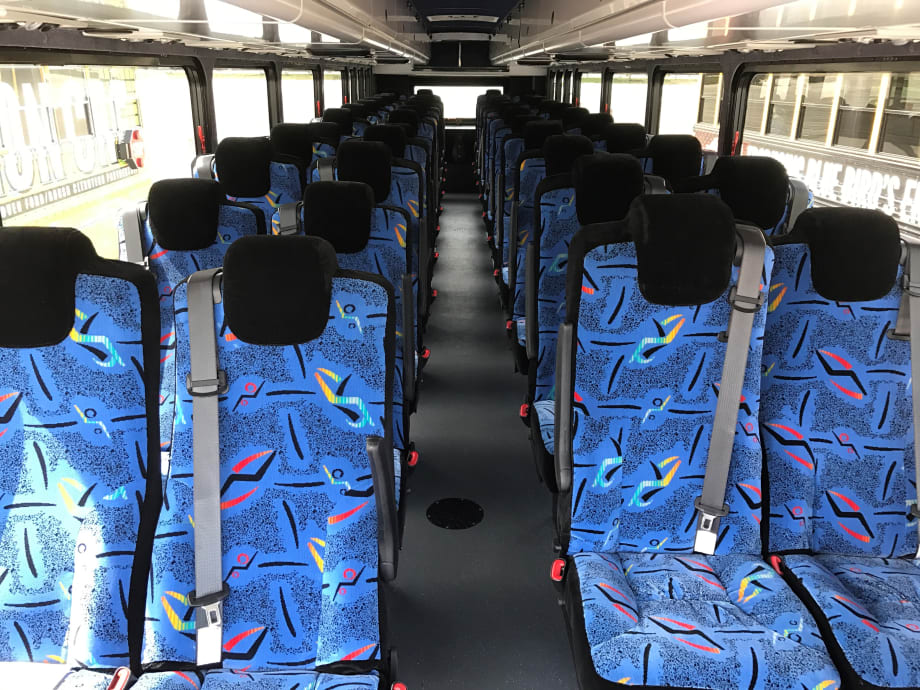
The Esquire is 25% lighter than previous Freedman models, with a thinner backrest that allows for more legroom.

2 min to read


The transit and motorcoach seating industry runs on innovation, and manufacturers are looking toward customer demand and emerging technology to guide development of new products.

Creating lightweight products is an evergreen trend in seating, as lighter products result in more efficient vehicles that can travel further. A key focus for seating manufacturers in developing new products is reducing weight from iteration to iteration.

Ad Loading...

“It’s weight and economics that drive the industry,” says Tony Everett, HSM Transportation (HSM) president.

A greater push for lightweight seating is also driven by a shift from diesel or CNG propulsion to battery propulsion, says United States Seating Co. (USSC) Executive VP Raymond Melleady.

“With battery propulsion, weight is distance,” he says. “The more weight you take out of a vehicle, you allow that vehicle to travel further distances.”

American Seating

The Insight-Prime and Insight-Prime+ are the latest products from American Seating. Both seats feature single-piece construction and can be secured to a structure with two bolts. By stripping the Insight-Prime and Insight-Prime+ of extra panels, upholstery, and other pieces of hardware, the seats are 20% lighter than American Seating’s previous models.

Both seats have 17-inch and 18-inch models and feature a surface design that repels dirt and moisture from seat crevices, facilitating cleaning.

Grab railings and various model types, including transverse, back-to-back, flip-up, and more are optional. The Insight-Prime+ comes with custom seat and insert color styling options to coordinate with various interiors.
www.americanseating.com

Hygienic design and equipment maintenance is also a growing trend in the industry.

“We’re seeing a high amount of interest in going away from foam and fabrics and more [toward] plastic seating products,” says Doug Oswald, marketing director for American Seating. The shift to plastic allows for easier-to-clean seats, he says.

Ad Loading...

Protective covers and antimicrobial topcoats are also growing in popularity. Vinyl performance covers allow manufacturers to apply silver ions into the material that neutralizes bacteria.

USSC

The Gemini Series from USSC is a four-piece injection-molded seat ergonomically designed to maximize comfort and hip-to-knee room. It is manufactured using ultra-lightweight materials that are proven to last in the most extreme transit operating environments.

The Gemini is available in 35-inch or 36-inch widths, with removable grab rails, and hidden seat fasteners. Pedestals and cantilevers have aluminum, stainless steel, or painted carbon steel options. Seats can also be transverse or longitudinal.

The seats feature inserts that are vandal-resistant, flip-up, or fixed, and designed to be quickly changed. Gemini inserts are available in fabric, vinyl, and non-upholstered plastic. www.usscgroup.com/uss-transit/

“[Manufacturers] will put a protective topcoat on a material, kind of like clear coat paint on a car that protects the color underneath,” says Freedman Seating Co. National Sales Manager John Mienik.

As passengers become more connected through smartphones, tablets, and other mobile devices, demand for USB outlets and chargers has grown. They are especially popular in bus rapid transit applications, where passengers are traveling for longer than 10 or 15 minutes at a time, says Melleady.

Freedman Seating Co.

Freedman Seating Co.’s Esquire incorporates an energy-absorbing FMVSS 202A headrest that follows the same regulations as headrests in passenger vehicles and trucks. The Esquire features luxury foam construction and three-point shoulder belts. Shoulder belts can be adjusted for height, and child seats can be secured with dual-locking retractable seat belts.

The Esquire features a thinner backrest than previous generations of Freedman seats, allowing for more hip-to-knee room and reducing the seat’s weight by up to 25%.

Optional features include cup holders, folding footrests, matching fold-aways, USB power outlets, and more. The Esquire seat can be installed with 16-inch, 17.5-inch, and 19-inch-wide cushions.

FMS Seating, Freedman’s sister company offer the Trieste, part of its Eleganza Collection, which features adjustable three-point seat belts, deep side bolsters, and custom stitching and panel designs for executive shuttles. Logos can be embroidered onto the adjustable headrest. Other options include coach-style Italia armrests, USB power outlets, footrests, and snack trays.
www.fmsseating.com

With a variety of available seating products and the evolution of new features and trends, customers have numerous things to consider when looking for the ideal option. Melleady recommends that buyers first determine what products would best fit the needs of the passengers based on the type of transportation, commute times, and items that riders may take onboard the vehicle. The ideal product would accommodate all passengers without sacrificing safety and security.

HSM Transportation Solutions

The Helium Seat from HSM is built for durability and passenger comfort. HSM developed the seat to comply with its “triple 10” product goals, says Everett.

“Any new product launch is what we call a triple 10 project: 10% weight reduction goals, 10% product improvement goal, and a 10% value improvement goal,” he says.

The Helium Seat also features an ultra-thin seat back for extra leg space, lumbar support, and flexmat and seat springs. The seat sports 16-inch and 17.5-inch-wide cushions.

Seat options include molded or upholstered armrests, top and corner grab rails, rigid or reclining seat backs, mesh map pockets, seat belts and under seat retractors, and foldaway and flip-up seats.
www.hsmtransportation.com


For Oswald, ergonomics is a major factor in determining what type of seat is best for any given application. He recommends allowing customers to personally test seating samples among internal staff and ridership to work out the best fit.
It’s also vital for customers to ensure that a product is reliable, says Everett. Mitigating liability through design, pretesting, and manufacturing, and checking if products are properly certified, protects both customers and OEMs.


Infanti Bus & Coach Upholstery

Infanti Bus & Coach Upholstery provides complete interior refurbishing of buses and coaches, which includes the entrance door, panels, all seating and headrests, side panels, under luggage, ceiling, back walls, and flooring.  

In addition to upgrading fabrics, Infanti also helps clients with branding. The company can install power outlets and USB ports for customers.

Infanti, which also provides full detailing services, will deep clean vehicles using state-of-the-art equipment in a gentle and eco-friendly way, restoring them to a “like new” state.

These services can be done either on-site or at a customer’s location, for convenience and limited down time. www.infantibusandcoachupholstery.com


Subscribe to Our Newsletter

More Management

An LA Metro bus and railcar.
New Mobilityby Alex RomanAugust 7, 2026

New Tricks for Old Bureaucracies: Joshua Schank on Making Transit Innovation Stick

Former LA Metro Chief Innovation Officer Joshua Schank discusses why good ideas aren't enough, how transit agencies can overcome resistance to change, and why today's challenges demand more innovation.

Read More →
A Community Transit Swift Green Line bus
Busby Staff and News ReportsAugust 7, 2026

Washington's Community Transit Sets Six-Year Roadmap for Growth, Expansion

Approved TDP targets more bus service, new mobility options, Swift BRT expansion, and a potential Everett Transit annexation.

Read More →
An pink and white OKC streetcar moves down a street.
Managementby Alex RomanAugust 7, 2026

OKC Streetcar Makes Zero-Fare Service Permanent

Ridership increased an average of 71% compared with the same period a year earlier during the fare-free pilot.

Read More →
Ad Loading...
Managementby Alex RomanAugust 6, 2026

DART Customer Satisfaction Reaches Six-Year High

Overall satisfaction rose to 74.9%, while the agency’s Net Promoter Score reached a record 33.7.

Read More →
A red, white, and blue graphic with an image of a rail line in NYC and text reading "Surface Transportation Bill Moves Forward."
Managementby Elora HaynesAugust 6, 2026

House Surface Transportation Bill Advances as Transit Funding Debate Intensifies

A bipartisan transportation package moving through Congress could redefine how the U.S. funds highways, transit, and motorcoach travel, while igniting new fights over electrification, regulation, and federal priorities.

Read More →
ManagementAugust 5, 2026

How Data, Strategy, and Community Engagement Are Reshaping Transit

In this edition of METROspectives, strada360 CEO Steve Lassey discusses how transit agencies can better align planning with operations, leverage data to improve decision-making, and build public trust as they prepare for the future of mobility.

Read More →
Ad Loading...
An Amtrak Acela train at New York Penn Station
Railby Alex RomanAugust 3, 2026

Amtrak Board Advances Plan to Restructure Organization, Seeks Public Input

The proposal, developed by Amtrak management and approved by the board for further consideration, is intended to modernize the organization's structure while improving accountability, operational efficiency, and customer service.

Read More →
Cover of a Strada 360 guide titled "Turn Transit Data Into Action: How to solve common transit agency pain points with connected technology." The cover features a blurred transit bus, a gray grid background with orange accents, and text describing how connected technology helps transit agencies improve visibility, operational efficiency, maintenance, scheduling, and data-driven decision-making. An orange callout highlights the challenges facing today's transit landscape.
SponsoredAugust 2, 2026

Turn Transit Data Into Action

Discover how leading agencies are using connected technology to gain real-time visibility across operations, improve service reliability, and reduce disruptions.

Read More →
An aerial image of SMU/Mockingbird Station with text reading "Transit-Oriented Development. Your Questions, Explained."
Managementby Elora HaynesAugust 1, 2026

What Transit-Oriented Development Means for the Future of Public Transportation

Once viewed primarily as transit operators, agencies are now leveraging land, partnerships, and long-term planning to boost ridership, expand housing, and strengthen communities.

Read More →
Ad Loading...
A graphic with an image of railroad track in the background and text reading: "$22 Million for Transit Innovation, Updates to High-Speed Rail Rules."
Managementby Staff and News ReportsJuly 31, 2026

USDOT Announces $22 Million for Transit Innovation, Updates High-Speed Rail Rules

New federal transit funding will support safety, accessibility, and technology projects as updated rail regulations establish new noise standards for high-speed trains.

Read More →