



RELATED: How technology can improve transit operator retention
Stop the Bleed: Hiring Bus Operators Based on a More Accurate Profile
Poor hires bleed the budget by lowering retention rates, raising absenteeism, and fighting with passengers.
by Charlotte DiBartolomeo, M.A.C.T.
August 8, 2019
In the last decade, transit has moved from recruiting former truck drivers to recruiting customer service representatives who can be taught to drive.
Brio Yiapan
7 min to read

In the last decade, transit has moved from recruiting former truck drivers to recruiting customer service representatives who can be taught to drive.
Brio Yiapan
As the transit industry’s trajectory becomes more volatile, budgets more uncertain, and passengers’ needs more complex, hiring the ideal candidate is essential to maintaining service. Poor hires bleed the budget by lowering retention rates, raising absenteeism, and fighting with passengers. Unfortunately, many HR departments don’t have clarity on the unique qualifications necessary to do the job well. In addition to budget concerns, the immediate and frustrating consequences of using a bad candidate profile to hire are felt most acutely by training and operations. Training departments waste their trainers on new hires who may not complete their training process. Operations struggle with a continuous shortfall in demand for operators. That shortage negatively impacts the operators who do remain in the seat as they’re often asked to pick up extra shifts.
As the leader of an organization whose role it is to teach bus operators how to de-escalate conflicts, respond to crises, give great customer service, and remain safe and healthy while doing it, we recognize the bus operator job is not for everyone. After listening to the stories of approximately 6,000 operators in the last decade, many of whom are 30- to 40-year veterans, it's clear the operator position requires candidates with a particular set of skills, healthy emotional self-regulation, and a broad and layered worldview.
Moving the Candidate Profile from Customer Service Representatives to Human Service Professionals
In the last decade, transit has moved from recruiting former truck drivers to recruiting customer service representatives who can be taught to drive. Transitioning from long-haul drivers to customer-oriented professionals was an enormous step forward. After all, passengers are customers, not cargo. Hiring for customer service indicated the bus operator was more likely to engage with passengers and build positive relationships than a former truck driver. Engaging with passengers reflects well on the company. That is unless the interaction becomes volatile. With fare evasion across the transit industry skyrocketing, the opportunity for operator/passenger conflicts remains high, if the operator pushes the passenger for the fare.
Historically, customer service is a transactional relationship with the employee providing service and the customer paying for that service. When customers don’t pay, it may dig at the conscientious operator who wants to complete the transaction for their company. Operators who take fare evasion personally will be more likely to argue with the customer for the fare and experience burnout.
Many employment screening tools use personality tests that prize conscientiousness as a highly desirable quality. Certainly, the industry needs operators who are conscientious enough to perform their duty with diligence and commitment. The conscientious worker is more likely to show up for work and follow the rules. The drawback to conscientiousness is that it breeds perfectionism, which may play out as inflexibility. Highly conscientious people tend to prefer planned behavior rather than spontaneous behavior.
The inflexible operator who prefers predictability and fixed behavior may find it challenging to meet the complex needs of both the customer and the community. Disabled, elderly, socioeconomically stressed passengers, and unaccompanied school-age children will all have a different set of needs than the commuter trying to get to work on time. Regardless of status, all customers are better served by operators who are strongly motivated by helping people, including the most vulnerable persons rather than just completing transactions for the company. That’s why it is better to view the operator role as a human service position rather than a customer service position.
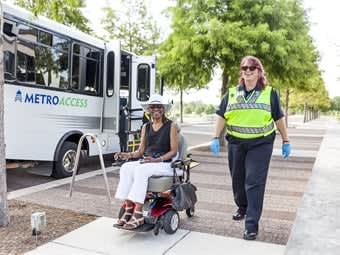
As the transit industry’s trajectory becomes more volatile, budgets more uncertain, and passengers’ needs more complex, hiring the ideal candidate is essential to maintaining service.
Brio Yiapan
Specific Qualifications of the Human Service Professional
What makes a human service professional capable of meeting the complex needs of the customer?
Intercultural Competence
Empathy
Unconditional Positive Regard
Systems Thinking
Candidates who are interculturally competent possess both a communication skillset and a framework for interacting with others who are from a different culture than theirs. Not only do they accept that other cultures have different values, but they also adapt themselves to the values of a different culture in their communication and perspective by dispensing with judgment and refraining from acting on their own bias. In addition to building a broader perspective, self-awareness and empathy are a foundation of intercultural competence.
Not coincidentally, candidates motivated by helping others are usually empathetic. Empathy is the ability to put oneself in another person’s shoes. Empathic candidates are more apt to display unconditional positive regard to customers. The term unconditional positive regard, coined by American psychologist Carl Rogers, refers to accepting and respecting others as they are without judgment or evaluation. It doesn’t mean all behavior is acceptable; rather it means showing respect and recognition of the inherent worth of each person regardless of their behavior. Operators who do not show unconditional positive regard to customers often appear judgmental, which displays as condemnation and may lead to violent conflicts and assaults.
For Candidates with a Broad and Layered Worldview, Hire Systems Thinkers
However, even culturally competent new hires whose motivation is to help vulnerable persons will burn out quickly if they don’t have a systems understanding of how power, social status, and economic structures influence human behavior. This is not just evident in the bus operator, the phenomenon of burnout in human service professionals is widespread when these professionals do not have a systems view of their work and the populations they serve.
Systems thinkers are big-picture thinkers who capably map out the complexity and root causes of problems. An example of a systems thinker is the operator who will not just point a finger at her assistant manager for being stuck with a conflict-ridden route with inadequate police intervention, she will recognize that budgets, board members, justice system policies, and poverty play a role. The analytical nature of systems thinkers assists them in problem-solving and assessing what can be immediately fixed versus what will need holistic action.
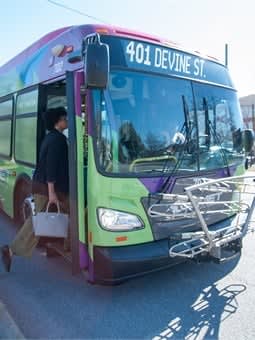
Candidates who are interculturally competent possess both a communication skillset and a framework for interacting with others who are from a different culture than theirs.
Michael Dantzler
Hire Candidates with Healthy Emotional Self-Regulation
Finally, hire candidates with healthy emotional self-regulation because the ability to manage emotions directly impacts focus, engagement with others, and the appropriate response to potential threats. Another term for this is a window of tolerance, the optimal zone of arousal in which a person functions most effectively. This term, coined by Dan Siegel, professor of psychiatry at UCLA Medical School, describes the bandwidth one has for stress.
When a candidate possesses a healthy window of tolerance, they accurately appraise the presence of danger versus feeling threatened by a noisy group of teens who are just blowing off steam after school. In other words, they are not easily stressed out by their environment. When operators have a narrow window of tolerance to stress they may become highly anxious, inflexible, easily overwhelmed, and aggressive. Or, the reverse will happen and they will shut down emotionally, experience memory loss, and mentally switch to autopilot. Any of these poor coping mechanisms may result in costly rule violations and accidents.
Limits of Personality Tests for Screening Candidates and the Necessity for Organizational Cultural Change
Humans start to develop emotional self-regulation with their caregiver from the moment of birth. Children who form healthy attachments grow up to be resilient adults with the ability to self-soothe under stress and maintain healthy coping mechanisms. But no one is entirely immune to the impact of trauma. Personalities are often reset after a traumatic event. When new hires experience trauma on the job, even resilient individuals become emotionally dysregulated, particularly if they receive little to no support from their management.
Hiring the right candidate is only useful if the organization has trained the new hire for the human service aspect of the job, and built a supportive work environment. Customers’ bad behaviors may be beyond managements’ control, but implementing responsive supervisors, transit police, and control center operators are not. Recruiting and hiring with the ideal candidate profile as a guide is surely the first step in raising retention. Building resilient organizational cultures is the systems change the industry needs.
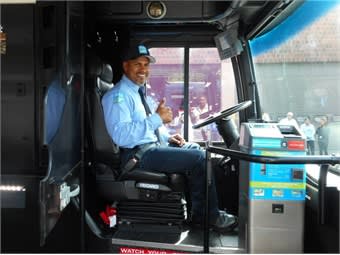
Recruiting and hiring with the ideal candidate profile as a guide is surely the first step in raising retention.
RGRTA
Action Steps
1. Post recruitment ads through human service degree program coordinators at community colleges. Describe the position as a human service role.
2. Search for candidates with experience as nurses’ aides, special education classroom aides, behavioral health workers, and disability service providers.
3. When choosing an employment screening tool, ensure the provider will customize the tool to fit your transit agency’s special needs and is screening for empathy, emotional self-regulation, and systems thinking. Look for validated screens.
4. Do not rely solely on personality tests, which may be biased against gender, race, and ethnicity, and aren’t trauma-informed. Instead, utilize a multi-layered approach, which relies on the in-house expertise of the operator position. This includes managers and mentor operators to become part of the interview process.
5. Once candidates are hired, prepare them with crisis intervention and conflict de-escalation training BEFORE putting them in the seat.
Charlotte DiBartolomeo, M.A.C.T. is CEO and founder of Red Kite Project, a resiliency building firm working with the transit industry for the past nine years to mitigate the impact of burnout, which causes absenteeism, high turnover rates, accidents, rule violations, and assaults.
Subscribe to Our Newsletter
More Management

METRO Opens Submissions for 2026 Motorcoach Awards
Nominations are now being accepted for METRO Magazine’s Operator of the Year and Innovative Operator of the Year awards.
Read More →
New York MTA Advances Final Contract for Second Avenue Subway Expansion
Contract Four is the largest in the Second Avenue Subway Phase 2 project and includes construction of station infrastructure, tracks, and signals for the subway expansion, MTA officials said. Work on Contract Four will begin in 2027.
Read More →
Transit Agencies Highlight Safety Gains at National Summit
Leaders from 15 major transit systems shared crime-reduction results and safety initiatives while discussing the role of continued federal support.
Read More →

NITA Names New Leadership, Expands Reduced-Fare Program at First Board Meeting
The new regional transit authority appointed its first board chair and interim executive director while extending reduced fares across CTA, Metra, and Pace for eligible riders.
Read More →
Beyond the Checklist: A Structured Approach to Transit Maintenance
Reliability-Centered Maintenance helps transit agencies move beyond routine checklists to focus limited resources on the assets and failures that have the greatest impact on safety, reliability, and service.
Read More →
APTA 2026 Nominating Committee Selects Leadership Slate, Names Chair and Vice Chair Nominees
Leadership changes will help shape the association’s priorities and its representation of the transportation industry during the 2026–2027 term.
Read More →
DART Launches Major Security, Fare Enforcement Initiative
The 90-day demonstration will deploy coordinated security teams at five light rail stations while testing controlled access and gathering data to guide future investments.
Read More →
Sponsored•September 9, 2026
Advancing Fare Collection Through Technology and Innovation
Learn about delivering 1300 gates at 91 stations while managing fare evasion. Explore the large scale deployment, solution customization and real-world results that affect the region. Prepare for deployment in your region now.
Read More →
Game Day in Motion: Moving Millions During the 2026 World Cup
Between packed transit stations and team motorcoaches, see how agencies and operators across North America tackled the transportation demands of the 2026 FIFA World Cup.
Read More →
Surface Transportation Extension Averts Shutdown, Leaves Transit Funding Gap
The stopgap keeps federal transportation programs moving, but missing advance funding could complicate the transit and rail projects agencies are planning next.
Read More →