



Related: Traveler's use of personal electronic devices rising sharply
The Remaking of the Motorcoach: Big Changes Redefine Intercity Bus Travel
Dynamic scheduling, sophisticated pricing, reserved seating and even frequent traveler programs are giving the sector a makeover, with heightened competition bringing added turbulence to a once sleepy mode of travel.
by Joseph Schwieterman, Ph.D., and Brian Antolin
April 4, 2016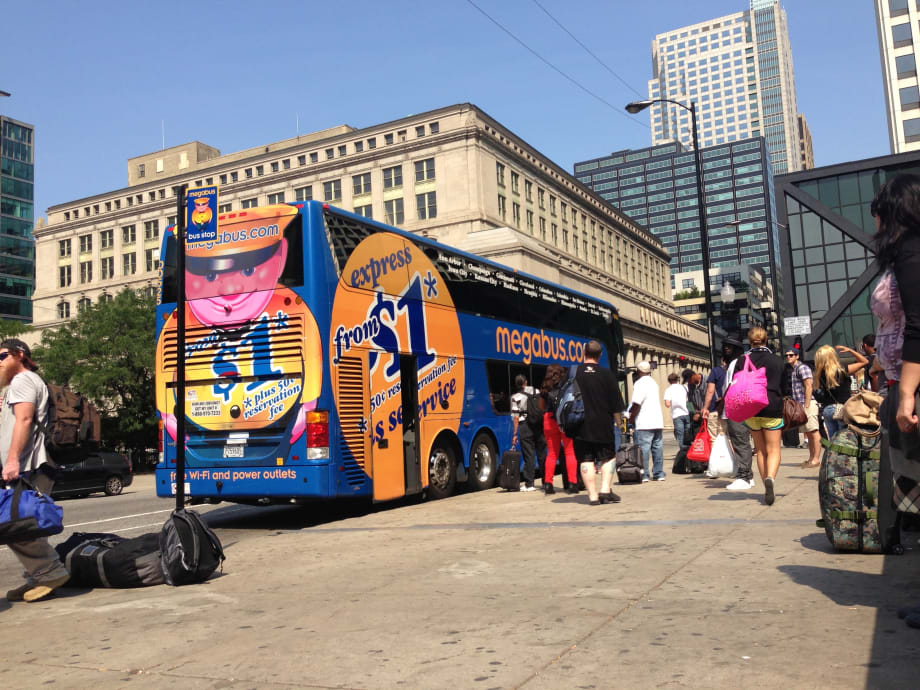
All this energy behind intercity bus travel means that it is critical for policymakers to understand how substantial this sector has become.
Photo: Chaddick Institute
7 min to read
Scheduled bus lines throughout the country appear ready for takeoff. That is, they are methodically adopting the qualities of airlines, with all the complexities and strategic challenges involved. Dynamic scheduling, sophisticated pricing, reserved seating and even frequent traveler programs are giving the sector a makeover. The heightened competition is bringing added turbulence to a once sleepy mode of travel and rapidly changing its public image.
Recent changes in bus travel have been particularly fascinating to watch. Like airlines, carriers feverishly add routes when times are good and cut them when times are bad. After multiple cycles of growth and recession in service expansions and route enhancements between 2007 and 2014, the growth last year took a surprising turn, with innovation and new tech-related features rolling out at an impressive pace.
This innovation is the centerpiece of “The Remaking of the Motorcoach,” the eighth annual review of the intercity bus industry by the Chaddick Institute at DePaul University. The big changes major carriers made in 2015 surprised our research team. As our co-author Matt Michel put it, “Intercity bus lines are using technology to win back customers who abandoned them years ago.”
Greyhound on the Move
Despite all the changes, Greyhound Lines remains the top dog, having nationwide coverage and large investments in premium Express service. Greyhound operates more than 1,200 schedules daily, twice as many as any other line. Rather than concentrating on new routes in 2015, the legacy line worked to improve their image and perception, starting with a revamped greyhound.com. The new website boasts a cleaner look than its predecessor, offering more detailed traveler itineraries and new ways to filter search results. Simplified fare options, each with different perks, are akin to that of Southwest Airlines.
Greyhound’s newly unveiled BusTracker, which updates the approximate location of scheduled coaches in real time, became a trendsetter in the sector. This alleviates reliance on driver or loudspeaker announcements for updates. Both Greyhound and Megabus formed partnerships with Parking Panda, allowing motorists to reserve parking spots within walking distance of many terminals by using an app.
The carrier also launched Greyhound Mexico, the first U.S.-based bus company to operate scheduled-line service into Mexico. Direct schedules run from Dallas, Houston, San Antonio, and other Texas cities to Nuevo Laredo and Monterrey, Mexico, eliminating the need to transfer in Laredo, Texas. The new services advance the company’s goal of gaining a stronger presence in the enormous bus market south of the border.
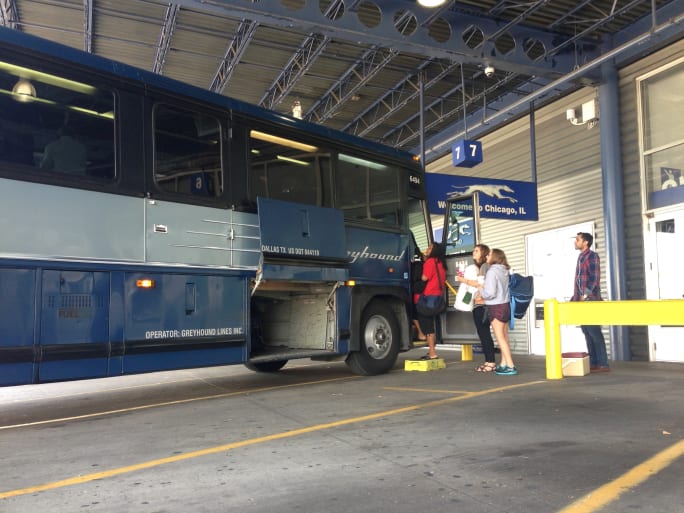
Rather than concentrating on new routes in 2015, Greyhound worked to improve their image and perception, starting with a revamped website.
Photo: Chaddick Institute
The past year also brought an end to Yo! Bus, Greyhound’s joint effort with Peter Pan Bus of Springfield, Mass., to gain traction in the Northeast’s hotly competitive Chinatown bus market.
Born to be Rivals
The battle for market share between Boltbus (affiliated with Greyhound) and Megabus (affiliated with Coach USA, a unit of Stagecoach Ltd.) has been a major factor in bus sector’s comeback.
Two years after launching in the midwest in 2006, Megabus and BoltBus made a big investment in the Northeast. Megabus subsequently developed networks in South Texas, California and Florida. BoltBus played it relatively safe, concentrating mostly on new routes in the northeast and west coast.
Last year, to further differentiate itself, Megabus unveiled a reserved seating program that allows passengers to select particular seats when purchasing their tickets, generally for a fee of $7 or less. The choice of reserved seats, initially confined mostly to the front row of the top level on the double-decker buses and lower-level seats with tables, has since expanded to 20.
As recently as a decade ago, almost all U.S. bus passengers were denied even an option of having a guaranteed seat, much less having a particular seat reserved for them. Megabus passengers can now arrive at the last moment with a prime seat awaiting them.
Megabus also partnered with Google Maps to allow customers to compare bus schedules, travel times and stop location data with other modes of transport. Boltbus, meanwhile, forged its own deal with Uber, allowing passengers to easily summon rides upon arrival. Bolt’s app, launched in 2014, was also upgraded to allow passengers to have their ticket scanned by their driver right on their phone.
What comes next is hard to predict, but these strategic moves create a keeping-up-with-the-Joneses environment that makes it more important for consumers to compare the different available options when shopping. This need is fueling the growth of the two leading “ticketing aggregating” websites, Busbud and Wanderu, which have been likened to the Expedias of bus travel.
Boston-based Wanderu hosts the most carriers, including all of the largest major U.S. brands plus Amtrak, but Busbud, based in Montreal, added Greyhound to its system in 2014 before signing up GoBuses, Peter Pan and several other regional operators last year. Each site has sophisticated search functions and has more than doubled their sales in 2015.
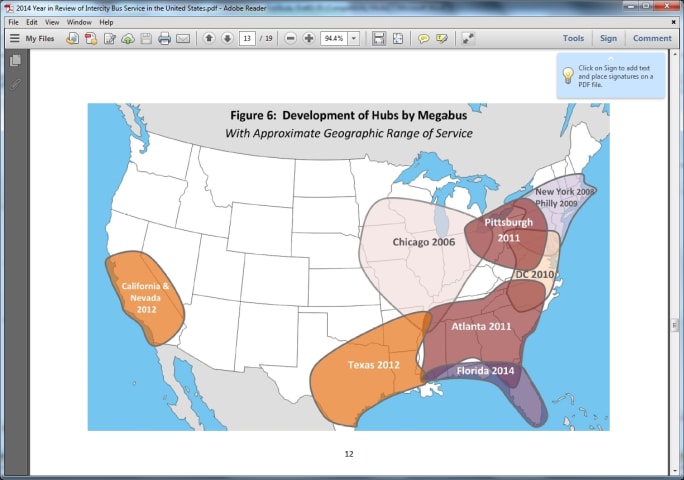
Notable new routes of the midwest and northeast in 2015.
Photo: Chaddick Institute
Midwest, Northeast Changes
The hotspots for new bus service shift from place to place every year. California was on fire in 2013, followed by Florida in 2014, but last year, it was back to the Midwest and Northeast (see map).
• New business class and luxury services attracted headlines in New England.
Concord Coach launched Portland, Maine–New York City service under the new Concord Coach Plus brand. This express service — the carrier’s first foray outside of New England — features executive-level amenities. The service bypasses Boston to shave significant time off the journey, making day trips possible.
Big Red Bullet began premium service between New York City and Ithaca, N.Y. Defending its turf, Coach USA Shortline tried to do one better by launching Ithaca Platinum Service and giving passengers the ability to show e-tickets on a mobile device. This express service saves customers approximately 30 minutes to 45 minutes per trip.
New York–Washington, D.C., seems saturated with service, but luxury offering expanded in the wake of the Pentagon City, Va., service launched by Washington Deluxe and new service to Tyson’s Corner by Royal Sprinter, a first-class operator that renamed themselves “Royal Traveler” last year.
• New value options in the Midwest and Northeast.
Travelers looking for bargains found themselves with new options starting in 2015. GoBuses has created a New York City–Providence, R.I., service. This new route makes GoBuses, owned by Academy Bus, a major regional competitor to Boltbus and Megabus. Chinatown lines are also making a comeback throughout the East.
Amtrak also became a more pervasive interline partner. Martz Trailways made its Philadelphia–Scranton, Pa., service an “Amtrak Thruway” route, as did Greyhound between Chicago and Toronto.
Jefferson Lines increased its Duluth–Twin Cities, Minn., frequency, while Megabus added a stop in Davenport, Iowa, along its Chicago–Omaha, Neb., service. Due to declining ridership, however, that carrier discontinued service to Columbia and Kansas City, Mo., marking the only time in recent memory that it has withdrawn entirely from a top-50 U.S. market.
• Expansions by state governments using federal funds for smaller-city service.
State governments are eager to link small- and mid-size cities to the national network, recognizing that schedule line service is gaining mainstream appeal. With assistance from the State of Illinois, a Greyhound Connect route linking Chicago and Davenport was created.
Greyhound started new state-supported Missouri routes from St. Louis, one to Kirksville another to Rolla. In Ohio, Go Bus launched new services and expanded several routes, including a new daily Cleveland–Athens service under contract by Barons Bus Lines.
New Names in the West
Perhaps the cleverest name for a new bus line is Colorado’s startup, “Bustang,” which has a mustang as its logo. The state-funded carrier offers weekday service linking Denver to Colorado Springs, Fort Collins and Glenwood Springs, Colo. Bustang joins a growing list of services that recently commenced with public financing in the west, which includes Colorado’s Road Runner Stage Lines, Nevada’s Silver State Trailways and Utah’s Elevated Transit.
The West’s next wave of expansion, however, may focus on luxury service. After launching Dallas and Austin service in 2014, for example, Vonlane began first-class service to Houston’s George Bush Intercontinental Airport last year. Vonlane’s decked-out 16-passenger coaches, aimed at diverting flyers, even have a small conference room onboard.
All this energy behind intercity bus travel means that it is critical for policymakers to understand how substantial this sector has become. Remarkably, there have not been reliable counts of passenger traffic, of number of carriers that provided scheduled service, or of the bus-miles of services they have provided.
Attempting to fill this gap, we estimate that this sector now encompasses 155 scheduled carriers (not including casino, airport-shuttle and charter lines) and handles 62.5 million annual passengers. This makes bus travel about twice the size of Amtrak and more than 40% larger than it was a decade ago.
This once sleepy mode of travel is now reaching for the skies, offering sought-after amenities and apps to win the loyalties of both automobile and train goers, as well as flyers that are weary of the hassle factor and inconveniences of traveling in pressurized cabins. Only time will tell what new developments the rest of 2016 will bring.
About the Author: Joseph Schwieterman, Ph.D., and Brian Antolin are authors of the annual DePaul University year in review of intercity bus travel.
Subscribe to Our Newsletter
More Motorcoach
Rethinking the Road: Transportation Challenges for Smaller College Athletics
Smaller college athletic programs are rethinking fleet strategies as rising costs, driver shortages, and longer travel distances put new pressure on transportation budgets.
Read More →
Brian Dickson on Building Stronger, More Resilient Transportation Organizations
Bus Business Consultants Founder Brian Dickson discusses the leadership principles, operational discipline, and strategic planning that separate transportation companies positioned for long-term success from those stuck in survival mode.
Read More →
Roman Cornell on ABC Companies’ Evolution and the Future of Passenger Transportation
The company’s CEO discusses carrying forward a third-generation family legacy, ABC’s continued evolution in passenger transportation, support for increasingly complex fleets, and how technology and continued investment could help operators improve uptime.
Read More →
From Surviving to Thriving: Building Stronger Transportation Organizations
Bus Business Consultants founder Brian Dickson shares lessons on leadership, organizational health, and creating options for long-term success in a changing transportation industry.
Read More →
Report: Canadian Motorcoach Industry Generates $4.4B in Economic Impact
The 2025 Motorcoach Economic Impact Report finds motorcoach travel supported nearly 25,000 jobs and generated $980 million in federal, provincial, and local taxes.
Read More →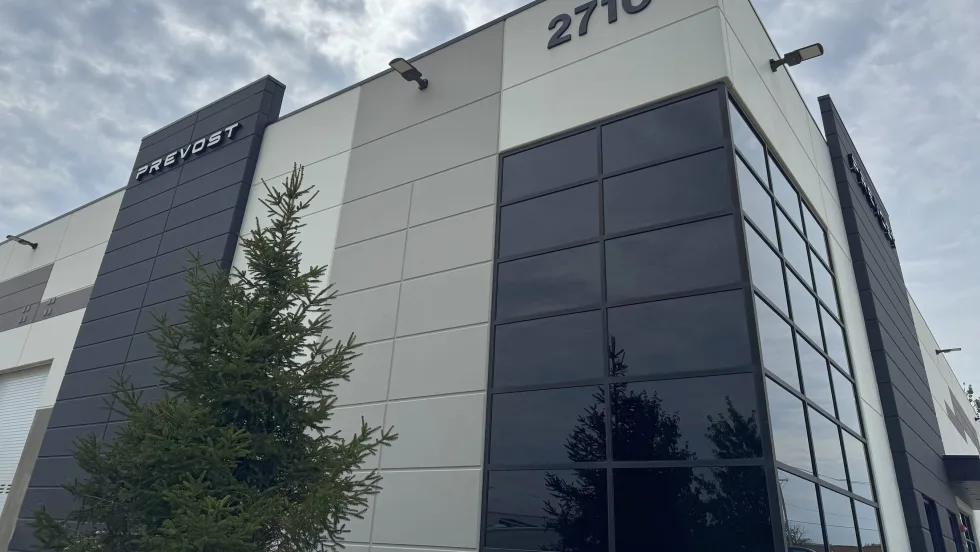
Prevost Opens Expanded Chicago-Area Service Center
The $8.1 million Elk Grove Village investment nearly triples facility space while adding service capacity, parts storage, and customer amenities.
Read More →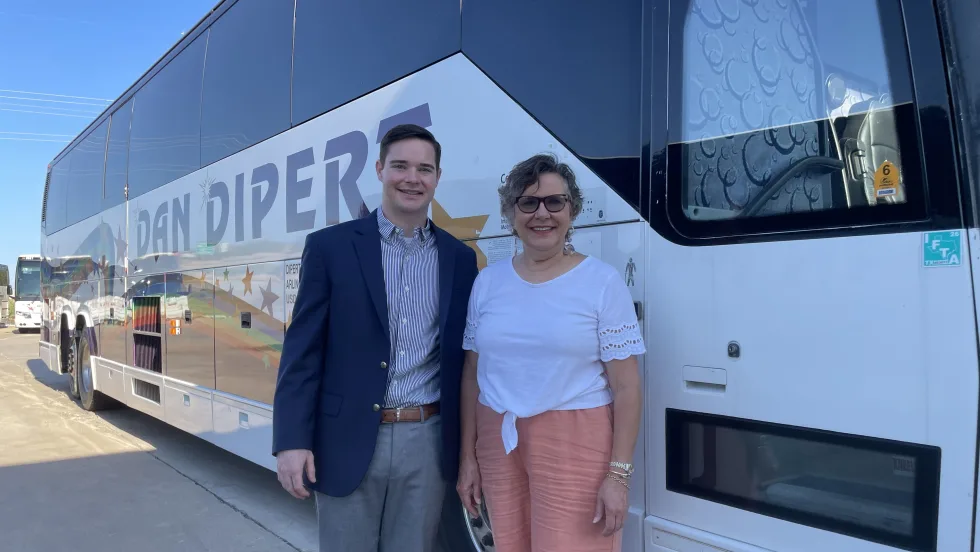
People Movement: Dan Dipert Coaches Adds Third-Generation Leader, Keolis Names New Valley Metro VP/GM, and More
In this edition, we also cover recent appointments and announcements at the Wabtec, SilverRide, HNTB, and more, showcasing the individuals helping to shape the future of transportation.
Read More →
METRO Opens Submissions for 2026 Motorcoach Awards
Nominations are now being accepted for METRO Magazine’s Operator of the Year and Innovative Operator of the Year awards.
Read More →
Biz Briefs: Alstom Lands Canadian Contract, LYT to Supply California TSP, and More
In METRO's latest installment, we take a look at recent news from Complete Coach Works, Beep, FlixBus, and more partnerships making headlines across the transportation sector.
Read More →
Biz Briefs: RIPTA Unveils New Frontrunners, Clevland RTA Adds New Siemens, and More
In METRO's latest installment, we take a look at recent news from Siemens, Prevost, Dodge, and more partnerships making headlines across the transportation sector.
Read More →