



Top 100 Bus Fleets Survey: Exploring New Options, Technologies to be Part of Multimodal Solution
From testing autonomous vehicles to piloting on-demand transportation, transit agencies are looking for new ways to complement their bus services. In conjunction, many are also adding technologies such as mobile apps that can help plan a complete trip using a host of transportation options.

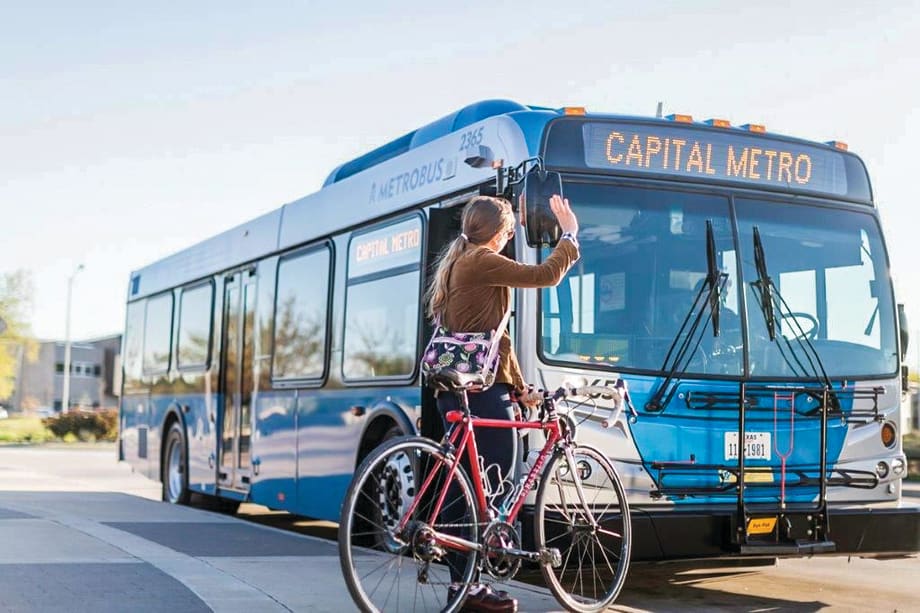
Many forward-thinking agencies are also in the process of testing various transportation solutions to increase multimodal trip capabilities and solve the first-, last-mile issue.
Photo: Capital Metro
Revamping bus routes, increasing real-time information, and introducing apps that help riders plan an entire multimodal trip are just some of the ways METRO’s Top 100 Bus Fleets are tackling the first-, last-mile issue, while also striving to become at least one solution in the total trip-planning process.
Many forward-thinking agencies are also in the process of testing various transportation solutions to increase multimodal trip capabilities and solve the first-, last-mile issue. Over the last year, several agencies, including Fla.’s Jacksonville Transportation Authority (No. 68) and Austin, Texas’ Capital Metro (No. 39) hosted autonomous shuttle demonstrations to showcase ways the technology could be used in practical applications, including connecting them to rail or BRT stations or as short-distance circulators.
Capital Metro, one of the agencies that are set to introduce a multimodal trip-planning app, also launched a limited pilot program for an on-demand transit service, called Pickup, which was a great success and is set to be expanded in October to include one of its rail stations, specifically to address the first-, last-mile issue.
In Portland, Ore., TriMet (No. 31), whose Open Trip Planner (OTP) was the first app in the U.S. transit industry to enable riders to connect with multiple transportation modes during trip-planning, is in the first year of a two-year project, funded by a Federal Mobility on Demand Sandbox grant, to expand OTP capabilities.
The grant will allow TriMet to build upon the core of OTP to incorporate shared-use mobility options. The open data, software, and user interfaces, responsive on both web and mobile, will help riders make informed decisions about their mobility choices, including when a bus or train alone doesn’t provide full access. TriMet’s project includes the development and expansion of two core data frameworks, including extending the OTP code base to support integration with shared-use mobility modes (bike-share and car-share services), as well as real-time transit information, and implementing a fully functional and comprehensive open geocoder (also known as address locating).
In addition to the two main elements of the project, TriMet is looking to develop a new web-based interface that will allow users to make intermodal trip plans, including shared-use mobility and demand-responsive services, such as Uber and Lyft — a capability that other agencies around the nation are also looking to add, according to METRO’s survey.
Following the lead of other cities around the U.S., several transit agencies are also reporting that they are either in the planning or implementation process of revamping bus routes, focusing on increasing frequencies and services, as well as filling the gaps in areas where employment or population growth have occurred over the years.
Overcoming Challenges, Tech
Eliminating the most common issue facing transit agencies — funding — we asked our Top 100 what their biggest issues were and how they are overcoming them, with declining ridership one of the most common concerns.
“The greatest challenge we face is long-term down-trending ridership, not only in our region, but also nationally, as more options become available to existing and potential new customers,” explained representatives from Santa Monica, Calif.’s Big Blue Bus (No. 94). “We are overcoming this challenge by asking our customers what they want more of, and improving our service as described in the new initiatives for the first- and last-mile issue.”
Another well-cited concern for transit agencies is their workforce, including turnover rates and the ability to attract and retain highly-qualified employees.
“We are investing in outside training to prepare the operators for the challenges that they face as an ambassador of SEPTA and to enable them to understand what is to be customer-centric,” SEPTA (No.11) officials explain. “We are changing our training methodology of new hires in our testing selection process/interview protocol, as well as making changes in our training methodology to stress the importance of employee engagement, value, and empowerment.”
Solution strategies at SEPTA include engagement of operators at the supervisor level, GM site visits and job shadowing, and explaining the important role SEPTA plays in the region, as well as the integral role each employee plays in their positions.
Additional challenges often mentioned include hiring and training skilled maintenance technicians, being responsive to customer requests for increased services and frequencies, and the impact of traffic congestion on on-time frequencies.
Transits are also continuing to add new technologies, including installing Wi-Fi and adding automatic vehicle locator, automatic passenger counter, and on-board camera systems. Additional tech improvements include improved fare technologies, such as mobile fare payment apps that enable passengers to pay fares via their smartphones, and the continuing transition from diesel to alternative-fueled vehicles at many agencies.
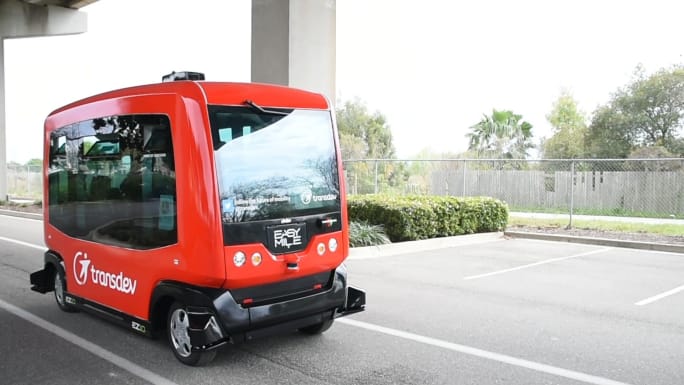
Over the last year, several agencies, including Fla.’s Jacksonville Transportation Authority, hosted autonomous shuttle demonstrations to showcase ways the technology could be used in practical applications.
Photo: JTA
The Bus Numbers
The Metropolitan Transportation Authority’s (MTA) New York City Transit/MTA Bus Co. tops this year’s list with 5,773 total vehicles. Showing some movement this year, the Los Angeles County Metropolitan Transportation Authority (2,328), New Jersey Transit (2,212), Chicago’s Pace Suburban Bus (2,164), and the Toronto Transit Commission (1,926) round out this year’s top five, which collectively totals 14,403 vehicles, or 21% of this year’s overall 67,153 vehicles. This year’s total fleet showed just a slight increase from last year.
With 408 total vehicles, Metro St. Louis lands right in the center at No. 50, while the Springfield Mass.-based Pioneer Valley Transit Authority rounds out the Top 100 with 183 total vehicles. Meanwhile, West Palm Beach, Fla.’s Palm Tran and the newly rebranded South Central Transit Authority, from Lancaster, Pa. (formerly the Red Rose Transit Authority), re-join the Top 100 at No. 61 and 91, respectively.
A closer look at the numbers reveals 48,011 buses are 35 feet or longer, making up 71% of the total vehicles reported, with 12,597, or 19%, of vehicles 35 feet and under.
Nearly 87% of the vehicles reported are fixed-route, with 13% of that number contracted, while demand-response vehicles make up nearly 13% of the total.
Overall, this year’s respondents report that they intend to, or have on order 4,048 vehicles in the next year. A good number of those planned purchases include electric buses, though on a small scale. When asked who those new purchases will be with, New Flyer, Gillig, BYD, Proterra, and Nova Bus were the suppliers most mentioned.
With all the budget and staff cuts going on around the nation, METRO would especially like to thank all of the transit agencies for participating this year. If you know a fleet that belongs on this list or have suggestions on how to improve our future lists, please let us know.
More Bus

New York MTA Plans Largest Bus Fleet Upgrade in More Than a Decade
The agency is seeking manufacturers for 650 new CNG buses to replace aging vehicles, improve reliability, and advance its broader fleet modernization strategy.
Read More →
Building a Flexible Path to Transit Electrification
John Hroncich discusses BAE Systems’ modular and scalable approach, lessons learned from decades of real-world operations, and how agencies can identify electrification strategies that fit their fleets.
Read More →
Bus Tech Talk: Keeping Transit Technicians Ahead of the Technology Curve
LA Metro’s Obed Mejia discusses technician training, evolving maintenance technology, fleet replacement, and strategies for getting the most out of today’s transit fleets.
Read More →
Biz Briefs: RIPTA Unveils New Frontrunners, Clevland RTA Adds New Siemens, and More
In METRO's latest installment, we take a look at recent news from Siemens, Prevost, Dodge, and more partnerships making headlines across the transportation sector.
Read More →
People Movement: Holly Arnold Joins Transdev and More
In this edition, we also cover recent appointments and announcements at Pace, CamTran, MCI, and more, showcasing the individuals helping to shape the future of transportation.
Read More →
The High Cost of Transit Buses: Industry Leaders Look to Procurement Reform
Transit leaders and policymakers examine how standardized bus designs, streamlined procurement, and predictable funding could help agencies stretch budgets and deliver better service.
Read More →
The Business Voice Behind Public Transportation
As chair of APTA’s Business Members Board of Governors, Ray Melleady explains how more than 850 business members are partnering with transit agencies to advance funding, innovation, and industry-wide collaboration.
Read More →
From Surviving to Thriving: Building Stronger Transportation Organizations
Bus Business Consultants founder Brian Dickson shares lessons on leadership, organizational health, and creating options for long-term success in a changing transportation industry.
Read More →
Finding the ‘Happy Medium’: Optimizing Maintenance Without Sacrificing Reliability
The key to maintenance optimization isn’t doing less work—it’s doing the right work at the right time on the right assets.
Read More →
LA Metro, City of West Hollywood, and Partners Advance Smarter Bus Lane Enforcement
The award-winning partnership combines AI-powered detection with human oversight to improve bus reliability, accessibility, and enforcement efficiency.
Read More →