



With COVID Still In Play, Transit Bus Deliveries Down for 3rd Straight Year
While COVID and supply chain issues continue to make an impact on transit bus deliveries, the trend could shift in the short term thanks to record funding and the slow yet building increase in ridership around the nation.

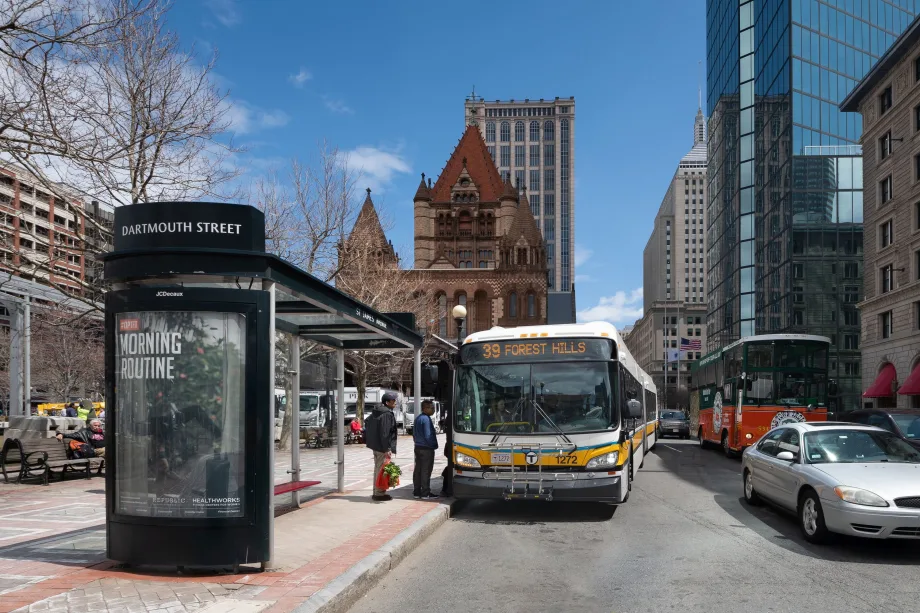
The year-over-year propulsion mix can best be summarized by the surprising shift of alternate fuel deliveries being less than diesel, reversing the trend evidenced in 2021.
Photo: MBTA
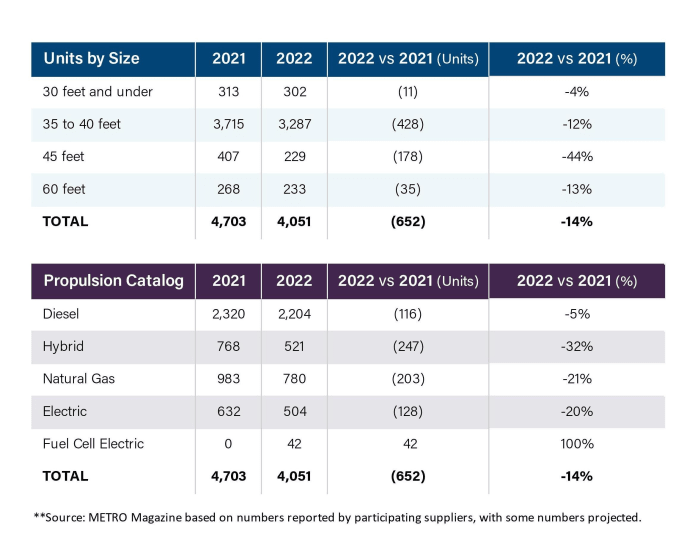
For the third year in a row transit bus deliveries are down, however, with historic funding for zero emission buses and more, we expect to see an uptick over the next few years.
Chart: METRO Magazine
Calendar year 2022 again showed the sluggishness of the recovery in the heavy-duty transit bus segment in North America in terms of bus deliveries to the market. Although a continued slow recovery was forecasted for 2022 coming out of 2021, the data shows the market actually contracted for a third year in a row.
Further, gains made in alternate fueled vehicles — versus diesel propulsion — in prior years did not repeat themselves in 2022, as diesel propulsion vehicles regained the majority share in 2022. The 40-foot length bus segment continued to be the predominant vehicle delivered in 2022 rising in overall share versus 2021.
The sluggish deliveries in 2022 come as a surprise given the expectation was for a slow but steady increase in bus deliveries coming out of the COVID pandemic. Clearly, the challenges in returning the market to pre-pandemic delivery levels and the financial strain it causes for both operators and bus manufacturers are significant as both try to right the size of their operations for the current reality.
Overall Transit Bus Market Assessment
There were several surprising findings in this year's delivery numbers, including:
2022 vs 2021 overall transit bus production declined by 652 units, or 14%, from 4,703 units in 2021 to 4,051 units in 2022. As a reference, market deliveries pre-pandemic in 2019 were 6,320 units, and thus, the market is delivering only 64% of pre-pandemic units. Interestingly, there is a parallel with the level of ridership at transit agencies in 2022, which averaged between 60% to 70% compared to pre-pandemic levels.
Primary possible reasons for the decline in 2022 are: continued challenges and tailwinds with supply chain materials, chip shortages for electrical components, shipping logistics, and maintaining staffing levels at bus production facilities.
Further complications arose from fleets not needing buses that were under contract due to reduced ridership, as well as contractual negotiations where OEMs looked to renegotiate pricing given the significant cost increases that have been incurred from the COVID pandemic. These issues quite probably delayed deliveries in many cases.
It is still understood new bus bid volume continues to be healthy, especially for electric vehicles.
Although 2022 was expected to be improved from 2021 for bus deliveries, we will see what 2023 brings as the march out of the pandemic continues to be a tough, challenging, and lumpy climb back to industry health for operators and bus manufacturers.
Assessment from a Transit Vehicle Length Segmentation Perspective
Overall, 40-foot transit bus deliveries made up the majority of the vehicles delivered. Trends by vehicle size included:
30-foot and under units experienced a minor decline of 11 units, or 4%, in 2022 from 313 units in 2021 to 302 units in 2022.
35- to 40-foot units experienced a significant reduction of 428 units, or 12%, from 3,715 units in 2021 to 3,287 units in 2022. Given that 40-foot buses are the predominant length of a bus in the market, it stands to reason this segment experienced the largest volume decline in 2022.
45-foot units experienced the worst percentage decrease of 44%, or 178 units, from 407 units in 2021 to 229 units in 2022.
60-foot units experienced a moderate decline of 35 units, or 13%, from 268 units in 2021 to 233 units in 2022.
The year-over-year changes show that the 35- to 40-foot segment continues to be the primary vehicle length for the market, with 81% of the volume in 2022 versus 79% in 2021. The 45-foot segment took the largest hit in 2022, reducing to 6% compared to 9% of the overall market in 2022.
Assessment from a Transit Bus Propulsion Segmentation Perspective
Surprisingly, the trend toward alternative-powered vehicles delivered outlegging diesel changed in 2022. Some of the findings from this year's survey, include:
All propulsion-type volumes were negatively affected in 2022 compared to 2021, however, some much more than others. 2021 was the first year where alternate fuel-powered vehicle deliveries exceeded diesel deliveries. In 2022, that trend ended with diesel deliveries exceeding alternate fuel deliveries by 357 units.
Electric propulsion vehicle deliveries waned by 20% in 2022, from 632 units in 2021 to 504 units in 2022.
Diesel propulsion continues to maintain the majority of market demand, as noted above, with only a minor decrease of 5% compared to 2021, from 2,320 units in 2021 to 2,204 units in 2022.
Trolley and fuel-cell electric propulsion showed no units in 2021 which was consistent with 2020.
Trolley deliveries were again zero units in 2022 same as in 2021.
2022 is the first year in the recent past where hydrogen fuel-cell electric deliveries were achieved with 42 units being delivered.
Hybrid propulsion saw the largest year-over-year decline of 32%, from 768 units in 2021 to 501 units in 2022.
The year-over-year propulsion mix can best be summarized by the surprising shift of alternate fuel deliveries being less than diesel, reversing the trend evidenced in 2021. This may well be because these alternate fuel vehicles utilize very specific and low-volume components, which may have been more adversely affected by supply chain issues than diesel buses.
In conclusion, 2022 proved to be yet another challenging year for the transit bus market segment with a decline in the volume of vehicles delivered for the third straight year.
Diesel propulsion was the main power source in 2022, reversing a trend seen in 2022 where alternate-fueled vehicles were the majority share of the market.
For 2023, we will see how things land with the slow and clunky recovery from the pandemic in 2020, but expect the amount of alternatively-propelled vehicles to begin to grow again as usage across the nation continues to take hold and Low-No and other vehicles funded by the Feds begin to be delivered.
METRO would like to thank all our suppliers for taking part again in this year’s survey.
More Bus
Study: Denver RTD Generates $2.1 Billion in Annual Economic Activity
An economic impact study finds the agency supports approximately 17,500 jobs, delivers $1.6 billion in annual community and mobility benefits, and generates $2.42 in economic value for every dollar invested.
Read More →
Mark Aesch Nominated to Lead Federal Transit Administration
The former Rochester transit chief and TransPro founder, who has also contributed to METRO Magazine, brings decades of industry experience and a focus on performance, accountability, and financial sustainability to the nomination.
Read More →
Pierce Transit Moves to Expand Fleet Following Proposition 1 Approval
The agency authorized the purchase or refurbishment of up to 60 buses to support a 47% service expansion, as voters nationwide approved billions in new transit funding.
Read More →
Transit Expands Agency Partnerships, Reaching 200 Official App Partners
COO Jake Sion discusses Transit’s growth, the success of its Transit Royale program, and how technology is helping agencies improve the rider experience.
Read More →
Everett Transit, Community Transit Approve Consolidation of Services
The agreement will bring Everett Transit into Community Transit’s network in April 2027, with plans to increase bus service by 50% by 2031 and expand regional connections.
Read More →
Brian Dickson on Building Stronger, More Resilient Transportation Organizations
Bus Business Consultants Founder Brian Dickson discusses the leadership principles, operational discipline, and strategic planning that separate transportation companies positioned for long-term success from those stuck in survival mode.
Read More →
LA Metro Breaks Ground on Vermont BRT Project
The 12.4-mile corridor is projected to serve 66,200 daily riders, reduce travel times by up to 24%, and create the nation's busiest bus rapid transit corridor.
Read More →
Roman Cornell on ABC Companies’ Evolution and the Future of Passenger Transportation
The company’s CEO discusses carrying forward a third-generation family legacy, ABC’s continued evolution in passenger transportation, support for increasingly complex fleets, and how technology and continued investment could help operators improve uptime.
Read More →
VIA Bus Ridership Grows 10.1% Through August 2026
San Antonio's VIA Metropolitan Transit reported the highest bus ridership growth among major Texas transit systems. Federal Transit Administration data ranked it second among the nation's 50 largest transit systems.
Read More →
LA Metro September Ridership Climbs 3.9%, Led by Rail Growth
The agency recorded more than 27.2 million boardings, with rail ridership increasing 12.4% year over year and the D Line posting the largest gains.
Read More →