




RELATED:Majority of millennials want access to better transit options
Are Fearful, Lurking Parents a Reason for Uninspired Transportation Choice?
I’ve been enjoying danah boyd’s book titled It’s Complicated: The Social Lives of Networked Teens. She is a researcher from Microsoft, New York University and Harvard who toured the country for the past several years interviewing teens about why they seem so addicted to social media and whether they are destroying their brains and their lives in the process. Her findings are basically that the kids are alright and it’s probably the parents who are crazy.
June 4, 2014
3 min to read
I’ve been enjoying danah boyd’s book titled It’s Complicated: The Social Lives of Networked Teens.
She is a researcher from Microsoft, New York University and Harvard who toured the country for the past several years interviewing teens about why they seem so addicted to social media and whether they are destroying their brains and their lives in the process.
Her findings are basically that the kids are alright and it’s probably the parents who are crazy.
What does this have to do with alleviating traffic congestion by promoting better transportation options? Well, while the parents are aggrieved over their kids’ technological addictions, they are often pushing their children towards having virtual relationships due to their clamp down on the mobility freedoms most of us probably enjoyed in our own youth.
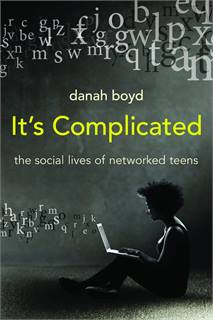
From boyd’s book, on page 90:
"From wealthy suburbs to small towns, teenagers reported that parental fear, lack of transportation options, and heavily structured lives restricted their ability to meet and hang out with their friends face to face. Even in urban environments, where public transportation presumably affords more freedom, teens talked about how their parents often forbade them from riding subways and buses out of fear. At home, teens grappled with lurking parents. The formal activities teens described were often so highly structured that they allowed little room for casual sociality. And even when parents gave teens some freedom, they found that their friends’ mobility was stifled by their parents."
Parental fear of letting kids have freedom to move around seems pretty irrational. According to Bureau of Justice Statistics, violent crime against youth declined 77 percent from 1994 to 2010. In 1994 and before, we were all undoubtedly biking around town with our friends and swimming unsupervised at fishing holes that would unquestionably be off-limits today.
Teens have apparently been brainwashed. They do a lot of self-policing of their mobility as well, according to boyd:
Teens regularly echoed parental fears, also arguing that today’s world is much more unsafe than it previously was.
It doesn’t help that public spaces – almost as if they are actual people – can practically be seen frowning upon kids when they try to enter. Policymakers have enacted countless freedom-crushing curfews and loitering laws. My old McDonald’s parking lot in Edwardsville, Illinois – where I spent countless hours socializing as a teen – will never be the same. Businesses as well ban teens, some even going so far as to install sound technology that emits high-pitched sounds only young people can hear.
Independent travel on public transit is often forbidden by the parents of teens boyd interviewed. “Even in cities, many teens never ride public transit alone except to take a school bus to and from school,” she writes.
"In 1969, 48 percent of children in grades kindergarten through eighth grade walked or biked to school compared to 12 percent who were driven by a family member. By 2009, those numbers had reversed; 13 percent walked or bicycled while 45 percent were driven. In a safety-obsessed society, parents continue to drop off and pick up students well into high school.
[Along with implications for childhood obesity,] walking or biking to school historically provided unstructured time with friends and peers. Even when teens commuted alone, they often arrived early enough to get some time with friends before heading home. This is no longer the case in many of the schools I observed."
We have to remember that when you’re younger, you always want to be older. Kids see adults in places like bars, clubs, restaurants, and even public transit where they are not allowed. Somehow within that mix, we, as a society, have to do a better job of helping our children go through the coming-of-age process in ways that will create the local and global communities for them that we once had as kids ourselves.
Subscribe to Our Newsletter
More Blog Posts
Building a Winning FTA Grant Proposal: Why Propane Autogas is the Pragmatic Choice for Fleet Resilience
With $610 million available through the FY 2026 Buses and Bus Facilities Competitive Program and the Low or No Emission Grant Program, agencies must build a compelling case before the September 21 deadline that balances environmental compliance with operational feasibility.
Read More →
Velo-city Conference 2026: Latest Trends in Cycling as Part of Urban Mobility
The global cycling conference highlighted how cities are integrating bicycles into multimodal transportation networks, expanding cycle tourism and reshaping urban mobility.
Read More →
Kindness Isn’t Soft...It’s Strategic.
Mike Bismeyer — often known as “The Kindness Guy” — has spent more than 17 years in public transit and mobility, serving in industry leadership roles, speaking across North America, and advocating for stronger workplace cultures. But his message doesn’t come from theory. It comes from lived experience.
Read More →
Inside ITF 2026: Transport Reacts to A Challenging World
Transport leaders from around the world gathered in Leipzig, Germany, for the 2026 International Transport Forum to discuss resilience, climate impacts, supply chains and the future of sustainable mobility.
Read More →
Every Ride Tells a Story — But You’re Not Just Selling the Ride
You’re selling the moment, the meaning, and the emotion behind it.
Read More →
How Digital Signage is Reshaping the Traveler Experience at Transportation Hubs
What was once a landscape of static signs has evolved into a responsive, immersive environment powered by real-time visual communication.
Read More →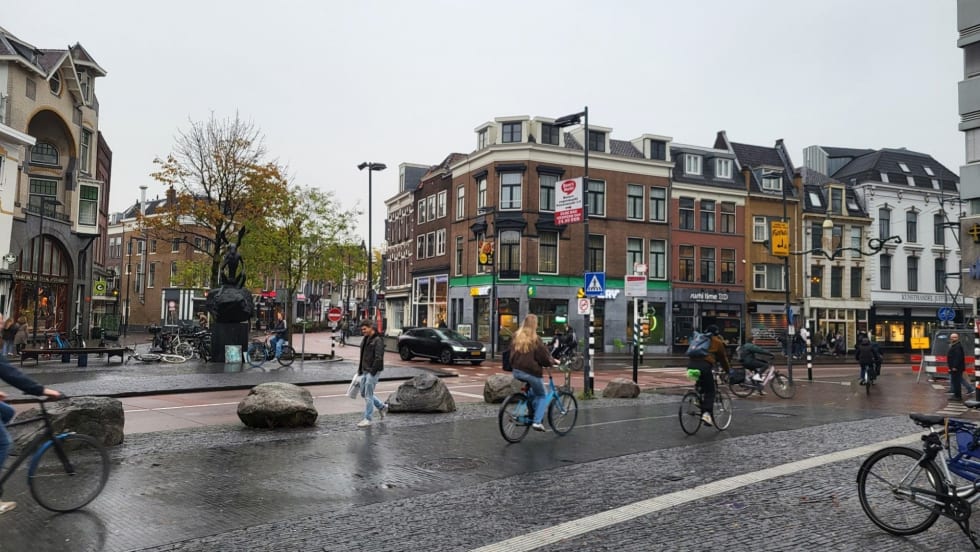
Latest Trends in Urban Mobility from Polis Conference 2025
Polis comprises cities and regions, as well as corporate partners, from across Europe, promoting the development and implementation of sustainable mobility. This year’s event had over a thousand attendees across various policy forums and an exhibition.
Read More →
Why Transit Leaders Require Better Tools for Operational Clarity In Today’s Tech-Fragmented Environment
Across North America and beyond, transit agency officials are contending with a perfect storm of operational headaches and strategic challenges that hamper daily service and long-term progress.
Read More →
The Powerless Brokers: Why California Can’t Build Transit
It is no secret that transit in the U.S. is slow and expensive to build.
Read More →
Why Transport Sustainability Should Focus on People Instead of Cars
Simply incentivizing electrification is not enough to make a meaningful impact; we must shift our focus toward prioritizing public transportation and infrastructure.
Read More →