



How to Design an Equitable Bus Shelter
Bus stops are the physical gateways to economic opportunity in urban environments, connecting people to jobs, schools, and health care. But these bus shelters rarely transcend their ultra-utilitarian form, with more attention paid to durability than inspired functional design.

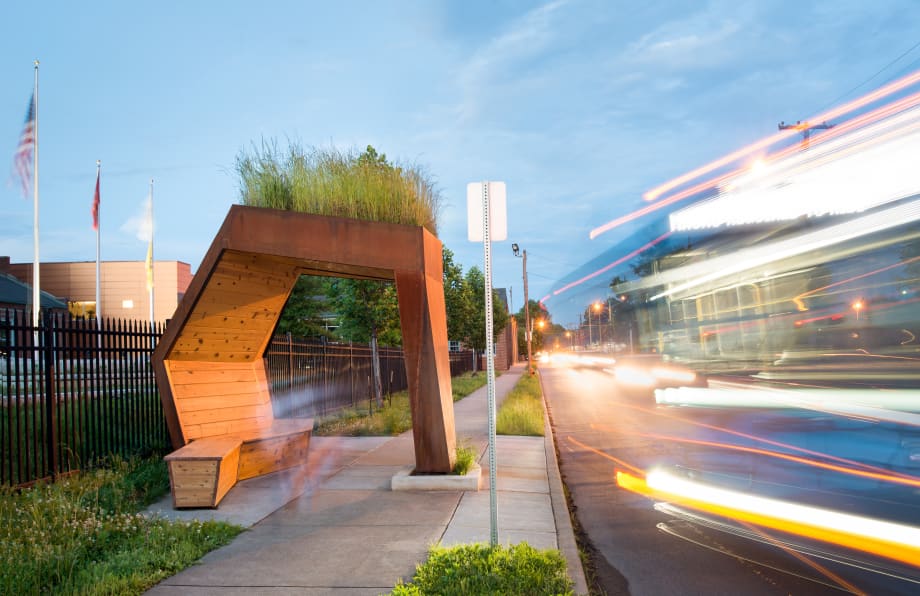
By actively seeking input and creating bus stops that address user needs, promote public safety, and tackle frequent concerns, governments and leaders can connect with riders.
Courtesy Luckett & Farley
Bus stops are the physical gateways to economic opportunity in urban environments, connecting people to jobs, schools, and health care. But these bus shelters rarely transcend their ultra-utilitarian form, with more attention paid to durability than inspired functional design — and rarely is the community engaged in their creation.
Transit leaders and architects can do more to maximize the potential of this important community asset. By actively seeking input and creating bus stops that address user needs, promote public safety, and tackle frequent concerns, governments and leaders can connect with riders, boost morale, and improve communities that may feel disenfranchised and unheard. This step to address equity and inclusion can be truly transformative.
Enter SmART Stop #2, a new bus shelter outside the Kentucky Center for African American Heritage at the corner of 18th Street and Muhammad Ali Boulevard in Louisville, Ky. This thoughtful piece of urban architecture responds to the particular needs of its environment and users, creating a space that is both welcoming and practical. Like the public transit system, this shelter plays an important role in the wellbeing of the people who use it.
Starting the SmART Stop
In partnership with the Vision Russell Neighborhood Initiative, the Civic Design Studio at Luckett & Farley set out create a better bus shelter prioritizing art, equity, and community. Our architecture firm collaborated with the Louisville Metro Housing Authority in its project to create and implement a dynamic plan for the historically underserved neighborhood.
SmART Stop #2 is one of five artistic shelters placed in high-traffic TARC bus stop locations. Each stop was designed to provide public artwork, shelter for transit riders, and improve neighborhood safety.
Our team of architects rode TARC buses to talk with riders about what they wanted and needed from their bus shelters. This simple step to gather community input from residents riding the bus helped build out the other features of SmART Stop #2’s creative design. Their feedback was instrumental to identifying what users wanted from this stop. Bus riders who frequent this stop were able to weigh in on the design and had impact in its outcome.
The final bus stop, which won the American Institute of Architects Kentucky’s Merit Award for Small Projects in 2020, reflected its community and location, providing utility, comfort, and beauty.
A Sustainable and Practical Structure
Any good shelter should offer protection and have a place to sit — but this critical piece of urban architecture can accomplish more.
Louisville is a heat island, filled with shadeless streets radiating warmth in Kentucky’s hot summer months. SmART Stop #2’s open design allows wind to blow through to mitigate heat while maximizing much-needed shade. The structure is designed based on the movement of the sun so in colder winter months, more sun shines through. This makes for a comfortable transitional environment before boarding the bus.
We went even further by integrating a green roof, which tempers the effect of the heat island and brings more benefits for sustainability. Designing for environmental factors is good for users and the city. The green roof is designed for water too, offsetting the pavement below, capturing rainwater, and removing runoff from an already overloaded municipal storm system.
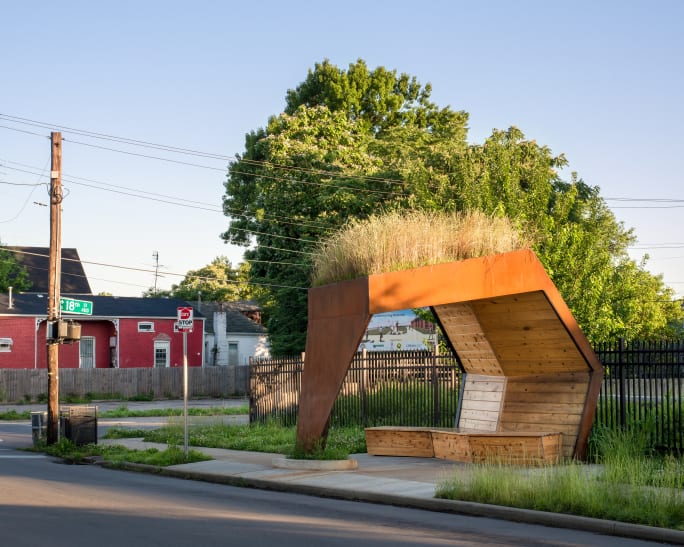
In partnership with the Vision Russell Neighborhood Initiative, the Civic Design Studio at Luckett & Farley set out create a better bus shelter prioritizing art, equity, and community.
Courtesy Luckett & Farley
Incorporating the Intangibles
Art, security, and comfort are difficult to design in an outdoor public structure with limited maintenance. Transit riders emphasized the importance bus stops can serve for public safety and morale. Enhancing lighting and other elements to create a safe space affects public perception and helps vulnerable populations like women, children, and the elderly feel secure while they wait on the bus. “Smart” shelters like SmART Stop #2 improve the user experience and can help make the community a more comfortable place.
When we set out to improve the lives of the citizens of Louisville through design, we knew we could create beauty within our built environment. Bus shelters can be art and not an eyesore. The geometric shape of SmART Stop #2 is unique and sculptural — bringing a striking work of art of an already vibrant street corner. Local artisans even helped in the construction and installation, taking ownership of the bus shelter and showing their pride in the neighborhood through collaboration. This additional investment from the people who live there brings even more joy and ownership in the new bus shelter as an integral part of the community.
Nearly every person who lives in an urban environment stands at a bus stop at some point. Now is the time to design this vital piece of our transit system with the wellbeing of its users — and its community — in mind.
More Blog Posts
Building a Winning FTA Grant Proposal: Why Propane Autogas is the Pragmatic Choice for Fleet Resilience
With $610 million available through the FY 2026 Buses and Bus Facilities Competitive Program and the Low or No Emission Grant Program, agencies must build a compelling case before the September 21 deadline that balances environmental compliance with operational feasibility.
Read More →
Velo-city Conference 2026: Latest Trends in Cycling as Part of Urban Mobility
The global cycling conference highlighted how cities are integrating bicycles into multimodal transportation networks, expanding cycle tourism and reshaping urban mobility.
Read More →
Kindness Isn’t Soft...It’s Strategic.
Mike Bismeyer — often known as “The Kindness Guy” — has spent more than 17 years in public transit and mobility, serving in industry leadership roles, speaking across North America, and advocating for stronger workplace cultures. But his message doesn’t come from theory. It comes from lived experience.
Read More →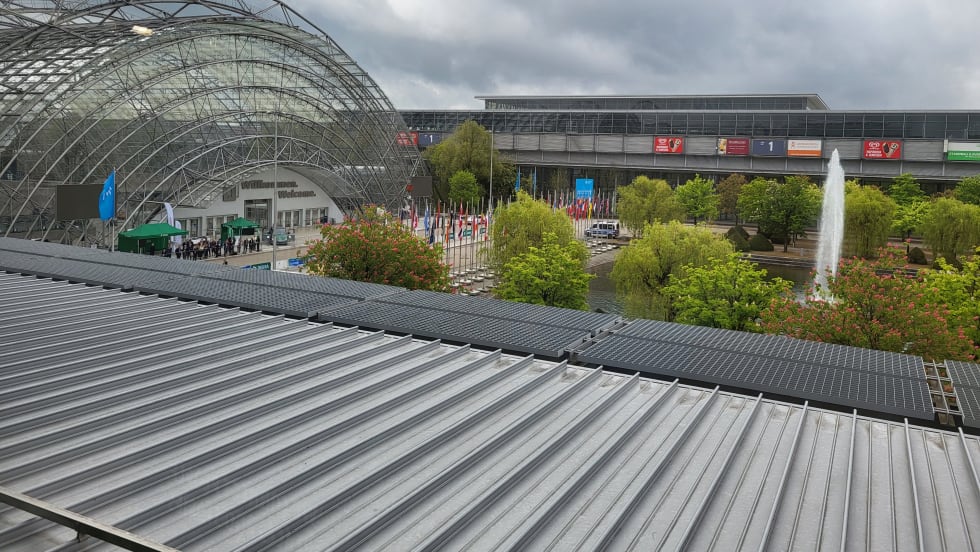
Inside ITF 2026: Transport Reacts to A Challenging World
Transport leaders from around the world gathered in Leipzig, Germany, for the 2026 International Transport Forum to discuss resilience, climate impacts, supply chains and the future of sustainable mobility.
Read More →
Every Ride Tells a Story — But You’re Not Just Selling the Ride
You’re selling the moment, the meaning, and the emotion behind it.
Read More →
How Digital Signage is Reshaping the Traveler Experience at Transportation Hubs
What was once a landscape of static signs has evolved into a responsive, immersive environment powered by real-time visual communication.
Read More →
Latest Trends in Urban Mobility from Polis Conference 2025
Polis comprises cities and regions, as well as corporate partners, from across Europe, promoting the development and implementation of sustainable mobility. This year’s event had over a thousand attendees across various policy forums and an exhibition.
Read More →
Why Transit Leaders Require Better Tools for Operational Clarity In Today’s Tech-Fragmented Environment
Across North America and beyond, transit agency officials are contending with a perfect storm of operational headaches and strategic challenges that hamper daily service and long-term progress.
Read More →
The Powerless Brokers: Why California Can’t Build Transit
It is no secret that transit in the U.S. is slow and expensive to build.
Read More →
Why Transport Sustainability Should Focus on People Instead of Cars
Simply incentivizing electrification is not enough to make a meaningful impact; we must shift our focus toward prioritizing public transportation and infrastructure.
Read More →