




RELATED: Therapy Dogs are 'Well-Prepared' Transit Passengers
From Mobility to Emergencies: Public Transit's Role
Transit’s role as a public service is much more than driving millions of riders — many of whom have no other transportation option — every day. Mass transit authorities can often be called upon to assist during an emergency event.
April 5, 2017
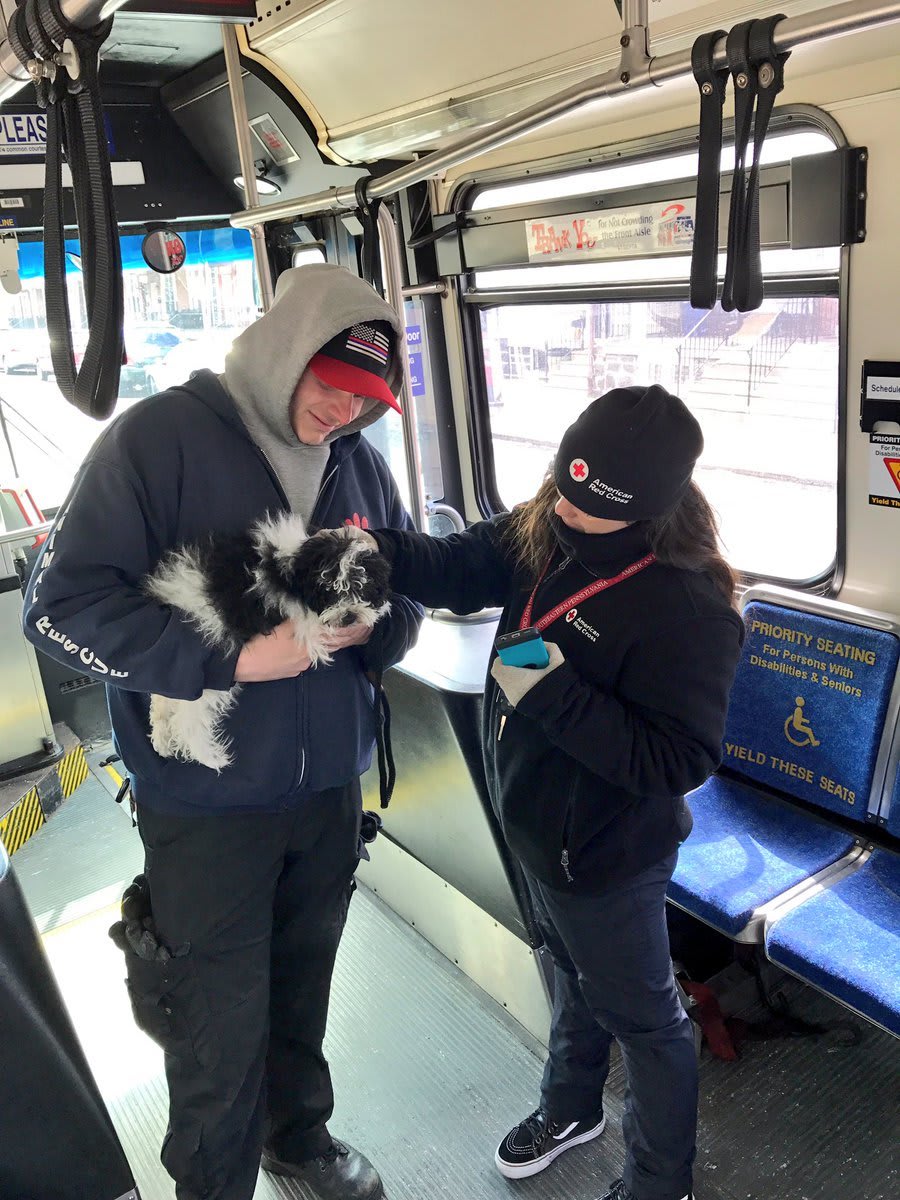
The American Red Cross used one of SEPTA buses to gather information on residents and animals evacuated as a result of March 11 fire in Philadelphia. Photo: Red Paw Emergency Relief Team
3 min to read
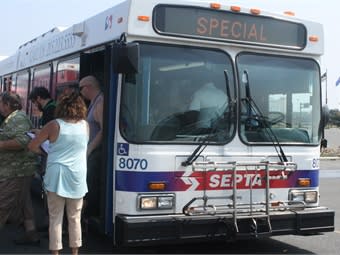
An emergency exercise simulating how SEPTA's 'Special' buses are used during an evacuation or other emergency response. Photo: SEPTA
Transit’s role as a public service is much more than driving millions of riders — many of whom have no other transportation option — every day.
Mass transit authorities can often be called upon to assist during an emergency event. In the past year, SEPTA buses have been used to transport or shelter residents evacuated due to fire, provide a place of respite for first responders, and serve as a makeshift intake facility for emergency organizations. SEPTA’s buses have even been used to rescue passengers of disabled school buses.
“Our priority is to serve our communities, whether it be transporting our customers to work, school, and appointments, or stepping in during a crisis,” said SEPTA chief officer, surface transportation, Mike Liberi.
The American Red Cross used one of SEPTA buses to gather information on residents and animals evacuated as a result of March 11 fire in Philadelphia. Photo: Red Paw Emergency Relief Team
Mass transit can also assist four-legged, furry members of their communities.
On a Saturday in early March, eight puppies, training to become Seeing Eye® dogs by members of Montgomery County (Pa.) 4-H Seeing Eye Puppy Club, boarded the Route 96 bus in Lansdale, Pa., and headed for Montgomeryville Mall. However, the student puppies’ first ride on mass transit wasn’t a leisure outing to the mall; the overall mission of the trip is for the dogs to be taught basic obedience and socialization skills before they are matched with their owners — who happen to be visually impaired.
“Blind people depend upon public transportation, so the dogs really have to handle mass transit,” said Sandy Marshall, coordinator of the Montgomery County 4-H group. “These dogs are their line to independence.”
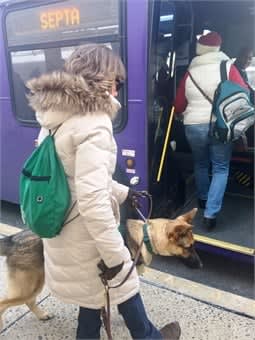
Seeing Eye guide dog-in-training Granger boarding the bus with his trainer Barb. Photo: SEPTA
Marshall brought Windy, a 10-month old Labrador, on the trip. Among those joining Windy were Granger, a nine-month old German Shepherd with trainer Barb Ward; Jazzy, a 10-month old Labrador/Golden Retriever mix, with trainer Barbarann Probst and daughter Ava; and Richard, a 13-month old Labrador, with trainer Abby Pietrack and her mother Maria.
“Handlers regularly take their service animals-in-training on our buses,” said Josh Gottlieb, SEPTA's director, administration and finance of surface transportation. “Having more than one training dog at a time is unusual — we mostly see one or two dogs at a time. We are happy to be able to assist in the service animal training process with our vehicles.”
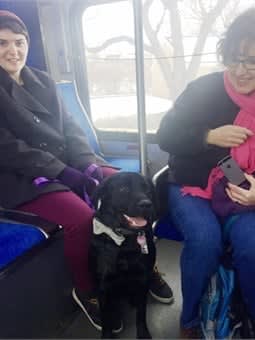
Seeing Eye guide dog-in-training Richard riding his first SEPTA bus with his trainer Abby and her mother Maria. Photo: SEPTA
Since 1929, The Seeing Eye has partnered with people who are blind by assisting them in enhancing their independence, dignity, and self-confidence through the use of Seeing Eye® dogs. Nearly 16,000 specially bred and trained dogs have brought a new level of mobility, safety, and self-sufficiency to approximately 8,000 men and women throughout the U.S. and Canada.
The puppies riding the Route 96 bus are owned by The Seeing Eye. The puppies will return to the organization when they reach about 14 months and then they will pair with their owners for further training.
Heather Redfern is the Public Information Manager for the Southeastern Pennsylvania Transportation Authority.
Subscribe to Our Newsletter
More Blog Posts
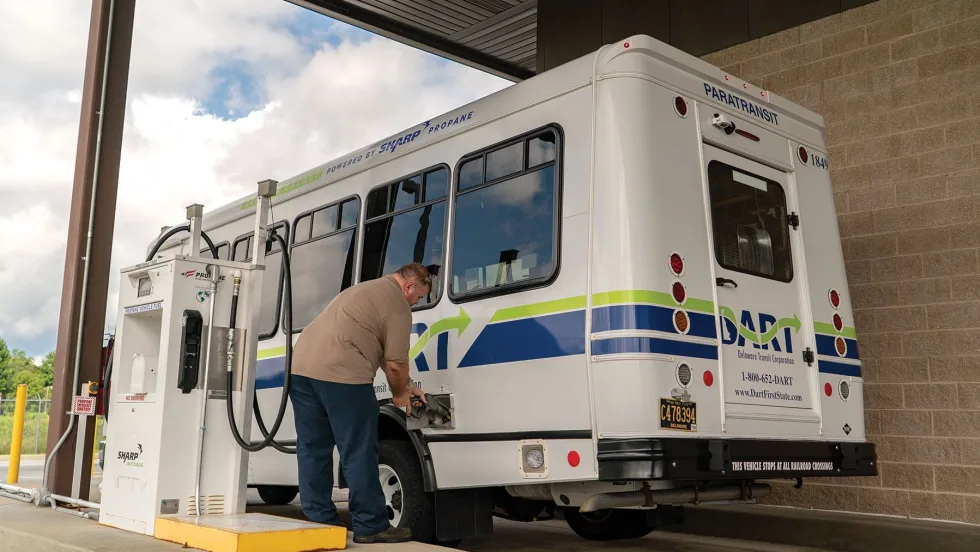
Building a Winning FTA Grant Proposal: Why Propane Autogas is the Pragmatic Choice for Fleet Resilience
With $610 million available through the FY 2026 Buses and Bus Facilities Competitive Program and the Low or No Emission Grant Program, agencies must build a compelling case before the September 21 deadline that balances environmental compliance with operational feasibility.
Read More →
Velo-city Conference 2026: Latest Trends in Cycling as Part of Urban Mobility
The global cycling conference highlighted how cities are integrating bicycles into multimodal transportation networks, expanding cycle tourism and reshaping urban mobility.
Read More →
Kindness Isn’t Soft...It’s Strategic.
Mike Bismeyer — often known as “The Kindness Guy” — has spent more than 17 years in public transit and mobility, serving in industry leadership roles, speaking across North America, and advocating for stronger workplace cultures. But his message doesn’t come from theory. It comes from lived experience.
Read More →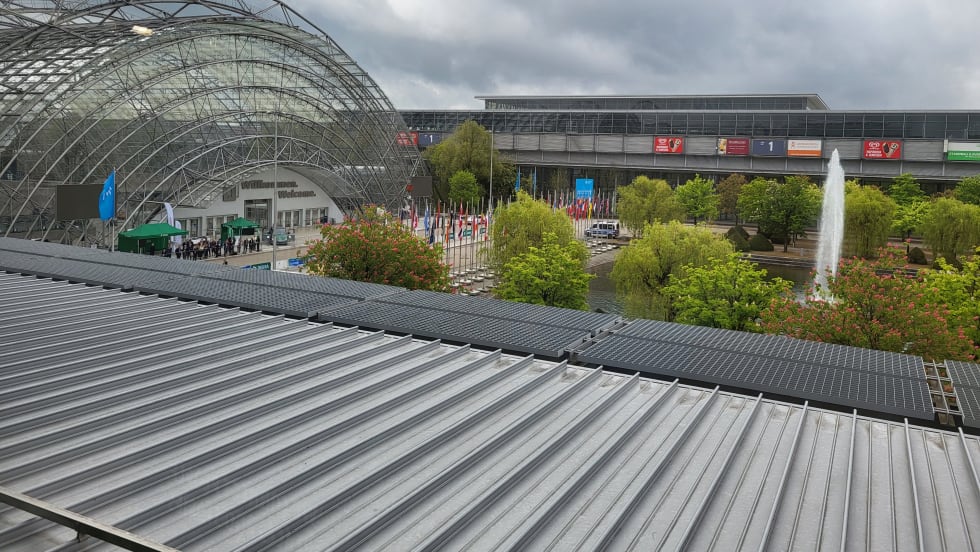
Inside ITF 2026: Transport Reacts to A Challenging World
Transport leaders from around the world gathered in Leipzig, Germany, for the 2026 International Transport Forum to discuss resilience, climate impacts, supply chains and the future of sustainable mobility.
Read More →
Every Ride Tells a Story — But You’re Not Just Selling the Ride
You’re selling the moment, the meaning, and the emotion behind it.
Read More →
How Digital Signage is Reshaping the Traveler Experience at Transportation Hubs
What was once a landscape of static signs has evolved into a responsive, immersive environment powered by real-time visual communication.
Read More →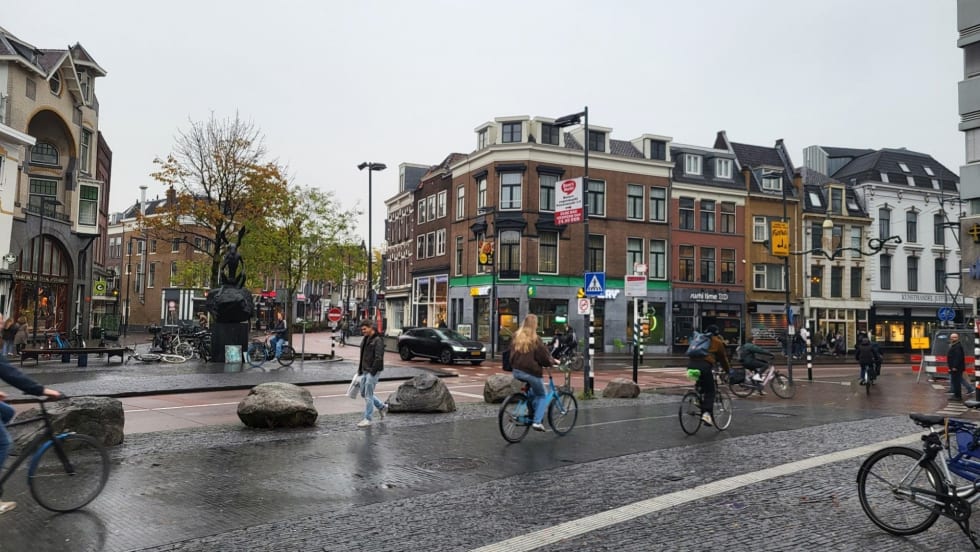
Latest Trends in Urban Mobility from Polis Conference 2025
Polis comprises cities and regions, as well as corporate partners, from across Europe, promoting the development and implementation of sustainable mobility. This year’s event had over a thousand attendees across various policy forums and an exhibition.
Read More →
Why Transit Leaders Require Better Tools for Operational Clarity In Today’s Tech-Fragmented Environment
Across North America and beyond, transit agency officials are contending with a perfect storm of operational headaches and strategic challenges that hamper daily service and long-term progress.
Read More →
The Powerless Brokers: Why California Can’t Build Transit
It is no secret that transit in the U.S. is slow and expensive to build.
Read More →
Why Transport Sustainability Should Focus on People Instead of Cars
Simply incentivizing electrification is not enough to make a meaningful impact; we must shift our focus toward prioritizing public transportation and infrastructure.
Read More →