




RELATED: N.Y. MTA prepares for snow with army of workers, equipment
How a Multifaceted Plan Helped SEPTA Weather Jonas
Winter Storm Jonas socked Philadelphia with 22.4 inches of snow in January. In some areas of the five-county SEPTA service region, snowfall totals were well over two feet. As a result of forecasted high winds, zero visibility and significant snow, SEPTA suspended service on all modes — with the exception of the Market-Frankford and Broad Street subway-elevated lines, its two busiest routes — beginning at 4 a.m. on Saturday, Jan. 23.
February 24, 2016
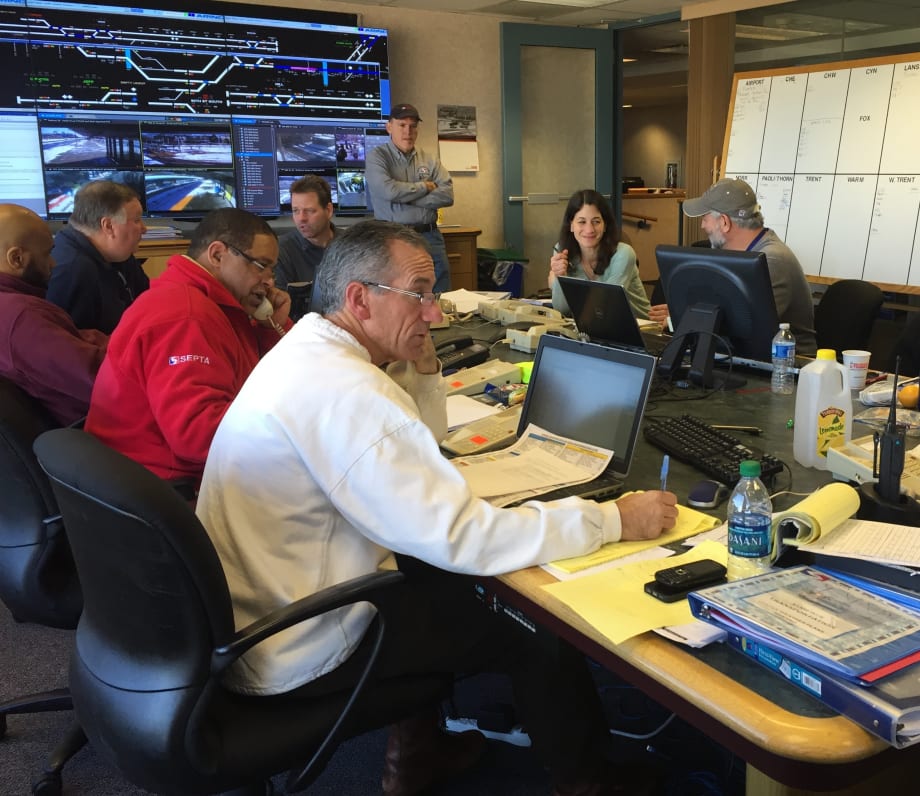
SEPTA staff monitoring the conditions and working on a service restoration plan in Control Center of agency's downtown Philadelphia headquarters. Photo: SEPTA
3 min to read
SEPTA staff monitoring the conditions and working on a service restoration plan in Control Center of agency's downtown Philadelphia headquarters. Photo: SEPTA
Winter Storm Jonas socked Philadelphia with 22.4 inches of snow in January. In some areas of the five-county Southeastern Pennsylvania Transportation Authority (SEPTA) service region, snowfall totals were well over two feet. As a result of forecasted high winds, zero visibility and significant snow, SEPTA suspended service on all modes — with the exception of the Market-Frankford and Broad Street subway-elevated lines, its two busiest routes — beginning at 4 a.m. on Saturday, Jan. 23.
“Making the decision to suspend our service was not one that was taken lightly,” said SEPTA GM Jeffrey D. Knueppel. “But with the expected white-out conditions, sustained high winds and snow accumulation, we knew we had to shut down the majority of our system, for the safety of our network."
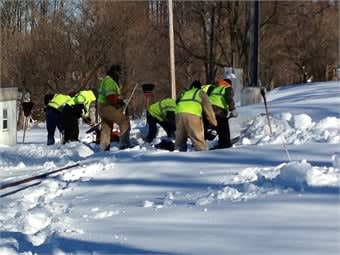
Crews digging out from knee-high snow at SEPTA's Frazier rail yard in Chester County, Pa. Photo: SEPTA
The authority was concerned that high winds would topple trees located near overhead wires, trapping trains and trolleys in inaccessible locations. Bus and trolley operators could have difficulty safely driving in whiteout conditions.
“In the end, it was the snow, not the winds, that most affected our region. We wouldn't have been able to safely and reliably transport passengers," Knueppel said. "Fortunately, we were able to keep the heart of our system, the Market-Frankford and Broad Street Lines, running throughout the storm, helping essential personnel to get to their work locations.”
A multifaceted communication approach was key in delivering SEPTA’s service plan before, during and after Jonas. Knueppel announced the plan at a press conference at SEPTA’s headquarters, 10:30 a.m. Friday, Jan. 22, the morning before the stoppage. Throughout the weekend, Knueppel and Assistant GM, Operations, Ron Hopkins spoke at press events, at SEPTA’s headquarters and along with Philadelphia Mayor Jim Kenney and other key city personnel at City Hall and the Office of Emergency Management.
The authority’s Customer Service Call Center was staffed with extra personnel and the Social Media Team answered riders’ questions submitted to the @SEPTA_Social Twitter feed. The Control Center also maintained service announcements on SEPTA’s website and tweeted up-to-the-minute service advisories to the public. SEPTA Media Relations kept local news outlets informed with regular media advisories and phone interviews, tweeting photos of crews at work in the field preparing for a return to service.
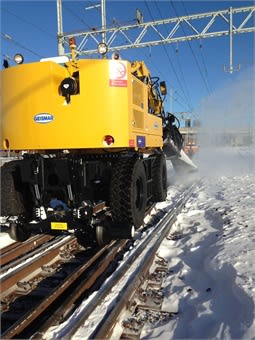
Geismar 360 equipment clearing snow off of SEPTA Regional (commuter) Rail. Photo: SEPTA
SEPTA has purchased or leased new heavy equipment, such as vehicle managed snow blower and throwers and a brining system, to be better able to manage the elements.
"We tweeted and posted photos online to allow our customers to see how our crews were working around the clock to get our service back, battling extreme conditions,” Knueppel said. "We also created a Webpage to help commuters understand the enormity of snow plowing and removal at our stations and to watch our contractors' efforts in not just clearning snow, but also removing it with front end loaders and trucks."
SEPTA’s Airport Regional Rail Line and trolley routes were operating on Sunday, and, as roads were plowed, so were 35% of the authority’s buses. The remaining 12 Regional Rail Lines, some of which travel on Amtrak territory, operated on Monday, Jan. 25, along with partial service on the Norristown High Speed Line (NHSL). The NHSL has a top running electrified third rail, which was buried by drifting snow. Crews used a jet engine to dig out the rail and restore service on the entire route by the start of the service day the following Wednesday, Jan. 27. All SEPTA bus routes were also back in service by Wednesday.
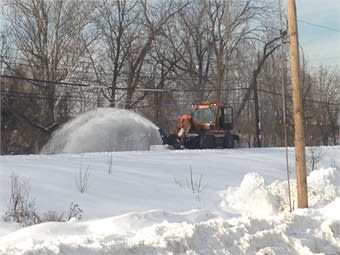
The jet engine-equipped blower clearing snow from the Norristown High Speed Line, which has an electrified third rail. Photo: SEPTA
“This was the fourth largest storm in Philadelphia’s history," Knueppel said. "Our approach was to provide key service in the core of the city for hospital, emergency response and other essential workers, while making prudent decisions for the safety of our network. SEPTA will conduct after-action meetings with feedback from customers as well as frontline employees utilized for the process."
Heather Redfern is the Public Information Manager for the Southeastern Pennsylvania Transportation Authority.
Subscribe to Our Newsletter
More Blog Posts
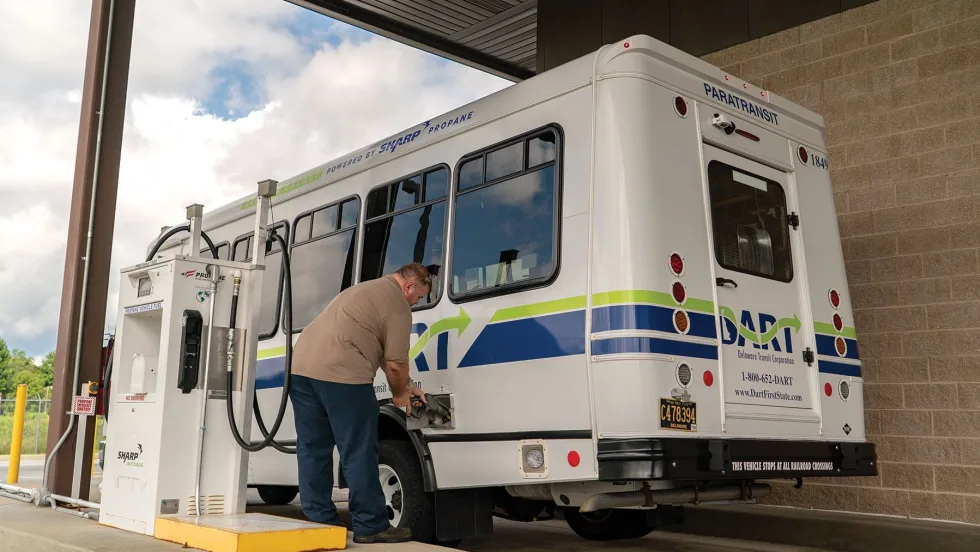
Building a Winning FTA Grant Proposal: Why Propane Autogas is the Pragmatic Choice for Fleet Resilience
With $610 million available through the FY 2026 Buses and Bus Facilities Competitive Program and the Low or No Emission Grant Program, agencies must build a compelling case before the September 21 deadline that balances environmental compliance with operational feasibility.
Read More →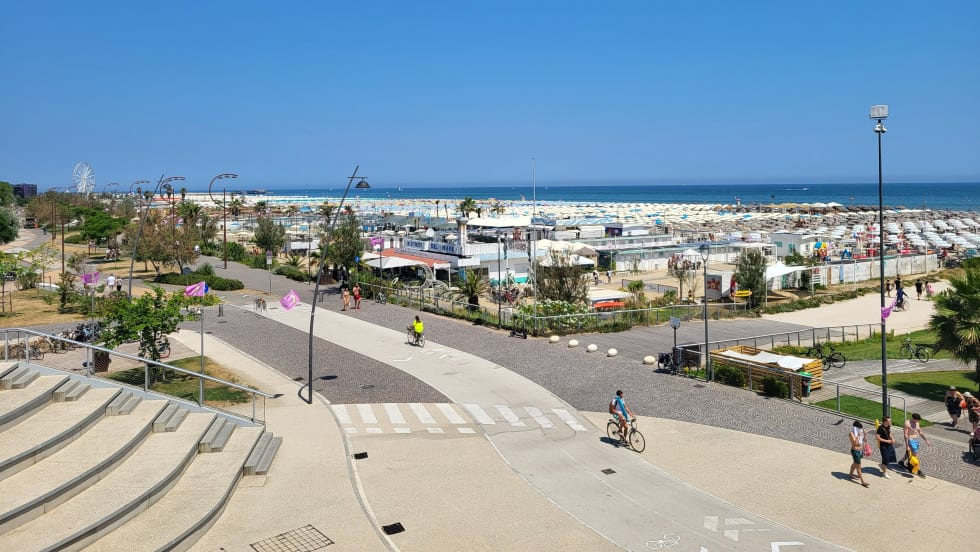
Velo-city Conference 2026: Latest Trends in Cycling as Part of Urban Mobility
The global cycling conference highlighted how cities are integrating bicycles into multimodal transportation networks, expanding cycle tourism and reshaping urban mobility.
Read More →
Kindness Isn’t Soft...It’s Strategic.
Mike Bismeyer — often known as “The Kindness Guy” — has spent more than 17 years in public transit and mobility, serving in industry leadership roles, speaking across North America, and advocating for stronger workplace cultures. But his message doesn’t come from theory. It comes from lived experience.
Read More →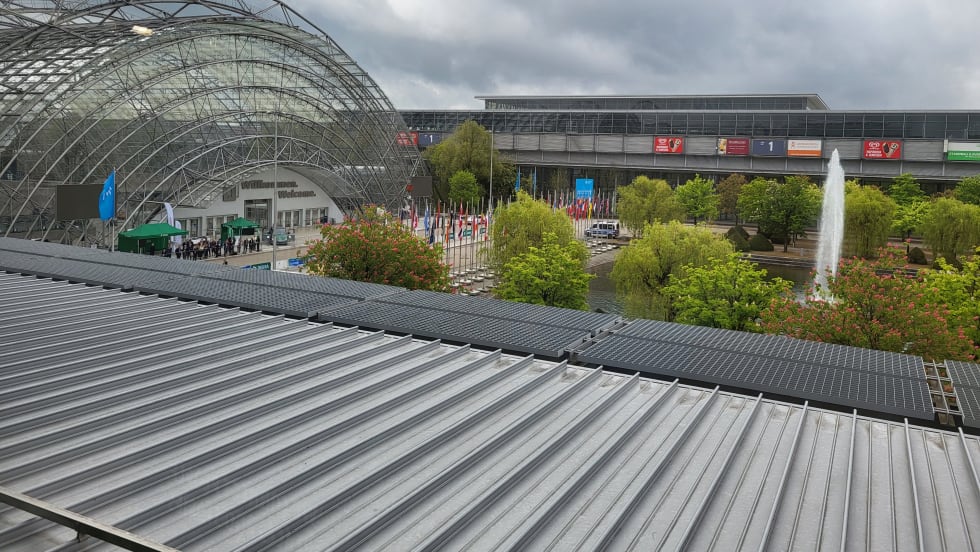
Inside ITF 2026: Transport Reacts to A Challenging World
Transport leaders from around the world gathered in Leipzig, Germany, for the 2026 International Transport Forum to discuss resilience, climate impacts, supply chains and the future of sustainable mobility.
Read More →
Every Ride Tells a Story — But You’re Not Just Selling the Ride
You’re selling the moment, the meaning, and the emotion behind it.
Read More →
How Digital Signage is Reshaping the Traveler Experience at Transportation Hubs
What was once a landscape of static signs has evolved into a responsive, immersive environment powered by real-time visual communication.
Read More →
Latest Trends in Urban Mobility from Polis Conference 2025
Polis comprises cities and regions, as well as corporate partners, from across Europe, promoting the development and implementation of sustainable mobility. This year’s event had over a thousand attendees across various policy forums and an exhibition.
Read More →
Why Transit Leaders Require Better Tools for Operational Clarity In Today’s Tech-Fragmented Environment
Across North America and beyond, transit agency officials are contending with a perfect storm of operational headaches and strategic challenges that hamper daily service and long-term progress.
Read More →
The Powerless Brokers: Why California Can’t Build Transit
It is no secret that transit in the U.S. is slow and expensive to build.
Read More →
Why Transport Sustainability Should Focus on People Instead of Cars
Simply incentivizing electrification is not enough to make a meaningful impact; we must shift our focus toward prioritizing public transportation and infrastructure.
Read More →