



How private-sector vendors can successfully navigate transit agencies
What I found in my public sector roles was that often private sector vendors did not understand how we operated nor how to interface effectively with us as the public agency.


Private-sector vendors should understand the needs of a transit agency and not always try to sell “canned” products/solutions. Photo: Wikimedia Commons/Nationaal Archief

Private-sector vendors should understand the needs of a transit agency and not always try to sell “canned” products/solutions. Photo: Wikimedia Commons/Nationaal Archief
I have spent over 30 years around the public transportation industry — about half the time each in the public and private sector. Most recently I served as CEO of the Maryland Transit Administration in Baltimore.
What I found in my public sector roles was that often private sector vendors did not understand how we operated nor how to interface effectively with us as the public agency. Here are some key things I wish they knew:
1.Most Transit CEOshave to serve almost as politicians because they operate in a very political world. Keep this in mind when you work with us.
2.We are VERY busy and have little time for office meetings with vendors.
3. Most of us don’t control procurement.
4. Wecan’t give you an edge because you are our buddy.
5.Bite-size info about industry trends are helpful.
6. Your messaging/engagement should differ based on the audience at our agency.
7. Understand and follow procurement rules.
How well do you know your customer the transit agency? Here are some key facts you should find out about your customer to better understand them:
1. Are they a State agency vs. Independent Authority.
2. Do they have a Board of Directors and are they Elected vs. Appointed.
3. Key stakeholders – Who are they and what do they want.
4.How are they funded – Taxes, farebox, fees – who subsidizes.
5. What is their budget – Capital and Operating.
6. What are their service plans – Public Info.
7. What are their service problems – Follow on Google News alerts.
To understand the direction of public transit agencies find out what the CEO is saying are his/her “North Stars.” What direction are they taking the agency? What are they focused on — what are their pain points? Are you reading the Board of Director minutes — they give you a good idea of what they and the top agency leadership are thinking and what services or improvements are coming down the pike.
Finally — here are some takeaways to be a better partner with your transit agency partners:

Be a resource to your customers.
Photo: Public Domain
1. Be a partner and not a “vendor” — Understand the agency needs and don’t always try to sell “canned” products/solutions.
2. Get to know your clients, their organizations, and projects.
3. Be a resource to your customers.
4. Follow up if they reach out.
5.Be timely with responses to RFPs and requests for information.
6. Work with the correct staff on projects — understand the roles.
7. Publish content – be a thought leader in your industry.
Understanding transit agencies better will help you provide more value to them and become more successful as a partner to improve service for our customers.
Paul Comfort is VP Business Development with the Trapeze Group.
More Blog Posts
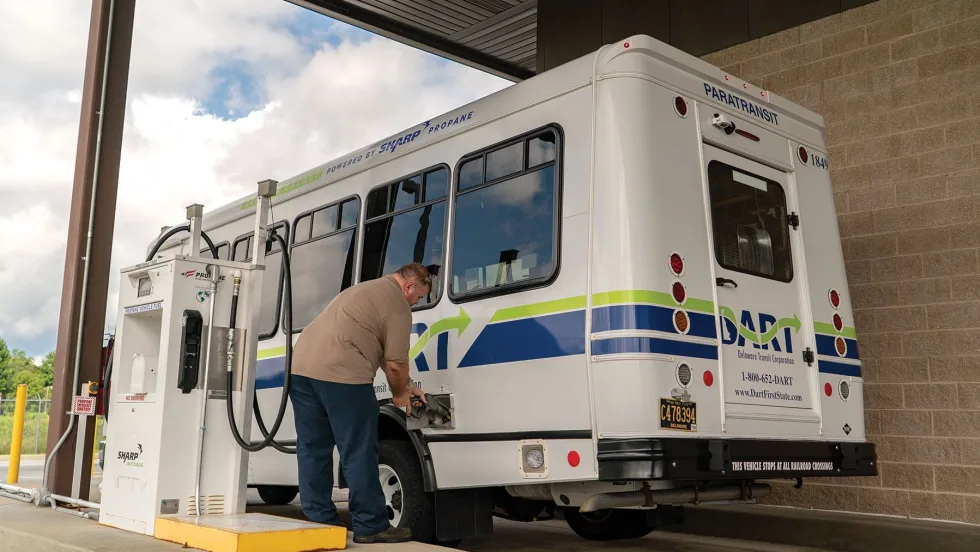
Building a Winning FTA Grant Proposal: Why Propane Autogas is the Pragmatic Choice for Fleet Resilience
With $610 million available through the FY 2026 Buses and Bus Facilities Competitive Program and the Low or No Emission Grant Program, agencies must build a compelling case before the September 21 deadline that balances environmental compliance with operational feasibility.
Read More →
Velo-city Conference 2026: Latest Trends in Cycling as Part of Urban Mobility
The global cycling conference highlighted how cities are integrating bicycles into multimodal transportation networks, expanding cycle tourism and reshaping urban mobility.
Read More →
Kindness Isn’t Soft...It’s Strategic.
Mike Bismeyer — often known as “The Kindness Guy” — has spent more than 17 years in public transit and mobility, serving in industry leadership roles, speaking across North America, and advocating for stronger workplace cultures. But his message doesn’t come from theory. It comes from lived experience.
Read More →
Inside ITF 2026: Transport Reacts to A Challenging World
Transport leaders from around the world gathered in Leipzig, Germany, for the 2026 International Transport Forum to discuss resilience, climate impacts, supply chains and the future of sustainable mobility.
Read More →
Every Ride Tells a Story — But You’re Not Just Selling the Ride
You’re selling the moment, the meaning, and the emotion behind it.
Read More →
How Digital Signage is Reshaping the Traveler Experience at Transportation Hubs
What was once a landscape of static signs has evolved into a responsive, immersive environment powered by real-time visual communication.
Read More →
Latest Trends in Urban Mobility from Polis Conference 2025
Polis comprises cities and regions, as well as corporate partners, from across Europe, promoting the development and implementation of sustainable mobility. This year’s event had over a thousand attendees across various policy forums and an exhibition.
Read More →
Why Transit Leaders Require Better Tools for Operational Clarity In Today’s Tech-Fragmented Environment
Across North America and beyond, transit agency officials are contending with a perfect storm of operational headaches and strategic challenges that hamper daily service and long-term progress.
Read More →
The Powerless Brokers: Why California Can’t Build Transit
It is no secret that transit in the U.S. is slow and expensive to build.
Read More →
Why Transport Sustainability Should Focus on People Instead of Cars
Simply incentivizing electrification is not enough to make a meaningful impact; we must shift our focus toward prioritizing public transportation and infrastructure.
Read More →