




RELATED: NY MTA launches tech lab to bolster system modernization
How Smart Tech Can Help Boost Transit Fleet Reliability
Budgets for maintaining assets and vehicles are often strained, forcing managers to make difficult repair-or-replace decisions...
November 14, 2018
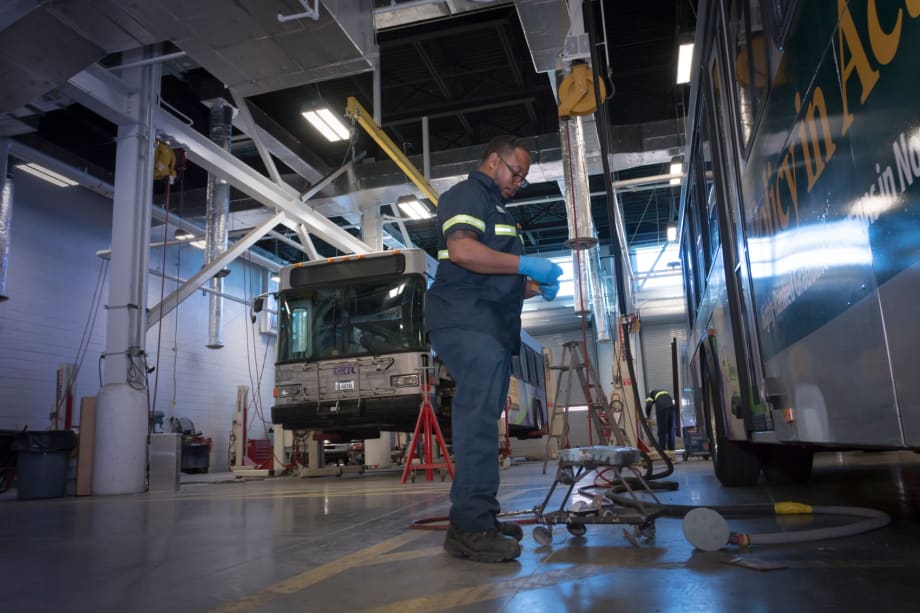
Modern IT solutions can play a major role in monitoring fleet health and keeping assets performing as needed. Photo: GRTC
5 min to read
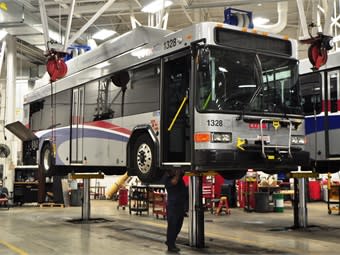
Timely maintenance and repairs of transit fleets require access to tools and parts. Photo: COTA
The ability to see the future would be quite valuable for mass transit managers. Being prepared for a vast variety of contingencies is a top priority for those tasked with keeping public transportation systems running without delays or failures. Yet, budgets for maintaining assets and vehicles are often strained, forcing managers to make difficult repair-or-replace decisions concerning ailing fleets. Fortunately, smart technologies, like the Internet of Things (IoT) and predictive analytics, can help provide that view into the future.
Defining the Driving Issues
Many cities are exploring ways to adopt digitization and apply smart technologies to make systems more efficient, safe, sustainable, and responsive to the community’s needs. However, the issues are complex. Managing public transportation in U.S. metro areas has become a juggling act to keep costs in line, while also accommodating the shifting needs of the community and complying with federal mandates for public transportation safety.
Four Driving Pressures That Make Preparation Difficult:
Population shifts. New housing developments, changes in population demographics, and evolving workplace travel patterns all contribute to the need for agility in planning. Transportation managers must also be aware of value-add factors that impact community satisfaction, such as accessibility for the elderly.
Fleet condition. The condition of assets, from bus fleets to ride-share bikes, also must be tracked and monitored for performance issues, preventive maintenance, and lifecycle projections. The parts and components included in each vehicle, like tires or brake systems, also require their own maintenance and projected lifespan. For example, computerized components are likely to have short lifespans, needing frequent updates.
Modern IT solutions can play a major role in monitoring fleet health and keeping assets performing as needed. Photo: GRTC
Reliability. If reliability is diminished by frequent breakdowns, the public will become frustrated and seek alternatives, hurting revenue. With budgets compromised, maintaining fleets becomes even more challenging, further escalating into a downward spiral. It is essential to stop that progressive threat before it gains momentum.
Compliance. Mandates from the Federal Transit Administration (FTA) to verify the proper use of federal funds have intensified the need for advanced reporting tools and system-wide visibility. The need to document Public Transportation Agency Safety Plans and State of Good Repair plans add to the pressures local transit authorities face.
Technology Comes to the Rescue
Modern IT solutions can play a major role in monitoring fleet health and keeping assets performing as needed — as well as providing intelligence and insight about the evolving community demands.
Five Modern Technologies to Support Proactive Public Transportation:
Enterprise Asset Management (EAM). A modern EAM solution will provide the ability to track and monitor assets, schedule preventive maintenance, and record as-serviced details. With a mature deployment model, managers can be proactive in responding to signs of diminished performance, intervening before a part or component fails. Progressive managers can take the system a step further and develop asset assessments, which assign scores based on condition, value, and cost to replace. This supports strategic planning for investing capital and maintaining continuity of service.
IoT. Sensors embedded in vehicles can track a wide range of physical attributes, monitoring for early warning signs of potential issues. Data that falls outside of the set parameters trigger an automated response, such as scheduling a technician to inspect or replace a part.
Sensors can also be installed in key locations, like bridges or highway on-ramps, to help monitor traffic patterns along with relevant context, such as weather or time of day. This data can provide insights about areas of congestion and when or where the transit schedule may need to be adjusted. Data generated from IoT can also be packaged into a consumable format and turned into a new revenue model.
Compliance reporting. Modern compliance and reporting tools make it easier to verify that federal funds are being used in accordance with FTA mandates while supporting State of Good Repairs guidelines. With the ability to drill into expense details, evaluate risks, and maintain safety standards, modern IT tools can reduce the worry over possible federal audits.
Artificial Intelligence (AI). AI is used in modern business intelligence solutions to help automate processes, speed agile response to real-time issues, and help managers make well-informed decisions, using data, not hunches. AI uses data science algorithms and machine learning to derive insights from data. AI functionality is embedded in modern Business Intelligence (BI) and EAM solutions.
Predictive analytics. Predictive analytics uses AI, machine learning, and data science algorithms to project the next likely outcome in a series. This advanced IT tool lets transit managers see into the world of tomorrow and anticipate trends. Managers will be able to accurately project demand as well as revenue earned from tickets.
Warehouse Management System. Timely maintenance and repairs of fleets require access to tools and parts. Replacement parts must be in inventory at the service center or a nearby warehouse. In addition to physically storing the parts inventory in a safe environment, the transit manager also needs reliable supply chain insights so that backup inventory can be ordered for just-in-time delivery. Foreseeing the type and volume of parts that will be needed is another benefit of predictive analytics.
Closing Thoughts
Metro transportation managers face numerous challenges in this fast-changing digital world. Not only must fleets and assets be maintained, managers must also be able to project the future demographic shifts and anticipate types of vehicles that will be best suited to meet demand. Technology can make the job easier. From IoT solutions to predictive analytics, advanced solutions will help transportation managers make insightful decisions, based on data, not hunches. Upgrading the IT solutions, now, will give the department a glimpse the future — so it can be prepared for its transit needs.
Kevin Price is a Technical Product Strategist at Infor.
Subscribe to Our Newsletter
More Blog Posts
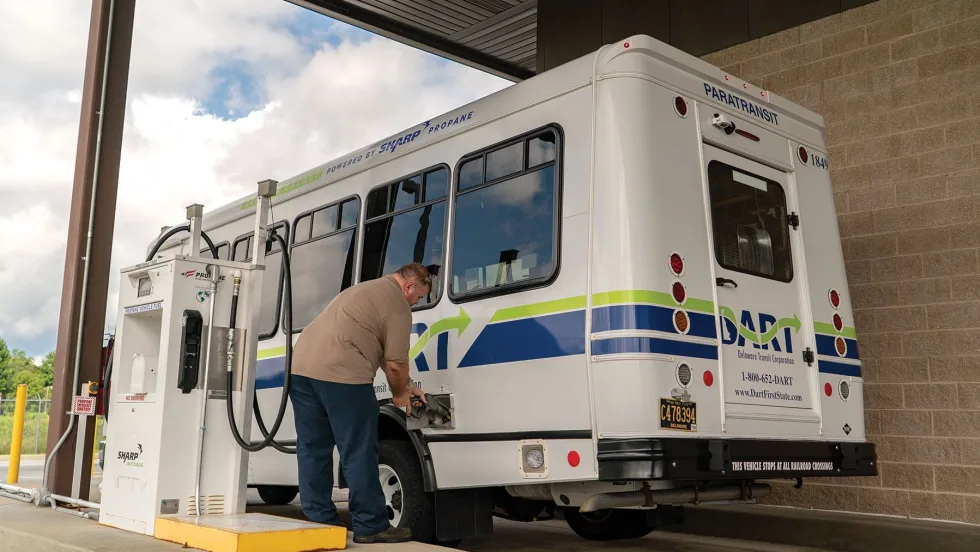
Building a Winning FTA Grant Proposal: Why Propane Autogas is the Pragmatic Choice for Fleet Resilience
With $610 million available through the FY 2026 Buses and Bus Facilities Competitive Program and the Low or No Emission Grant Program, agencies must build a compelling case before the September 21 deadline that balances environmental compliance with operational feasibility.
Read More →
Velo-city Conference 2026: Latest Trends in Cycling as Part of Urban Mobility
The global cycling conference highlighted how cities are integrating bicycles into multimodal transportation networks, expanding cycle tourism and reshaping urban mobility.
Read More →
Kindness Isn’t Soft...It’s Strategic.
Mike Bismeyer — often known as “The Kindness Guy” — has spent more than 17 years in public transit and mobility, serving in industry leadership roles, speaking across North America, and advocating for stronger workplace cultures. But his message doesn’t come from theory. It comes from lived experience.
Read More →
Inside ITF 2026: Transport Reacts to A Challenging World
Transport leaders from around the world gathered in Leipzig, Germany, for the 2026 International Transport Forum to discuss resilience, climate impacts, supply chains and the future of sustainable mobility.
Read More →
Every Ride Tells a Story — But You’re Not Just Selling the Ride
You’re selling the moment, the meaning, and the emotion behind it.
Read More →
How Digital Signage is Reshaping the Traveler Experience at Transportation Hubs
What was once a landscape of static signs has evolved into a responsive, immersive environment powered by real-time visual communication.
Read More →
Latest Trends in Urban Mobility from Polis Conference 2025
Polis comprises cities and regions, as well as corporate partners, from across Europe, promoting the development and implementation of sustainable mobility. This year’s event had over a thousand attendees across various policy forums and an exhibition.
Read More →
Why Transit Leaders Require Better Tools for Operational Clarity In Today’s Tech-Fragmented Environment
Across North America and beyond, transit agency officials are contending with a perfect storm of operational headaches and strategic challenges that hamper daily service and long-term progress.
Read More →
The Powerless Brokers: Why California Can’t Build Transit
It is no secret that transit in the U.S. is slow and expensive to build.
Read More →
Why Transport Sustainability Should Focus on People Instead of Cars
Simply incentivizing electrification is not enough to make a meaningful impact; we must shift our focus toward prioritizing public transportation and infrastructure.
Read More →