




RELATED: Testing of first autonomous shuttle on public roads in Calif. begins
How to Ensure New Mobility Services Make City Life Better, Not Worse
A recent headline in the Chicago Tribune read: “Driverless cars may make traffic worse, not better.”
May 23, 2018
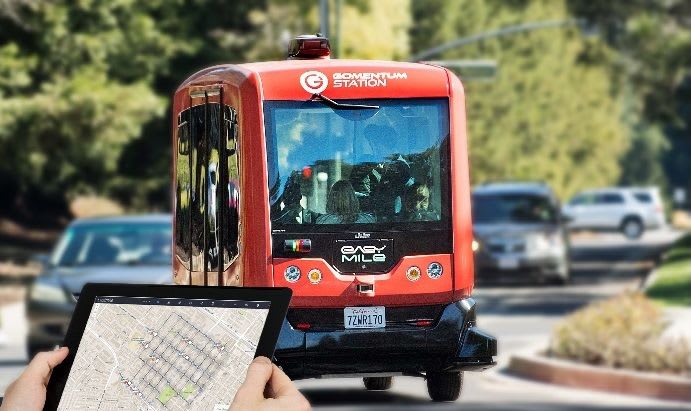
New mobility services like ridehailing, micro-transit and autonomous taxis and shuttles (shown) can be integrated and deployed with minimal new infrastructure investment. Photo: Bestmile
4 min to read
New mobility services like ridehailing, micro-transit and autonomous taxis and shuttles (shown) can be integrated and deployed with minimal new infrastructure investment. Photo: Bestmile
A recent headline in the Chicago Tribune read: “Driverless cars may make traffic worse, not better.” The same week, the BBC ran a story titled, “How the internet is clogging up city streets.”
Both articles question some of the conventional wisdom suggesting that new mobility services will ease congestion and pollution by creating a seamless path from home to office and back, and anywhere in between in comfortable, shared, zero-emission vehicles.
Transportation planners have noted the only thing worse than streets clogged with single-occupant vehicles would be streets clogged with additional fleets of zero-occupant vehicles. Meaning if we simply add robotaxis to the current mix of public and private transit options, we could indeed see congestion worsen in city centers.
While autonomous cars enjoy increasing attention in the media, the focus has been mainly on the vehicles. Vehicles alone don’t constitute services. How can these vehicles, along with ridehailing and public transit services, be coordinated and optimized to create and deliver services that people love and that reduce traffic and pollution?
What will be badly needed to ensure that the conventional wisdom prevails — that new mobility services will make urban transit more convenient and boost the quality of urban living — is an overarching mobility management system that coordinates services, connecting travelers with the right vehicle at the right time in the right destination within the service area, pooling as many as possible, and managing vehicle locations based on demand. Because vehicles and their guidance technologies are all being designed independently of one another, this management solution must be “vehicle-agnostic,” able to communicate with and deliver instructions to vehicles of different brands or makes. It will also, in the near term, need to be able to communicate with human-driven services to ensure mixed fleets are coordinated.
A useful analogy for what is needed might be the air traffic control employed by airports around the world. Each airline uses different vehicles and technologies, sometimes with different brands and types of vehicles within the same fleet. They all communicate with a single management center that serves as the brain of the service, guiding vehicles to ensure that traffic is smooth, safe, and efficient.
Most transit networks already have massive management centers with sophisticated management tools. It will be important for new mobility services to easily integrate with transit systems to enable operators to get new services up and running quickly, and coordinate with other modes of transit in the network. This is important because new mobility services will be complementary to current transit modes, solving first/last mile limitations, making conventional services more convenient for commuters, and for intra-city transit. Microtransit — shared, human-driven cars, or vans — for example, can pool travelers with similar destinations at train and bus stations and take them to their homes or offices.
Cities around the world are expected to grow significantly in coming decades. Most cannot add more roads to make mobility easier. Large public transit infrastructure projects like new rail lines are expensive and take years to plan and build. New mobility services like ridehailing, micro-transit and autonomous taxis and shuttles can be integrated and deployed with minimal new infrastructure investment, reducing the use of private cars, increasing the use of public transit, and making cities more livable to residents, commuters and visitors.
Many have noted that cities will need to get smarter in order to grow in ways that improve the quality of life of the people that live, work, and travel within them. Cities will need smarter buildings, utilities, and transportation. For transportation to get smarter, new public and private entrants will need to be able to easily integrate into and communicate with other modes of transit. Synchronizing as many modes of mobility as possible — including new mobility services — can optimize efficiency and provide a seamless user experience. This has the potential to make getting in and out of cities and getting around town so convenient that people will gladly leave their cars at home, or exit private car ownership entirely, delivering on the promise to reduce pollution and congestion.
Michael Cottle has more than 25 years of working with public and private transit organizations. Currently he is the VP of Sales and Customer Service at Bestmile, maker of a mobility services platform for autonomous and human-driven vehicles and services.
Subscribe to Our Newsletter
More Blog Posts
Building a Winning FTA Grant Proposal: Why Propane Autogas is the Pragmatic Choice for Fleet Resilience
With $610 million available through the FY 2026 Buses and Bus Facilities Competitive Program and the Low or No Emission Grant Program, agencies must build a compelling case before the September 21 deadline that balances environmental compliance with operational feasibility.
Read More →
Velo-city Conference 2026: Latest Trends in Cycling as Part of Urban Mobility
The global cycling conference highlighted how cities are integrating bicycles into multimodal transportation networks, expanding cycle tourism and reshaping urban mobility.
Read More →
Kindness Isn’t Soft...It’s Strategic.
Mike Bismeyer — often known as “The Kindness Guy” — has spent more than 17 years in public transit and mobility, serving in industry leadership roles, speaking across North America, and advocating for stronger workplace cultures. But his message doesn’t come from theory. It comes from lived experience.
Read More →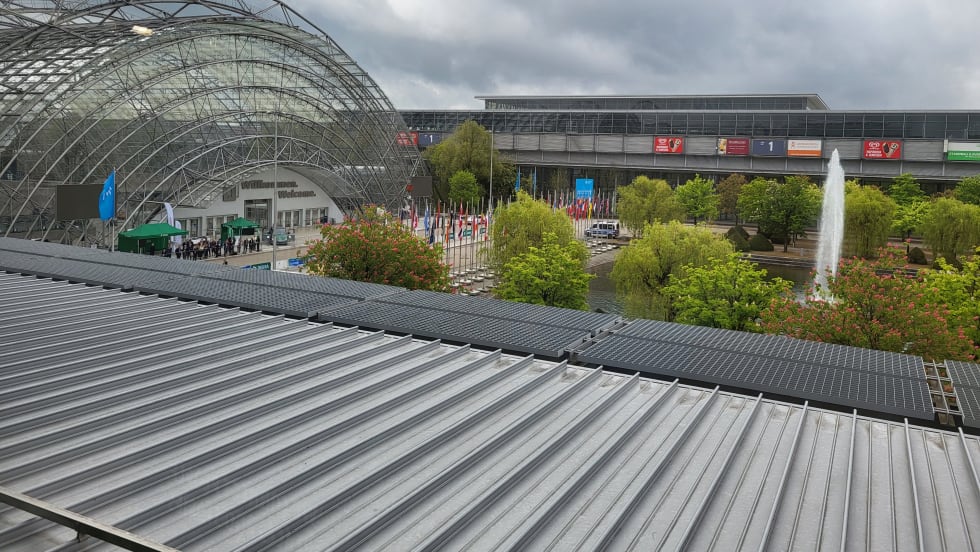
Inside ITF 2026: Transport Reacts to A Challenging World
Transport leaders from around the world gathered in Leipzig, Germany, for the 2026 International Transport Forum to discuss resilience, climate impacts, supply chains and the future of sustainable mobility.
Read More →
Every Ride Tells a Story — But You’re Not Just Selling the Ride
You’re selling the moment, the meaning, and the emotion behind it.
Read More →
How Digital Signage is Reshaping the Traveler Experience at Transportation Hubs
What was once a landscape of static signs has evolved into a responsive, immersive environment powered by real-time visual communication.
Read More →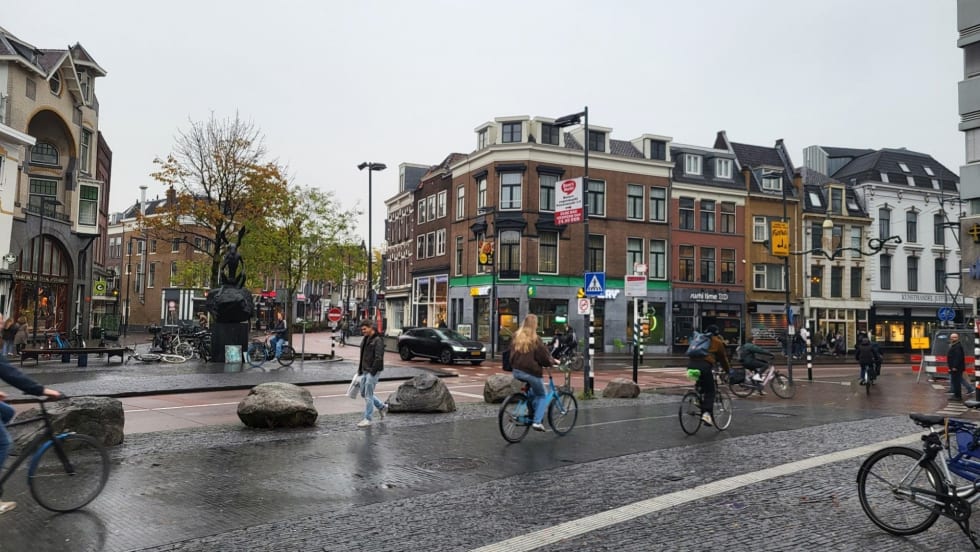
Latest Trends in Urban Mobility from Polis Conference 2025
Polis comprises cities and regions, as well as corporate partners, from across Europe, promoting the development and implementation of sustainable mobility. This year’s event had over a thousand attendees across various policy forums and an exhibition.
Read More →
Why Transit Leaders Require Better Tools for Operational Clarity In Today’s Tech-Fragmented Environment
Across North America and beyond, transit agency officials are contending with a perfect storm of operational headaches and strategic challenges that hamper daily service and long-term progress.
Read More →
The Powerless Brokers: Why California Can’t Build Transit
It is no secret that transit in the U.S. is slow and expensive to build.
Read More →
Why Transport Sustainability Should Focus on People Instead of Cars
Simply incentivizing electrification is not enough to make a meaningful impact; we must shift our focus toward prioritizing public transportation and infrastructure.
Read More →