



How transit payments will evolve post-Covid-19
Long after the initial threat of the pandemic has faded, Covid-19 will continue to be a catalyst for change.

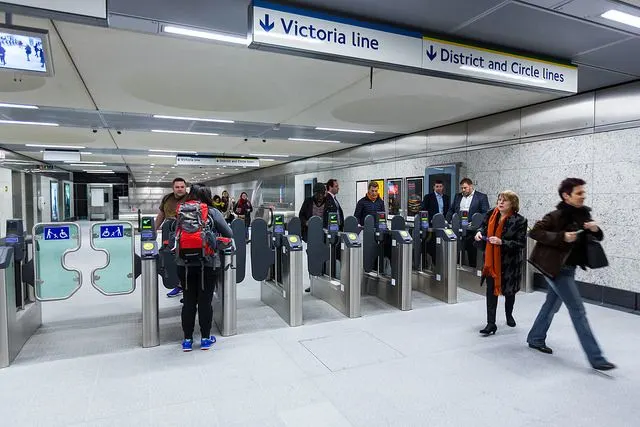
The major gain offered by contactless payments is that customers can instantly complete transactions with the tap of a card or digital wallet on a smartphone without the need to physically touch a payment terminal.
TfL
The major gain offered by contactless payments is that customers can instantly complete transactions with the tap of a card or digital wallet on a smartphone without the need to physically touch a payment terminal.
TfL
Long after the initial threat of the pandemic has faded, COVID-19 will continue to be a catalyst for change. The way we live and work has been turned upside down; through this experience, many of us have learned what we value and how we might like society to move forward.
Within Littlepay’s sectors, transit and payments, the shift has been dramatic. Devastated by social distancing and lockdown measures, public transit ridership across the globe is down at least 70%. Longer-distance and commuter services have been the hardest hit, in some cases losing more than 90% of riders. The blow to revenue has seen transit agencies struggling to maintain service levels and having to make drastic cuts. Even as restrictions on movement are eased in some countries, government advice, as in the UK, to avoid public transport where possible will slow down recovery.
In the payments world, cash usage has plummeted, driven by public concern about handling banknotes combined with the closures of cafes, pubs, restaurants, and shops, resulting in far less opportunities to spend. ATM withdrawals in the UK in April 2020 were down 60% compared to the previous year, with over half (54%) of people saying they are avoiding using cash and three quarters (76%) saying that the coronavirus will affect their use of cash over the next six months.
Increasingly, in public-facing businesses, there has been a migration towards "clean" contactless payments. More than 40 markets have raised their contactless payment thresholds to allow higher value purchases, helping consumers to avoid contact with frequently touched PIN-pads.
With such radical change to societal structures happening almost overnight and set to last for the foreseeable future, the road back to "life as we knew it" will be long. As we journey toward something like normality, a lasting imprint will be left, with new behavior’s taking root and decisions more and more governed by the question: why go backwards?
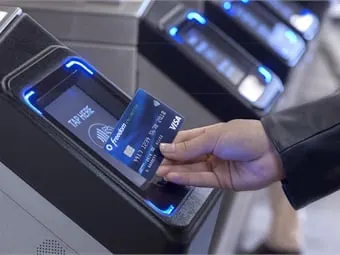
More than 40 markets have raised their contactless payment thresholds to allow higher value purchases, helping consumers to avoid contact with frequently touched PIN-pads.
Visa
A new normal
Our new experience of living in congestion-free cities, for instance, may lead to increased demand for seamless city mobility using a variety of interconnected transport modes, micromobility solutions, and related services. To restore consumer confidence, transit will need to reduce friction-points, address overcrowding, and maintain robust health and safety standards in stations and on vehicles. Cities may need to be remapped to create more safe spaces for people to walk, scoot, and cycle.
Even in regions that have been more resistant to contactless adoption to date, notably the U.S., merchants are rapidly rethinking payment technology that relies on PIN pads and touchscreens. The provision of "hygienic" payment options has become part of pandemic health and safety protocol, along with sanitization, ventilation, social distancing, and the wearing of masks.
The major gain offered by contactless payments is that customers can instantly complete transactions with the tap of a card or digital wallet on a smartphone without the need to physically touch a payment terminal. In transit, there is the added benefit of spending less time queuing for tickets and enjoying faster, smoother journeys. This can be using one service or many, as there is great potential for collaborative ticketing schemes across many transit modes.
The technology means that transport can continue to take fares, while safeguarding staff and passengers. Going forward, fare structures can be applied that provide better value and relevance considering changing traveler behavior. For instance, if partial home working becomes a long-term reality for many, automatic rolling fare caps could be an attractive alternative to season tickets for commuters travelling once or twice a week rather than every day.
As a counterpoint to what could be a bleak outlook for the transit sector, there has been rocketing appreciation of public transport providers in recent weeks. Many key workers not bound by governments’ stay-at-home orders have depended on public transit to help them perform essential jobs in health and social care, supermarkets, and supply chains.
Transport’s frontline workers have been hailed as heroes for putting themselves at risk to keep cities and communities alive and kicking. Whatever society emerges from this crisis in the months ahead, public transport networks will continue to be at its heart with contactless payments playing a vital supporting role.
Thea Fisher is Head of Commercial at Littlepay
More Blog Posts
Building a Winning FTA Grant Proposal: Why Propane Autogas is the Pragmatic Choice for Fleet Resilience
With $610 million available through the FY 2026 Buses and Bus Facilities Competitive Program and the Low or No Emission Grant Program, agencies must build a compelling case before the September 21 deadline that balances environmental compliance with operational feasibility.
Read More →
Velo-city Conference 2026: Latest Trends in Cycling as Part of Urban Mobility
The global cycling conference highlighted how cities are integrating bicycles into multimodal transportation networks, expanding cycle tourism and reshaping urban mobility.
Read More →
Kindness Isn’t Soft...It’s Strategic.
Mike Bismeyer — often known as “The Kindness Guy” — has spent more than 17 years in public transit and mobility, serving in industry leadership roles, speaking across North America, and advocating for stronger workplace cultures. But his message doesn’t come from theory. It comes from lived experience.
Read More →
Inside ITF 2026: Transport Reacts to A Challenging World
Transport leaders from around the world gathered in Leipzig, Germany, for the 2026 International Transport Forum to discuss resilience, climate impacts, supply chains and the future of sustainable mobility.
Read More →
Every Ride Tells a Story — But You’re Not Just Selling the Ride
You’re selling the moment, the meaning, and the emotion behind it.
Read More →
How Digital Signage is Reshaping the Traveler Experience at Transportation Hubs
What was once a landscape of static signs has evolved into a responsive, immersive environment powered by real-time visual communication.
Read More →
Latest Trends in Urban Mobility from Polis Conference 2025
Polis comprises cities and regions, as well as corporate partners, from across Europe, promoting the development and implementation of sustainable mobility. This year’s event had over a thousand attendees across various policy forums and an exhibition.
Read More →
Why Transit Leaders Require Better Tools for Operational Clarity In Today’s Tech-Fragmented Environment
Across North America and beyond, transit agency officials are contending with a perfect storm of operational headaches and strategic challenges that hamper daily service and long-term progress.
Read More →
The Powerless Brokers: Why California Can’t Build Transit
It is no secret that transit in the U.S. is slow and expensive to build.
Read More →
Why Transport Sustainability Should Focus on People Instead of Cars
Simply incentivizing electrification is not enough to make a meaningful impact; we must shift our focus toward prioritizing public transportation and infrastructure.
Read More →