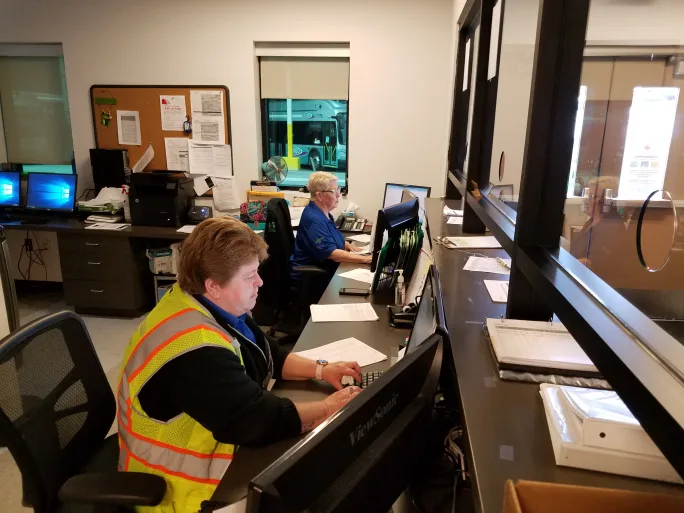
Diversity, in all its forms, injects fresh perspectives and ideas into every facet of the industry.
Photo: Pexels/Jopwell
5 min to read
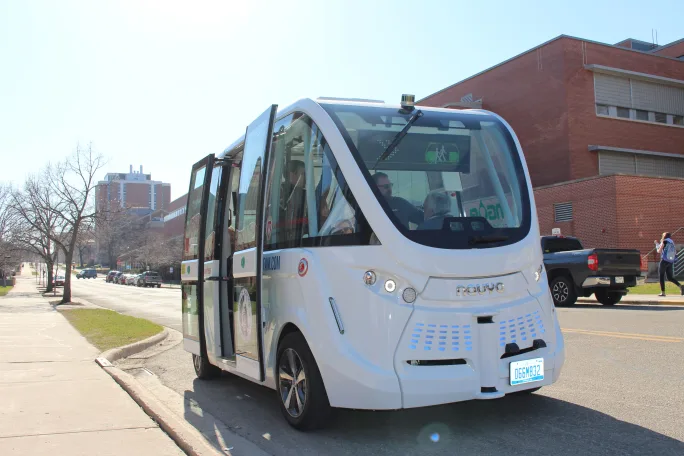
Undoubtedly, the transportation technology industry has undergone a remarkable digital transformation over the past decade. What was once a world dominated by traditional infrastructure has now become a hotbed of innovation driven by technology, such as transit signal prioritization, autonomous systems, artificial intelligence (AI), and advanced driver assistance systems.
While these advancements have reshaped the industry, it is the evolution of gender diversity that has the potential to revolutionize it further.
Ad Loading...
The Power of Diversity: A Catalyst for Innovation
Diversity, in all its forms, injects fresh perspectives and ideas into every facet of the industry. In transportation technology, this diversity is incredibly vital, as it tackles complex challenges and requires innovative solutions. When women are actively involved in the development and leadership of transportation technology, there is a diversification of thought that sparks innovation.
Here are just a few examples of brilliant innovations by women in transportation technology:
Windshield Wiper – Invented by Mary Anderson and automized by Charlotte Bridgwood.
Rear View mirror – Ideated by Dorothy Levitt.
Highway Traffic Lanes – Handpainted by June McCarroll, who later launched a safety campaign across California, with the California Highway Commission adopting it.
Turn Signals and Brake Lights – Invented by Florence Lawrence.
Global Positioning System (GPS) depends on satellite geodesy models by Dr. Gladys West.
OnStar Telematics Applications – Dr. Jane Macfarlane, the lead architect, LYT Board Director
And the list can go on and on.
The transportation technology sector plays a pivotal role in shaping the future of mobility, especially as cities undergo their own digital transformation based on technologies such as AI.
Ad Loading...
From autonomous vehicles to smart cities, these innovations hold the potential to transform our lives. However, without adequate representation, there is a risk of overlooking critical aspects of safety and accessibility.
Increased ideation, differing viewpoints, and fresh perspectives and ideas can be extremely powerful for organizations in the transportation technology industry that need new solutions to age-old challenges.
When women are actively involved in the development and leadership of transportation technology, there is a diversification of thought that sparks innovation.
Photo: Transdev
The Impact of Diverse Leadership
Diversity at the C-level is not merely a buzzword; it is a game-changer. While the transportation technology industry often sees male executives at the helm, there is a wealth of talented women who are subject matter experts at various levels. Operators and product experts bring invaluable insights due to their proximity to the customer base, and the industry stands to benefit from these diverse experiences.
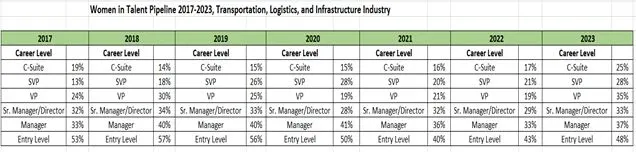
According to the McKinsey & Company " Women in the Workplace, 2023" study, the Transportation, Logistics, and Infrastructure industry does not struggle as much as other sectors with attracting women to entry-level positions (48% of the workforce), but the talent pipeline decreases with each next career step.
It clearly demonstrates the infamous "broken rung," the greatest obstacle women face in progressing their careers to the C-suite — women are represented in only 37% of the first-tier managerial positions, a whopping 11% drop from the entry-level positions.
Ad Loading...
Not surprisingly, with the talent pipeline drying up through the next career levels, only 28% of women advance to the Sr. VP level, and only 25% reach the C-suite.
It is without any doubt that there needs to be more women in this industry sector. However, the statistics from the 2023 study reviewed in isolation paint only part of the picture.
It is without any doubt that there needs to be more women in this industry sector. However, the statistics from the 2023 study reviewed in isolation paint only part of the picture.
Photo: McKinsey & Company
If we analyze the “Women in the Workplace” study data over the last seven years, we will encounter some fascinating findings. (note: the dates in the chart are the dates of the published studies that typically account for the data obtained a year prior)
Something that stood out for me is that the 2023 entry-level percentages are lower in comparison to 2017 to 2020 studies; the "broken rung" is strongly present across the last seven years, and although the 2023 number of women in the C-Suite is still low at 25%, it demonstrates a significant percentage gained within one year, from 17% in 2022. That is why I am glad that one of the debunked myths in the 2023 McKinsey & Company "Women in Workplace" is that women became less ambitious after the pandemic. No, we did not.
In my current company, women in leadership positions represent 43%, and we always strive to hire and promote from within. We value open communications and diverse opinions that demonstrate direct results on the company’s productivity and continual growth.
Ad Loading...
I asked Patrick Armijo, principal traffic engineer at LYT and a veteran of the transportation technology industry, for his opinion on working for women leaders after being led by several women throughout his career.
"The accomplishments of these women make me proud to have served under them,” he said. “I feel that the contributions of my team helped them succeed in their careers in some small way. Their accomplishments are self-evident and need no further validation from anyone.”
What was once a world dominated by traditional infrastructure has now become a hotbed of innovation driven by technology, such as transit signal prioritization, autonomous systems, AI, and advanced driver assistance systems.
In my opinion, there are three focus areas: Attract, Retain, and Nurture.
Attract suitable candidates, expanding the talent pool. That could be done by aligning the organization's goals with the communal goals for selected career paths. Participate in professional networks and social media, promoting the organization's mission, values, and diversity initiatives.
Retain talent by fostering an inclusive work environment, providing mentorship, educational support, a flexible work environment, and promoting without conscious or unconscious bias. Have a documented process and practices that ensure merit-based advancement.
Nurture a diverse workforce, enabling them to evangelize on the organization's behalf to attract new candidates, including younger generations, to STEM (Science, Technology, Engineering, and Mathematics). Girls who witness women thriving in this field are more likely to pursue careers in STEM themselves.
Ad Loading...
Embracing Diversity for a Thriving Future
Gender diversity in the transportation technology sector is not just about optics; it is about achieving lasting change and innovation.
Greater gender diversity is key in stepping outside the traditional game plan to instead identify and collaborate on ways new technology can solve our nation's transportation and congestion problems and create an opportunity for our country to once again be the model for a global future in how commuters, businesses, and cargo move.
As the transportation technology industry continues to evolve, it is the diverse voices and ideas that will lead to a brighter and more inclusive future. By breaking down barriers and championing gender diversity, we can shape a transportation landscape that serves all communities and sets the standard for global innovation.
With $610 million available through the FY 2026 Buses and Bus Facilities Competitive Program and the Low or No Emission Grant Program, agencies must build a compelling case before the September 21 deadline that balances environmental compliance with operational feasibility.
The global cycling conference highlighted how cities are integrating bicycles into multimodal transportation networks, expanding cycle tourism and reshaping urban mobility.
Mike Bismeyer — often known as “The Kindness Guy” — has spent more than 17 years in public transit and mobility, serving in industry leadership roles, speaking across North America, and advocating for stronger workplace cultures. But his message doesn’t come from theory. It comes from lived experience.
Transport leaders from around the world gathered in Leipzig, Germany, for the 2026 International Transport Forum to discuss resilience, climate impacts, supply chains and the future of sustainable mobility.
Polis comprises cities and regions, as well as corporate partners, from across Europe, promoting the development and implementation of sustainable mobility. This year’s event had over a thousand attendees across various policy forums and an exhibition.
Across North America and beyond, transit agency officials are contending with a perfect storm of operational headaches and strategic challenges that hamper daily service and long-term progress.
Simply incentivizing electrification is not enough to make a meaningful impact; we must shift our focus toward prioritizing public transportation and infrastructure.