Sharing the Road in Transportation Requires Merging More Women into the Lane
Even though we only officially honor the contributions of women during Women's History Month in March, we must remind ourselves throughout the year the road to celebrating women and greater diversity does not stop at this mile marker.
Toshya Leonard ・Marketing Partner at Cubic Transportation Systems
According to McKinsey & Company, companies in the top quarter for gender diversity on executive teams are 21% more likely to outperform on profitability.
Photo: Canva/METRO Magazine
4 min to read
Even though we only officially honor the contributions of women during Women's History Month in March, we must remind ourselves throughout the year the road to celebrating women and greater diversity does not stop at this mile marker.
Alarmingly, women comprise only 15% of the transportation workforce, accounting for nearly 15 million. According to census data, the proportion of women in transportation occupations only increased by 3% from 2005 to 2019. Cubic Transportation Systems took the MobilityXX pledge in 2021, dedicated to increasing the number of women from all backgrounds in the transportation sector by 10% in 10 years.
Ad Loading...
About the MobilityXX Pledge
MobilityXX is a partnership of the Intelligent Transportation Society of America (ITS America), The Ray, and WTS International. The organization is engaging the broader transportation industry to give more women a seat at the table by pledging to complete two or more action items over the next year that promote diversity and increase the number and influence of women within their organization.
Cubic is committed to advancing corporate sponsorship and employee resource groups and diversifying industry panels as part of its pledge.
It's essential to bring more women and women of color into transportation, particularly into decision-making roles. Having more diverse voices to weigh in will help solve critical challenges in the transportation space, improving the traveler experience and organizational success. According to McKinsey & Company, companies in the top quarter for gender diversity on executive teams are 21% more likely to outperform on profitability.
It's essential to bring more women and women of color into transportation, particularly into decision-making roles.
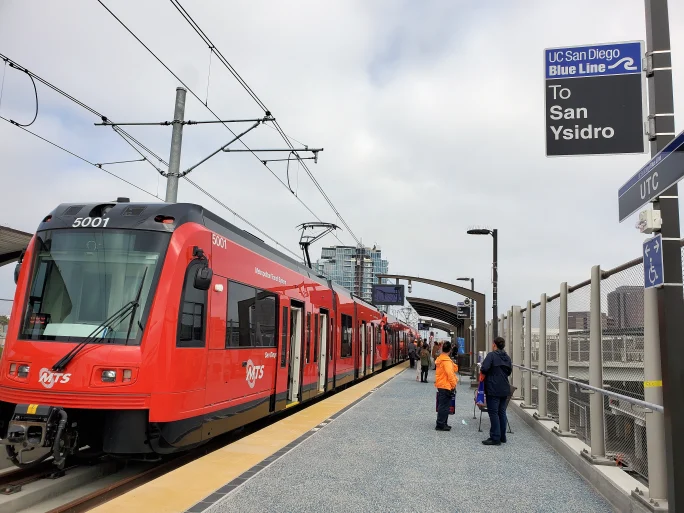
Photo: San Diego MTS
Filling the Workforce Gap
How can the transportation industry bridge this significant gap? Start with the students.
In December 2022, Cubic partnered with the Young Women's College Preparatory Academy to provide college packs to graduating seniors. In doing so, Cubic invited the school's STEM program members to its Sugar Land, Texas, facility, where the girls learned about Cubic's ITS hardware and software, even participating in a live demo environment to learn about actuation and signal timing. The tour ended on a high note with executives from both sides discussing internship programs.
Ad Loading...
Young Women's College Preparatory Academy is a middle and high secondary school for girls in Houston. The academy is a part of the Houston Independent School District, helping gifted and talented girls from economically disadvantaged backgrounds to excel in their studies and graduate to some of the best colleges in the U.S.
“Community Partners create opportunities that allow our students to explore non-traditional or simply unheard-of career opportunities,” said Tiphany Burrell, development manager – Houston, Young Women’s Preparatory Network and Young Women’s Preparatory Academy. “So much is available in STEM-based careers, but many pathways are not part of a traditional educational track. It takes people being willing to share their time and resources to help girls like ours understand that there is a sea of possibilities when they pursue their college degree.”
Cubic is committed to advancing corporate sponsorship and employee resource groups and diversifying industry panels as part of its pledge.
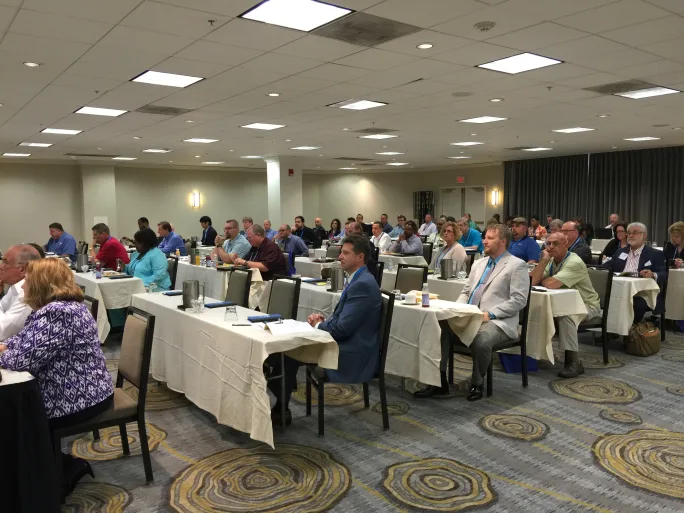
Photo: METRO Magazine
The Importance of Women in Transportation
Interestingly, despite the lack of women in the mobility industry, they spend more on transportation than men, often due to handling household trips and errands and opting for safer mobility options. The median extra costs women pay for transport in New York City compared to men, for example, is $26 to $50 per month.
"With women using and investing more in transit, they deserve a seat at the table and an opportunity to share their experiences," said Bonnie Crawford, VP/GM, Umo and CTS. "There is a natural assumption that transit and ITS events must be filled with executives, who are often men. Instead of stacking a conference panel with senior leaders, the transportation industry would benefit by leveraging talented women who often hold subject matter expert roles at various levels. Operators and product specialists have a perspective and proximity to the customer base that's incredibly valuable — and often inaccessible by the C-suite. By gathering a broad cross-section of people, the entire industry will benefit from their shared experiences."
It's time to allow women to drive the conversation and innovation on the roads they travel. To learn more about MobilityXX's efforts, click here.
Ad Loading...
For more information on The Young Women's College Preparatory Academy, click here.
With $610 million available through the FY 2026 Buses and Bus Facilities Competitive Program and the Low or No Emission Grant Program, agencies must build a compelling case before the September 21 deadline that balances environmental compliance with operational feasibility.
The global cycling conference highlighted how cities are integrating bicycles into multimodal transportation networks, expanding cycle tourism and reshaping urban mobility.
Mike Bismeyer — often known as “The Kindness Guy” — has spent more than 17 years in public transit and mobility, serving in industry leadership roles, speaking across North America, and advocating for stronger workplace cultures. But his message doesn’t come from theory. It comes from lived experience.
Transport leaders from around the world gathered in Leipzig, Germany, for the 2026 International Transport Forum to discuss resilience, climate impacts, supply chains and the future of sustainable mobility.
Polis comprises cities and regions, as well as corporate partners, from across Europe, promoting the development and implementation of sustainable mobility. This year’s event had over a thousand attendees across various policy forums and an exhibition.
Across North America and beyond, transit agency officials are contending with a perfect storm of operational headaches and strategic challenges that hamper daily service and long-term progress.
Simply incentivizing electrification is not enough to make a meaningful impact; we must shift our focus toward prioritizing public transportation and infrastructure.