




RELATED: Best, worst cities for commuting on public transportation
Is commuting the new smoking?
Data overwhelmingly shows why workers should opt-out of driving alone to work each day — not just for their own health, but for the improvement of their work performance, too.
February 26, 2020

Getty Images/ Nenov
7 min to read

Data shows that it’s possible to change people’s commuting behavior, leading them to become healthier and better workers because of it. Getty Images/ Nenov
(This article was originally published by Scoop.)
Commuting is hard. Changing established commuting behavior is harder. It’s hard at the individual, organizational, and societal levels. Most of us don’t commute because we want to, but because it’s the only way to reach economic opportunity. Commuting is a trade-off we must make for a paycheck.
Across the U.S., the distance we’re forced to travel to work continues to grow. Relatively few people can walk, bike, or take public transit to their jobs, leaving the vast majority of commuters with no alternative but to commute by car (and in most cases that means driving alone).
Data overwhelmingly shows why workers should opt-out of driving alone to work each day — not just for their own health, but for the improvement of their work performance, too. At the same time, we all know that it’s difficult to change daily habits, even those we know are bad for us.
So, considering all of this, why haven’t more organizations woven offerings into their commuter plans that help drastically improve the commute for their workers (and positively influence people’s commuting behavior)?
The evidence for change
There seems to be an infinite number of reasons we should try and get people out of driving alone and into another mode (well, almost any other mode). Recently, Professor Ashley Whillans and Doctoral Student Ariella Kristal of Harvard point out a number of these reasons in their Harvard Business Review article “Why It’s So Hard to Change People’s Commuting Behavior:”
"American employees spend, on average, 200 hours a year commuting to work, and 3/4th of these commuters drive to work alone. Commuting alone by car is not just bad for the environment (24% of global energy-related CO2 emissions come from transportation), it’s also bad for business. Car commuters report higher levels of stress and lower job satisfaction compared to train commuters — in large part because car commuting can involve driving in traffic and navigating tense road situations.”
Driving alone to work is bad for the environment, increases stress, and decreases job satisfaction. But the impact of Single-Occupancy Vehicles (SOVs) doesn’t stop there. Here at Scoop, we’ve further discussed how the way we commute today eats away at workers’ limited time off, increases voluntary attrition, forces them to make significant financial trade-offs, and in way too many cases, the biases of commuting leave eligible candidates out of the job market altogether.
We can be our own worst enemy
Just informing someone of the short- and long-term consequences of their behavior, no matter the evidence, is a lot easier than prompting behavior change that’s sustained over an extended period of time.
Example: The majority of us are aware of the harmful effects of tobacco smoking on our health.
Just because we all know our behavior has negative short- and long-term consequences doesn’t mean we’re going to actually change that behavior. Americans certainly don’t have the best track record when it comes to changing our ways, even after a pile of evidence suggests we should. Take for instance the following:
1. In the 1930s we had a hunch that smoking caused adverse health effects.
2. By the late 1940s, epidemiology, animal experiments, cellular pathology, and chemical analytics showed smoking tobacco as the source of the lung cancer epidemic.
3.In 1964, Surgeon General Luther Terry publishes the official and definitive report that classifies smoking cigarettes as the cause of lung cancer.
4. Across the preceding decades, the anti-smoking movement launched hundreds of campaigns targeted at changing behavior. Some more successful than others.
5. Then, 1998’s Attorney General Master Settlement significantly limited the access to and marketing of tobacco products in the United States, and finally the percentage of Americans using tobacco products drop below 20%.
6. And yet, children and teens born after that MSA are still choosing to pick up this deadly habit.
Is commuting the new smoking?
Whether they’re familiar with the scientific evidence that highlights the negative impacts of driving alone or not, most commuters in any given week would express at least mild frustration about their commute. Whether it’s time, distance, construction, accidents, fellow passengers’ behavior, the topics on talk radio, or congestion, there’s a complaint for everyone.
Whillans and Kristal wanted to pinpoint why exactly it’s so hard to change people’s commuting behavior. To try and nudge people out of what they know is bad for them and openly express frustration about having to do so, Whillans and Kristal designed a set of behavioral experiments to prompt that initial change at a variety of employer types. From organizations with 1,000 employees up to 70,000 they note:
"Overall, we found a whole set of interventions — many of which are used regularly in corporate settings — that failed to shift people’s commuting behavior.”
They summarize why these interventions didn’t work out as hoped into three issues which have haunted Transportation Demand Management (TDM) professionals for years:
1. Free parking is king. When we aren’t forced into paying the full cost of something, we often discount the value.
2. Inconvenience is a big hurdle to climb. Our “convenience culture” has reimagined almost every decision we make. It may not be what’s best, but you bet it’s easy.
3. Habitual habits are hard to break. You’re more likely to find a Seattleite on a monorail in Walt Disney World than you are to find them on one at home.
Emerging practical applications of behavioral insights and transportation
This year’s Transportation Research Board in Washington, D.C. saw what was perhaps the largest convergence of behavioral insights researchers and practitioners focused on commuting ever. Almost all of the mode shift studies that were presented echoed the difficulties that Whillans and Kristal’s research projects published in HBR had in generating short- and long-term behavior change. While many of the studies’ results demonstrate the difficulties of creating long-lasting commuter change, it is possible. (A study of 200,000 carpool trips conducted by the University of Washington which investigated the impact of a Seattle county’s carpooling partnership with Scoop demonstrates the potential of shared commuting opportunities working at a much larger scale — and more quickly — than has historically been possible.)
We now have a strong developing body of research to help us drive better, empirically backed conversations on what federal, state, regional, and employer policy and funding initiatives should look like to help improve the daily commute for millions of Americans.
We can change people’s commuting behavior — here’s where to start
As we move forward into 2020, I remain optimistic that we can create large-scale commuter behavioral change. My role at Scoop gives me a front seat to the intersection of the leading organizations that have already committed to radically improving their employee’s commutes (check out the World Economic Forum’s coverage of LinkedIn and Bedrock) and this growing field of behavioral and transportation science research committed to the commute.
Change is possible. Here’s what we need to do:
1. Employers need to advocate for their employees’ commutes. Much like how Americans needed regulations to change their smoking habits. The most impactful way to change people’s commuting behavior for the better is by working with their employers and organization heads to create top-down, system-wide change.
2. Identify the unique barriers that commuters of specific companies and cities face. This is a big one — the reasons behind someone’s poor commuting behaviors in Los Angeles could be far different than the reasons of someone in Milwaukee. It’s why we at Scoop work with employees and cities directly to identify the unique barriers that commuters experience and specifically design our product to make those challenges dissolve.
3. Incentivize better commuting methods. It works. We know — and the data shows — that it’s possible to change people’s commuting behavior. And that we’d become healthier and better workers because of it. From improving well-being to boosting productivity at work, an improved commute by means of carpooling can transform one’s life, but it’s usually not until after commuters get into a carpool that they realize its positive long-term impact. Here’s some proof: King County Metro’s Carpooling Incentive Fund provided $2 for each participant in a matched and completed carpool during the pilot period. Before being incentivized to use Scoop, 57% of commuters drove to work on their own. After being incentivized to use Scoop over the course of the five-month period, only 9% of these commuters to drove to work on their own. You can read more about the success of their carpooling investments here.
So, again, is commuting the new smoking? Can we actually drive behavioral change to fix our bad habits that we know are bad for us?
We’re now at the stage where the data is clear: driving alone to work negatively impacts us at a personal, professional, environmental, and organizational level. It’s on us as researchers, policymakers, HR leaders, and TDM professionals to spread the word about just how much of an impact improving the commute can be.
They gave up their Joe Camels. Will they give up their SOVs?
Charlie Knuth is Head of Commuter Insights at Scoop, a carpooling network builder.
Subscribe to Our Newsletter
More Blog Posts

Velo-city Conference 2026: Latest Trends in Cycling as Part of Urban Mobility
The global cycling conference highlighted how cities are integrating bicycles into multimodal transportation networks, expanding cycle tourism and reshaping urban mobility.
Read More →
Kindness Isn’t Soft...It’s Strategic.
Mike Bismeyer — often known as “The Kindness Guy” — has spent more than 17 years in public transit and mobility, serving in industry leadership roles, speaking across North America, and advocating for stronger workplace cultures. But his message doesn’t come from theory. It comes from lived experience.
Read More →
Inside ITF 2026: Transport Reacts to A Challenging World
Transport leaders from around the world gathered in Leipzig, Germany, for the 2026 International Transport Forum to discuss resilience, climate impacts, supply chains and the future of sustainable mobility.
Read More →
Every Ride Tells a Story — But You’re Not Just Selling the Ride
You’re selling the moment, the meaning, and the emotion behind it.
Read More →
How Digital Signage is Reshaping the Traveler Experience at Transportation Hubs
What was once a landscape of static signs has evolved into a responsive, immersive environment powered by real-time visual communication.
Read More →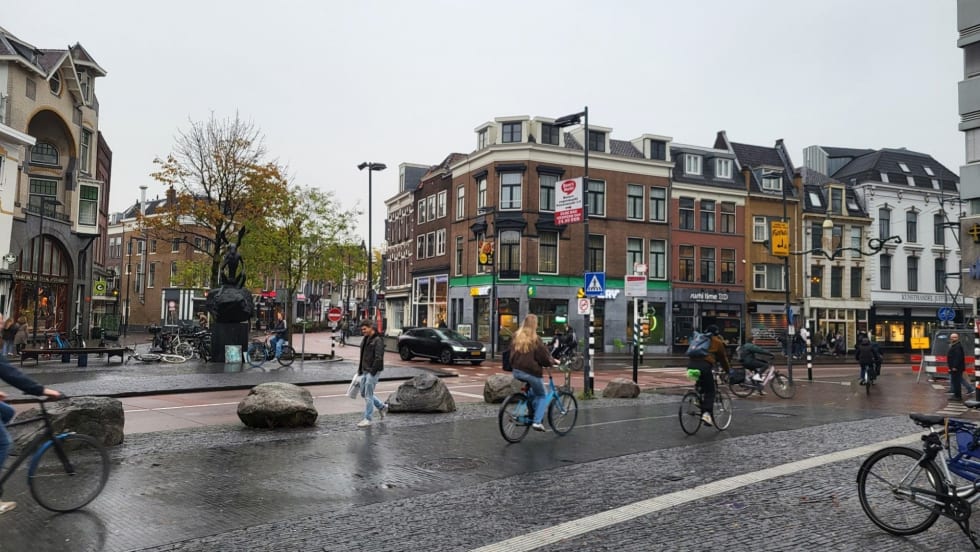
Latest Trends in Urban Mobility from Polis Conference 2025
Polis comprises cities and regions, as well as corporate partners, from across Europe, promoting the development and implementation of sustainable mobility. This year’s event had over a thousand attendees across various policy forums and an exhibition.
Read More →
Why Transit Leaders Require Better Tools for Operational Clarity In Today’s Tech-Fragmented Environment
Across North America and beyond, transit agency officials are contending with a perfect storm of operational headaches and strategic challenges that hamper daily service and long-term progress.
Read More →
The Powerless Brokers: Why California Can’t Build Transit
It is no secret that transit in the U.S. is slow and expensive to build.
Read More →
Why Transport Sustainability Should Focus on People Instead of Cars
Simply incentivizing electrification is not enough to make a meaningful impact; we must shift our focus toward prioritizing public transportation and infrastructure.
Read More →
Transit ROI & System Efficiencies Will Drive 'Big, Beautiful' Transit Funding
For many years, the narrative surrounding public transit improvements has been heavily weighted toward environmental gains and carbon reduction. While these are undeniably crucial long-term benefits, the immediate focus of this new funding environment is firmly on demonstrable system efficiencies and a clear return on investment.
Read More →