




RELATED: NYC has longest commute via car and transit, study says
Report finds 62% of U.S. workers didn't apply for job due to commute
Research highlights how commuting leads to lower productivity, higher costs, longer workdays, and different lifestyle choices.
September 25, 2019
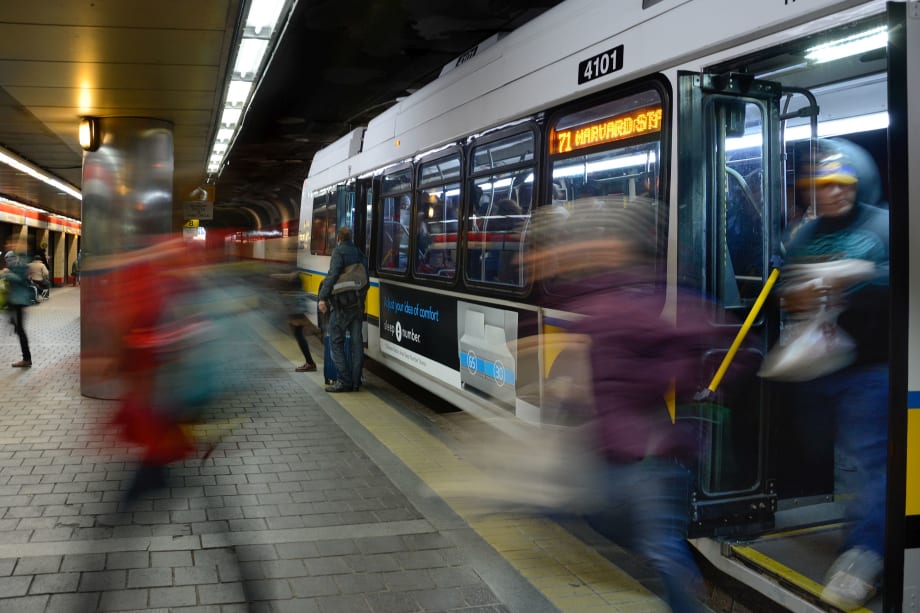
American workers also feel their lifestyles would be much healthier without the stresses of the commute, according to a new survey.
MBTA
4 min to read
American workers also feel their lifestyles would be much healthier without the stresses of the commute, according to a new survey.
MBTA
A new report, compiled by carpooling company, Scoop, offers key insights and a better understanding of the impact of lengthening commutes on American workers’ physical, financial, and emotional well-being.
The State of the American Commute report, which highlights how commuting leads to lower productivity, higher costs, longer workdays, and different lifestyle choices, is based on a survey of more than 7,000 workers in 16 major metropolitan regions across the U.S.
"Nearly three-quarters of commuters in the U.S. drive alone to work today, and their commutes are getting longer — a paradigm that exists in part because American workers are increasingly finding it difficult to live close to where they work," said Rob Sadow, co-founder/CEO, Scoop. "As a result, commutes are getting more painful. Our research suggests that employers must find ways to support alternative commutes to mitigate the commute's impact on their employees' health, productivity, and satisfaction at work — ultimately helping to reduce attrition."
Work Requirements, Cost of Living Responsible for Majority of Solo Commutes
American workers have attempted alternative modes of transportation, such as public transit (37.9% of respondents), carpooling, (23.4%), or bicycling (12.8%), but many revert back to driving alone to work via single-occupancy vehicle (SOV) trips.
The most common reasons cited for returning to driving alone are tied to respondents’ relationship with work:
Almost one-quarter (24.7%) noted that a job change led them to solo commuting.
Twenty-four percent cited a work location change.
17.6% said they work irregular hours.
13.8% need access to a car for their job, and 13.8% drive because of a work schedule change.

"Nearly three-quarters of commuters in the U.S. drive alone to work today, and their commutes are getting longer," said Rob Sadow, co-founder/CEO, Scoop.
Public Domain
While work may force many to commute alone, the rising cost of living is making the drive to the office more arduous. With housing costs ballooning across many urban centers across the country, workers are being forced to live farther from their jobs and endure longer commute times:
Almost half (49.4%) of workers have a one-way commute between five and 20 miles.
Just one-quarter of workers live within five miles of their job.
The average worker travels 28 minutes to work one-way, each day. Over a year, that represents 30 work days dedicated solely to commuting.
Only nine percent of workers have commutes that take five minutes or fewer.
Commute Affects Well-Being, Job Choices
Longer commutes are giving American workers pause about their own health, as well as their life decisions, such as choosing jobs.
Almost one-third (32%) say the commute causes them stress, while two-thirds of workers said they can see how the commute causes stress among other people.
Nearly two-thirds (62%) report not applying to jobs based on the commute due to location.
Thirty percent have considered quitting their jobs based on their daily commute to a certain location.
American workers also feel their lifestyles would be much healthier without the stresses of the commute:
Thirty-one percent believe they would make healthier food choices if they had a shorter commute.
Half of all workers would exercise more if they could reduce their commute times.
More than one-third (37%) would get more sleep.
Employers Should View Commute as Competitive Advantage
The survey highlights that organizations must become aware and sensitive to the pains, challenges, and opportunities associated with employees’ commutes. More importantly, organizations must do more to proactively provide solutions that ultimately reduce the impact of the commute. Less than one-quarter (22.5%) of workers said their employer incentivizes alternative transportation modes.
This research shows that offering a more robust range of commuting solutions is a benefit to employees and an advantage for employers. Incentives for using alternate modes of transportation empower commuters to take the stress not only off their wallets but off their minds as well. Respondents replied that the following incentives would encourage them to try different transportation modes:
Free parking
Flexible work schedules (including the ability to work from home)
On-site locker rooms
Subsidized transit
Beyond these types of incentives, employers should also consider offering employees solutions that are flexible enough to meet the day-to-day needs of employees and support options for switching and tools to help employees make the switch easier, such as guaranteed rides home or automated carpool matching.
More Management

METRO Opens Submissions for 2026 Motorcoach Awards
Nominations are now being accepted for METRO Magazine’s Operator of the Year and Innovative Operator of the Year awards.
Read More →
New York MTA Advances Final Contract for Second Avenue Subway Expansion
Contract Four is the largest in the Second Avenue Subway Phase 2 project and includes construction of station infrastructure, tracks, and signals for the subway expansion, MTA officials said. Work on Contract Four will begin in 2027.
Read More →
Transit Agencies Highlight Safety Gains at National Summit
Leaders from 15 major transit systems shared crime-reduction results and safety initiatives while discussing the role of continued federal support.
Read More →

NITA Names New Leadership, Expands Reduced-Fare Program at First Board Meeting
The new regional transit authority appointed its first board chair and interim executive director while extending reduced fares across CTA, Metra, and Pace for eligible riders.
Read More →
Beyond the Checklist: A Structured Approach to Transit Maintenance
Reliability-Centered Maintenance helps transit agencies move beyond routine checklists to focus limited resources on the assets and failures that have the greatest impact on safety, reliability, and service.
Read More →
APTA 2026 Nominating Committee Selects Leadership Slate, Names Chair and Vice Chair Nominees
Leadership changes will help shape the association’s priorities and its representation of the transportation industry during the 2026–2027 term.
Read More →
DART Launches Major Security, Fare Enforcement Initiative
The 90-day demonstration will deploy coordinated security teams at five light rail stations while testing controlled access and gathering data to guide future investments.
Read More →
Sponsored•September 9, 2026
Advancing Fare Collection Through Technology and Innovation
Learn about delivering 1300 gates at 91 stations while managing fare evasion. Explore the large scale deployment, solution customization and real-world results that affect the region. Prepare for deployment in your region now.
Read More →
Game Day in Motion: Moving Millions During the 2026 World Cup
Between packed transit stations and team motorcoaches, see how agencies and operators across North America tackled the transportation demands of the 2026 FIFA World Cup.
Read More →
Surface Transportation Extension Averts Shutdown, Leaves Transit Funding Gap
The stopgap keeps federal transportation programs moving, but missing advance funding could complicate the transit and rail projects agencies are planning next.
Read More →