




RELATED: Labor concerns should not deter AV bus tech deployment
Labor law issues for the transit employer considering automation
A duty to bargain with labor over the decision to automate and a duty to bargain over the effects of the decision may arise.
October 23, 2019

3 min to read

Autonomous vehicle technology developments are expected to result in future operational savings in part through the elimination of driver and maintenance staff positions. Public Domain
This is the first post in a five-part weekly series reviewing the legal landscape for transit employers considering automation. The series will address relevant statutes, the effects of existing collective bargaining agreements, the subjects over which an employer may be required to bargain, and steps an employer can take now to better position itself to automate.
Autonomous vehicle technology has reached a place where certain technologies are market-ready or readily adaptable to transit operations, and further automation technologies continue to be developed. These developments are expected to result in future operational savings in part through the elimination of driver and maintenance staff positions and reduced overtime. For the remaining workers, job responsibilities will change, and new skills will be required. Even partial automation may result in job losses or a “de-skilling” of the vehicle operator role. These eventualities will trigger labor law obligations.
Collective bargaining agreements
Legal protections for transit labor may exist in collective bargaining agreements, federal or state law and under section 13(c) of the Federal Transit Act. If a mass layoff or closing is necessary, advance notice to employees and government entities may be required.
When a transit authority considers automation, a duty to bargain with labor over the decision to automate and a duty to bargain over the effects of the decision may arise.
The duty may arise from one of three types of labor laws that govern the transit employment relationship: the National Labor Relations Act, the Railway Labor Act or state-specific public sector collective bargaining statutes.
Also, obligations may arise from an employer’s collective bargaining agreement with a union if it addresses the implementation of automation, robotics or artificial intelligence.
The employer may have agreed to bargain over the decision to automate or the agreement may reserve such decisions to management.
If the agreement is silent on the issue, the statutory requirements come into play.
Federal grants, loans for related projects
If a transit authority is receiving or seeking a construction grant or loan from the U.S. Department of Transportation’s Federal Transit Authority (FTA) related to its efforts to automate, it will want to consider its obligations to employees affected by that project under the Federal Transit Act.
The Act protects mass transit workers by requiring that labor standards be maintained on construction work financed with an FTA grant or loan.
As a precondition to receiving a grant or loan, an applicant must enter into a protective arrangement with the U.S. Department of Labor that provides for the preservation of rights and benefits of employees under existing collective bargaining agreements, the continuation of collective bargaining rights, the protection of individual employees against a worsening of their positions in relation to their employment, assurances of employment to employees of acquired transit systems, priority of reemployment, and paid training or retraining programs.
An employer contemplating automation must also keep in mind that the elimination of a sizable number of positions or a closing may trigger notice requirements under the Worker Adjustment and Retraining Notification Act (also known as WARN) and state law counterparts or a collective bargaining agreement.
For a more in-depth analysis and overview of the labor law issues discussed in this series, please refer to our white paper, Labor Law Issues in Deciding to Automate Mass Transit Operations.
Michael Greco is Regional Managing Partner with Fisher Phillips.
Subscribe to Our Newsletter
More Blog Posts
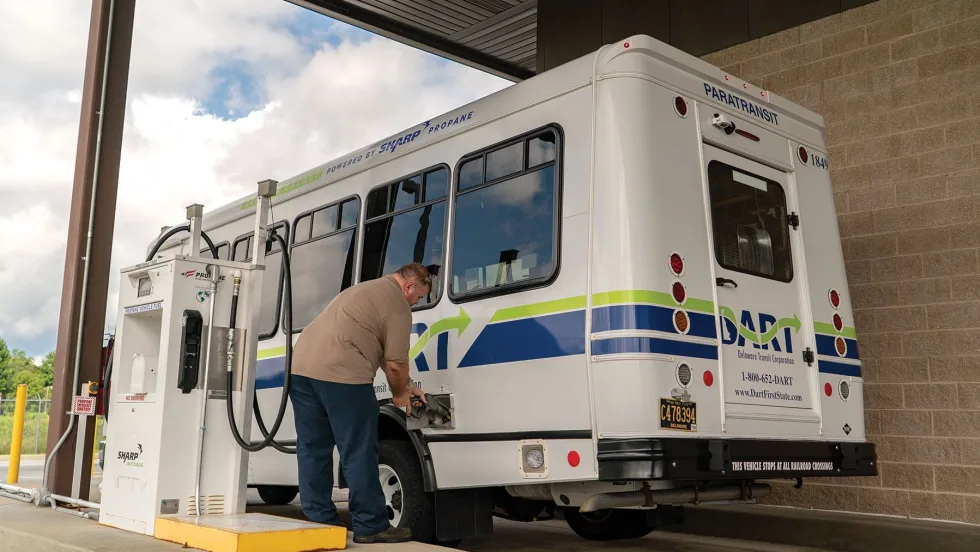
Building a Winning FTA Grant Proposal: Why Propane Autogas is the Pragmatic Choice for Fleet Resilience
With $610 million available through the FY 2026 Buses and Bus Facilities Competitive Program and the Low or No Emission Grant Program, agencies must build a compelling case before the September 21 deadline that balances environmental compliance with operational feasibility.
Read More →
Velo-city Conference 2026: Latest Trends in Cycling as Part of Urban Mobility
The global cycling conference highlighted how cities are integrating bicycles into multimodal transportation networks, expanding cycle tourism and reshaping urban mobility.
Read More →
Kindness Isn’t Soft...It’s Strategic.
Mike Bismeyer — often known as “The Kindness Guy” — has spent more than 17 years in public transit and mobility, serving in industry leadership roles, speaking across North America, and advocating for stronger workplace cultures. But his message doesn’t come from theory. It comes from lived experience.
Read More →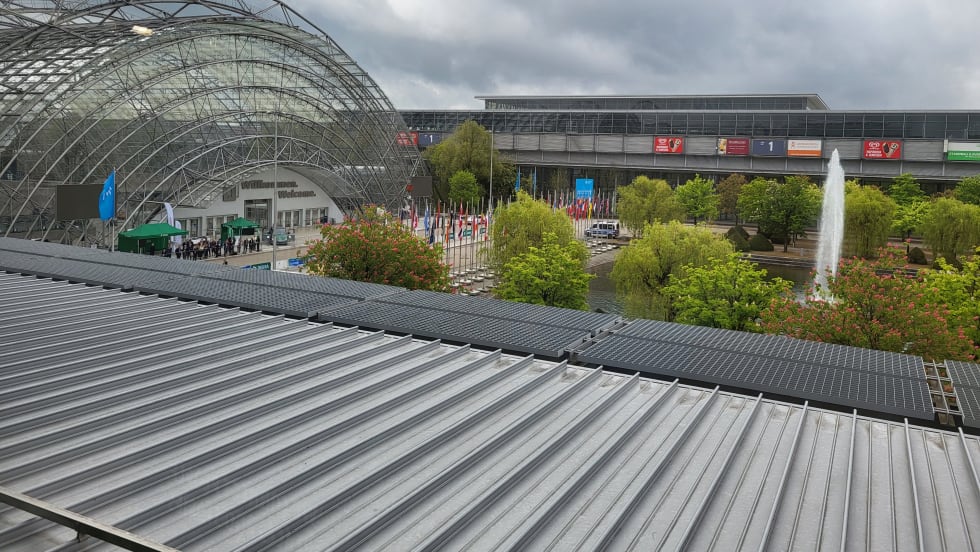
Inside ITF 2026: Transport Reacts to A Challenging World
Transport leaders from around the world gathered in Leipzig, Germany, for the 2026 International Transport Forum to discuss resilience, climate impacts, supply chains and the future of sustainable mobility.
Read More →
Every Ride Tells a Story — But You’re Not Just Selling the Ride
You’re selling the moment, the meaning, and the emotion behind it.
Read More →
How Digital Signage is Reshaping the Traveler Experience at Transportation Hubs
What was once a landscape of static signs has evolved into a responsive, immersive environment powered by real-time visual communication.
Read More →
Latest Trends in Urban Mobility from Polis Conference 2025
Polis comprises cities and regions, as well as corporate partners, from across Europe, promoting the development and implementation of sustainable mobility. This year’s event had over a thousand attendees across various policy forums and an exhibition.
Read More →
Why Transit Leaders Require Better Tools for Operational Clarity In Today’s Tech-Fragmented Environment
Across North America and beyond, transit agency officials are contending with a perfect storm of operational headaches and strategic challenges that hamper daily service and long-term progress.
Read More →
The Powerless Brokers: Why California Can’t Build Transit
It is no secret that transit in the U.S. is slow and expensive to build.
Read More →
Why Transport Sustainability Should Focus on People Instead of Cars
Simply incentivizing electrification is not enough to make a meaningful impact; we must shift our focus toward prioritizing public transportation and infrastructure.
Read More →