




Of all the systems necessary to put a transportation "meal on the table" for the American mobility consumer, the most complex, important and misunderstood is resources.
Meeting the mobility needs of America's aging population
Through no fault of their own, consumers of public transportation are like people who go into a restaurant, order a fine meal from the menu, and enjoy what the waiter or waitress places on the table.
May 2, 2019
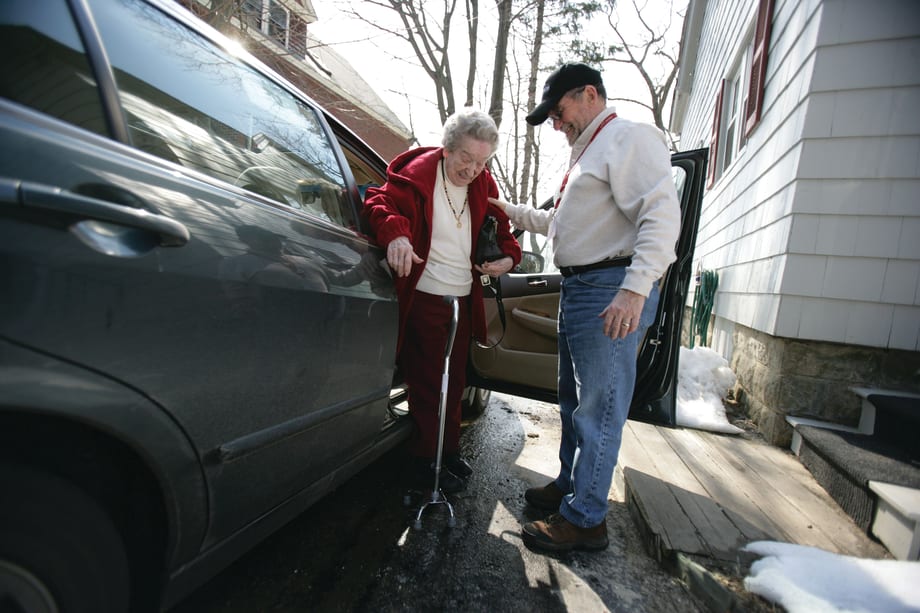
Based on data from its first million rides, ITN America's most common rider is a 90-year-old widowed woman with self-reported good health, living alone in the community.
ITN America
5 min to read
Based on data from its first million rides, ITN America's most common rider is a 90-year-old widowed woman with self-reported good health, living alone in the community.
ITN America
Transportation may be the most misunderstood of society’s essential systems and services. Sometimes, I think of it as a house with its various complexities — electrical, gas, plumbing, roofing, foundation, airflow, lighting, and temperature control. Sometimes transportation seems like the community vascular system, connecting everything and everybody. But regardless of the metaphor, transportation is more complicated than we who use it every day imagine. It needs systems for communication, fuel, mechanical movement, labor, management, storage, logistics, maintenance, governance, and above all, the resources necessary to pay for everything.
In the almost 30 years I have been working on ITNAmerica, a national nonprofit transportation solution for older people and those with special needs. I have rarely met anyone in public transportation not deeply committed, over worked, under resourced, and too often also unappreciated. Through no fault of their own, consumers of public transportation are like people who go into a restaurant, order a fine meal from the menu, and enjoy what the waiter or waitress places on the table. The whole process seems simple — read the menu, select, consume. There may be something going on in the kitchen, though it is generally a blur. But as anyone who has ever worked in the restaurant industry will tell you, it’s infinitely more than that.
Of all the systems necessary to put a transportation meal on the table for the American mobility consumer, the most complex, important and misunderstood is resources. Probably more than half of all transit riders assume the fare they pay covers the cost of their trip, when in fact the Hamilton Project of the Brookings Institute reports only a fraction of the nation’s 1,800 transit services operate in the black.

Even Uber and Lyft, internet-savvy taxicab companies, lose money on rides. Indeed, they have never been profitable. Instead of subsidizing rides with taxpayer dollars, they use investor funds. Lyft lost $911 million in 2018 despite revenue of $2.2 billion. Uber, the larger competitor, lost $1.8 billion on revenues of $11.8 billion.
Whenever I am in a conversation with someone who uses Uber or Lyft, I ask them if they are aware that these services lose money.
I have asked this question for several years, and so far every reply is the same: “Really?”
This is no surprise to me. Consumers are primarily concerned with their own ride. Unless someone is thinking of investing in the Uber or Lyft IPO’s, they aren’t thinking about Uber’s profitability. The same goes for transit — people just want to get where they are going. How much the ride is subsidized is not their issue.
Social enterprise
But as an organization with a mission to meet the mobility needs of America’s aging population, it is ITNAmerica’s issue. And because we are a non-profit organization, we approached the problem with a different set of business rules. ITNAmerica is a social enterprise, with a business-like approach and a social purpose as a bottom line. We are a little bit like a business and a little bit like public transit, so we have a foot in each world.
Based on data from our first million rides, our most common rider is a 90-year-old widowed woman with self-reported good health, living alone in the community. There is a high likelihood she has a mobility impairment and needs someone to carry her packages, fold her walker, or lend a steadying arm. Her income is modest. Her most common ride is for healthcare (40%), followed by consumer needs, such as rides to the hairdresser or supermarket (23%). The average fare she pays is about $12, and by a ratio of 10 to one, she describes the cost as inexpensive.
At $12 a ride, ITN also loses money. But unlike Uber and Lyft, and like more than 900 other non-profit transportation services in the U.S., ITN solves the labor problem with volunteers. The quality of service is extremely high, with ITN customer satisfaction ratings in the high 90’s for more than a decade, so there is always more demand than supply, and every non-profit transit service is endlessly on the prowl for more of this high quality, low-cost (or free) labor.
Another way to think of this resource is social capital. ITN built its own software, ITNRides, to capture, store, and redistribute this economic resource through a Personal Transportation Account. Volunteer drivers earn credit for every mile they drive, and then store these credits for their own future needs. Volunteers in one ITN community may send the credits to a loved one in any other ITN community nationwide. Older people with cars they no longer drive can trade the cars to pay for rides, storing the value as credits in their Personal Account.
Arm-through-arm, door-through-door
When the automated vehicles eventually come along, which they surely will, ITN volunteers or volunteers for other non-profit transportation services can still ride along and provide the arm-through-arm, door-through-door assistance that publicly subsidized or investor subsidized services simply cannot afford.
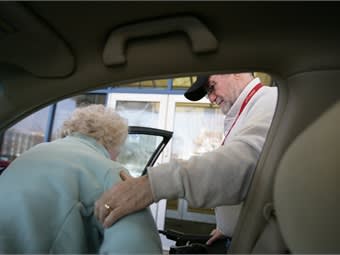
ITN America
This innovative approach to labor and capital expands the pool of resources available to meet consumer needs. It is ideal for tackling what is probably the most challenging transit problem of all: Rural America. ITNAmerica is now pilot testing a model that works where resources are scarce, opportunities for efficiency through shared rides are rare, and distances and cost are accelerated. It’s called ITNCountry, and it is designed to serve anyone in a rural community who wishes to participate in the system.
ITNCountry can thrive where public transit struggles because we provide the tools to support low cost, do-it-yourself transportation networks. If there is one resource in which rural America is rich, it is the spirit of neighbor helping neighbor. We can help reach the unmet need. We are a logical transit partner because we go where you don’t. We partner with communities to develop sustainable solutions, and we look forward to partnering with transit agencies too. In every state, ITNCountry will make the next difference.
Katherine Freund is president of ITN America.
Subscribe to Our Newsletter
More Blog Posts
Building a Winning FTA Grant Proposal: Why Propane Autogas is the Pragmatic Choice for Fleet Resilience
With $610 million available through the FY 2026 Buses and Bus Facilities Competitive Program and the Low or No Emission Grant Program, agencies must build a compelling case before the September 21 deadline that balances environmental compliance with operational feasibility.
Read More →
Velo-city Conference 2026: Latest Trends in Cycling as Part of Urban Mobility
The global cycling conference highlighted how cities are integrating bicycles into multimodal transportation networks, expanding cycle tourism and reshaping urban mobility.
Read More →
Kindness Isn’t Soft...It’s Strategic.
Mike Bismeyer — often known as “The Kindness Guy” — has spent more than 17 years in public transit and mobility, serving in industry leadership roles, speaking across North America, and advocating for stronger workplace cultures. But his message doesn’t come from theory. It comes from lived experience.
Read More →
Inside ITF 2026: Transport Reacts to A Challenging World
Transport leaders from around the world gathered in Leipzig, Germany, for the 2026 International Transport Forum to discuss resilience, climate impacts, supply chains and the future of sustainable mobility.
Read More →
Every Ride Tells a Story — But You’re Not Just Selling the Ride
You’re selling the moment, the meaning, and the emotion behind it.
Read More →
How Digital Signage is Reshaping the Traveler Experience at Transportation Hubs
What was once a landscape of static signs has evolved into a responsive, immersive environment powered by real-time visual communication.
Read More →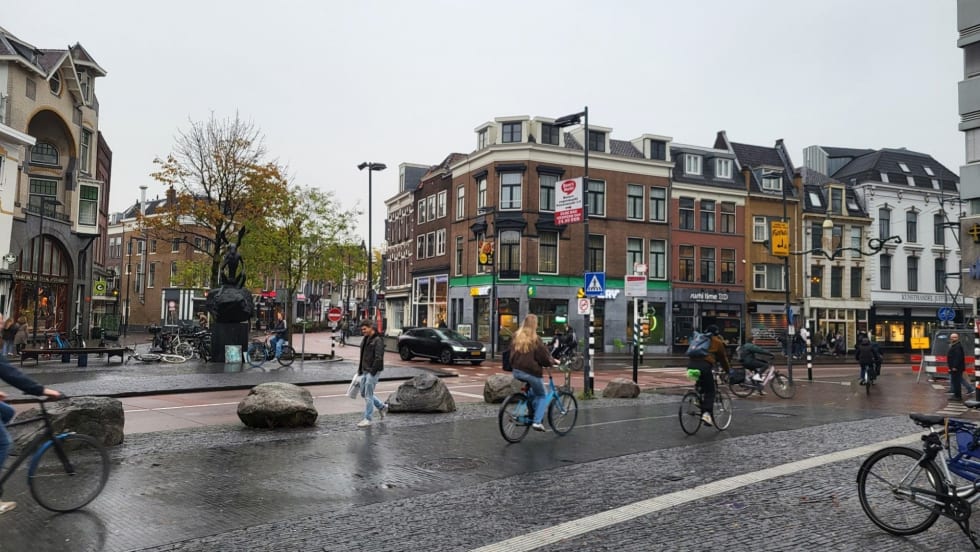
Latest Trends in Urban Mobility from Polis Conference 2025
Polis comprises cities and regions, as well as corporate partners, from across Europe, promoting the development and implementation of sustainable mobility. This year’s event had over a thousand attendees across various policy forums and an exhibition.
Read More →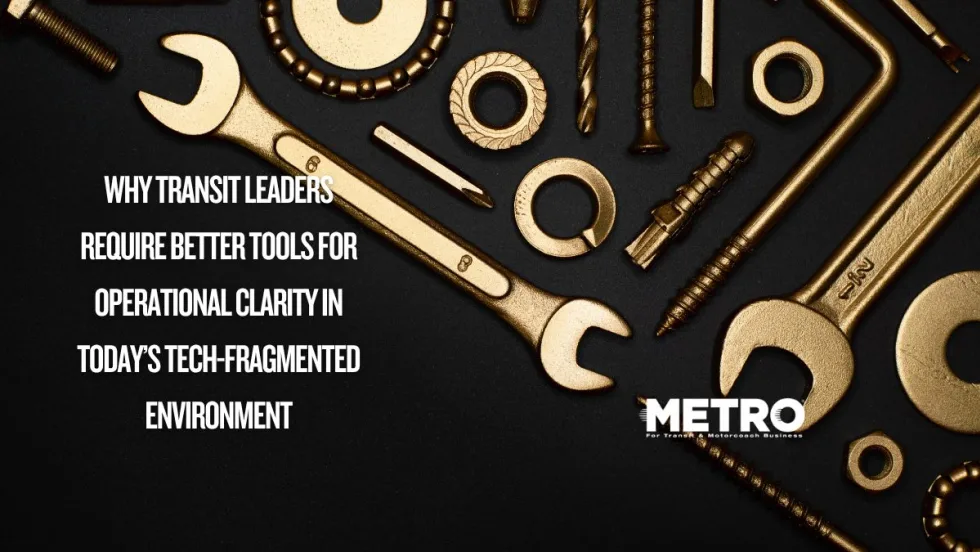
Why Transit Leaders Require Better Tools for Operational Clarity In Today’s Tech-Fragmented Environment
Across North America and beyond, transit agency officials are contending with a perfect storm of operational headaches and strategic challenges that hamper daily service and long-term progress.
Read More →
The Powerless Brokers: Why California Can’t Build Transit
It is no secret that transit in the U.S. is slow and expensive to build.
Read More →
Why Transport Sustainability Should Focus on People Instead of Cars
Simply incentivizing electrification is not enough to make a meaningful impact; we must shift our focus toward prioritizing public transportation and infrastructure.
Read More →