



Post-COVID Ridership Recovery: Klaipeda Public Transport Use Case
As we slowly begin to emerge from the pandemic, some very interesting trends are starting to present themselves. Specifically, in the world of mobility and public transport, we’re beginning to witness levels of commercial, recreation, and leisure activities not seen since late 2019/early 2020.


The challenge being faced by Klaipeda is understanding real passenger demand, distribution, and behavior in the short term.
Getty Images/Aleh Varanishcha
As we slowly begin to emerge from the pandemic, some very interesting trends are starting to present themselves. Specifically, in the world of mobility and public transport, we’re beginning to witness levels of commercial, recreation, and leisure activities not seen since late 2019/early 2020.
What’s important to note is that many of these trends are either on target or growing faster than previously expected, in light of recent COVID variants (such as Omicron). Therefore, what we’re currently dealing with is a situation as we move into the summer of 2022 whereby many public sector planners, engineers, operators, and policymakers are simply trying to make sense of the data. Below is a snapshot from Power BI that highlights the dramatic increase in ridership by average working day over the past four months (January — April 2022).
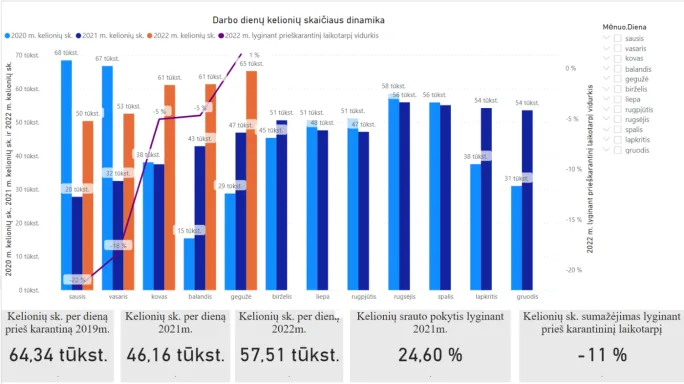
Average Working Day — By Month (2022)
Charts are public domain
Asistobe currently works with several global clients in delivering AI-assisted optimization and planning tools for public transport networks. One of which is Klaipeda Public Transport in Klaipeda, Lithuania. The challenge being faced by Klaipeda is understanding real passenger demand, distribution, and behavior in the short term. This will better enable them to replan their schedules, frequency, and match services with consumer preferences.
The current project with Klaipeda Public Transport encompasses three discrete product phases (EXPLORE / OPTIMIZE / PLAN), which address the complete lifecycle of public transport planning and operations. Klaipeda Public Transport will soon be able to leverage the power of OPTIMIZE to not only scan for problems in the network but to now create customized optimization scenarios that allow them to better understand cost, operational, and service quality tradeoffs when defining new parameters for occupancy, frequency, and other strategic KPIs. Below is a preview of the OPTIMIZE module, which is to be launched in late May.
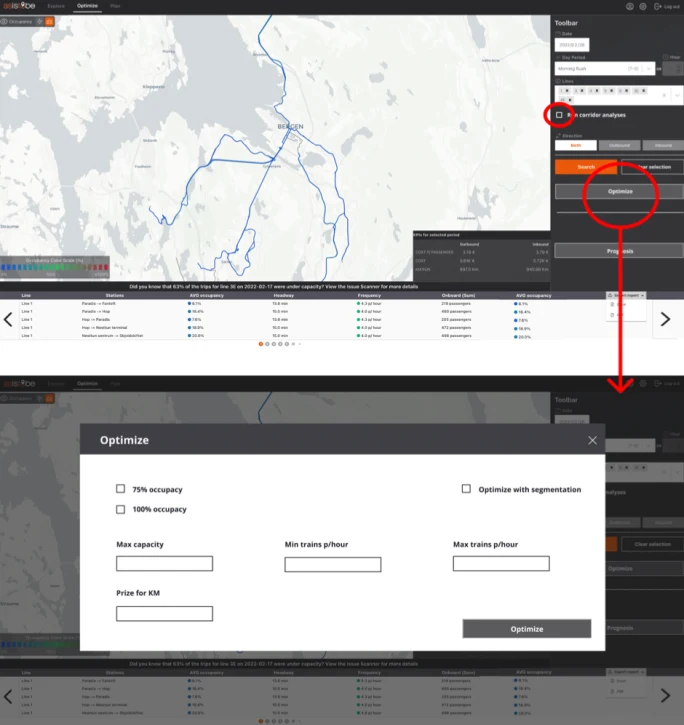
Asistobe Optimize Short Term Scenarios
Not only service planners, but operators, executive, engineers, and finance will have their own views and leverage the power of AI & Machine Learning through multimodal data sources to provide a complete picture of the public transport network. In addition, automated prognoses will be offered that give users the ability to not only create customized optimization scenarios, but also run seven-day predictions into the future based upon data from real passenger demand. Keep in mind, this data comes from a variety of sources, and Asistobe’s data science/R&D team currently validates, processes, and cleanses data from: passenger counting systems, ticketing systems, GTFS / NeTEx, GPS, telco, and others. Below is a preview of the prognosis tool, which is to be bundled in the OPTIMIZE module, and to be used by Klaipeda and other clients in better understanding future transport service delivery.
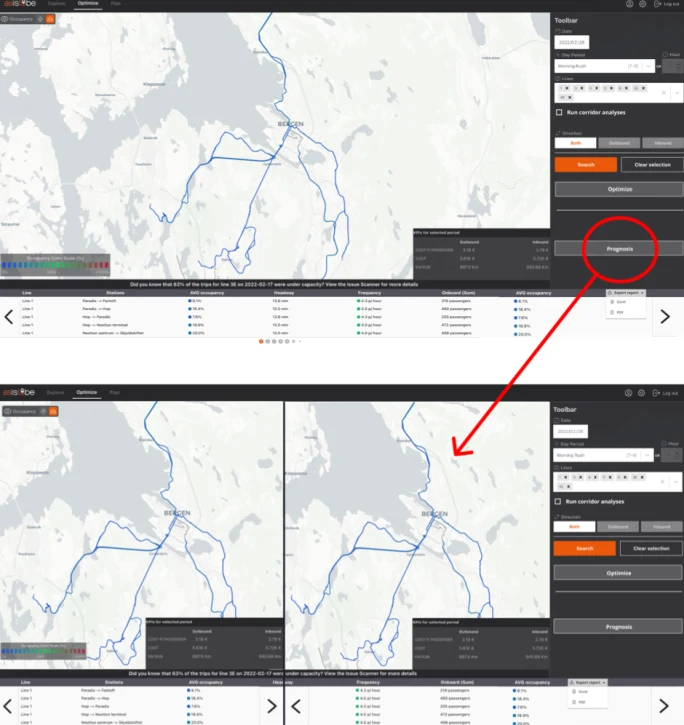
Asistobe Prognosis 7-Day Outlook
Klaipeda Public Transport along with many other agencies are seeking to better understand the data they have, and how to leverage these insights for actionable results. The specific business case here is to apply these insights gathered over the past three months, present themselves visually and graphically in the Asistobe platform, and serve insights into future plans. As can be seen in the graph below, Klaipeda is trying to manage its fleet, drivers, and capacity as it plans for summertime service. The image depicts how ridership is consistently increasing on average 2% week over week, as we approached Week 20.
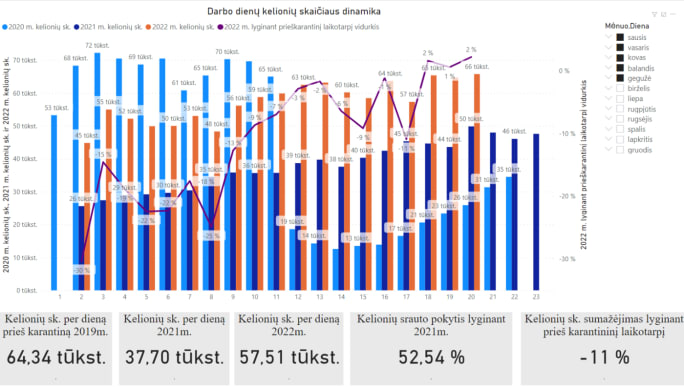
Ridership by Week (2022)
The challenge now is to leverage the wealth of data and local knowledge related to this dramatic increase in ridership and better plan and deliver public transport services. Asistobe will be working with Klaipeda Public Transport in the coming weeks and months to analyze and visualize data insights in the Optimize module to enable short term customized cost and operational scenarios, along with automated prognoses based upon data from real passenger demand patterns. We look forward to working with Klaipeda and all our clients in aligning services with the demands of every changing mobility landscape in 2022 and beyond.
More Blog Posts
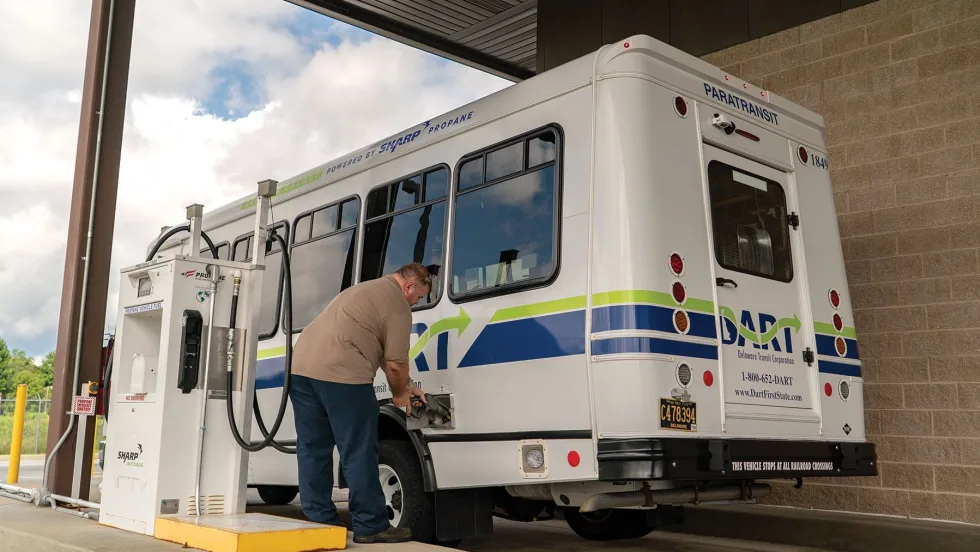
Building a Winning FTA Grant Proposal: Why Propane Autogas is the Pragmatic Choice for Fleet Resilience
With $610 million available through the FY 2026 Buses and Bus Facilities Competitive Program and the Low or No Emission Grant Program, agencies must build a compelling case before the September 21 deadline that balances environmental compliance with operational feasibility.
Read More →
Velo-city Conference 2026: Latest Trends in Cycling as Part of Urban Mobility
The global cycling conference highlighted how cities are integrating bicycles into multimodal transportation networks, expanding cycle tourism and reshaping urban mobility.
Read More →
Kindness Isn’t Soft...It’s Strategic.
Mike Bismeyer — often known as “The Kindness Guy” — has spent more than 17 years in public transit and mobility, serving in industry leadership roles, speaking across North America, and advocating for stronger workplace cultures. But his message doesn’t come from theory. It comes from lived experience.
Read More →
Inside ITF 2026: Transport Reacts to A Challenging World
Transport leaders from around the world gathered in Leipzig, Germany, for the 2026 International Transport Forum to discuss resilience, climate impacts, supply chains and the future of sustainable mobility.
Read More →
Every Ride Tells a Story — But You’re Not Just Selling the Ride
You’re selling the moment, the meaning, and the emotion behind it.
Read More →
How Digital Signage is Reshaping the Traveler Experience at Transportation Hubs
What was once a landscape of static signs has evolved into a responsive, immersive environment powered by real-time visual communication.
Read More →
Latest Trends in Urban Mobility from Polis Conference 2025
Polis comprises cities and regions, as well as corporate partners, from across Europe, promoting the development and implementation of sustainable mobility. This year’s event had over a thousand attendees across various policy forums and an exhibition.
Read More →
Why Transit Leaders Require Better Tools for Operational Clarity In Today’s Tech-Fragmented Environment
Across North America and beyond, transit agency officials are contending with a perfect storm of operational headaches and strategic challenges that hamper daily service and long-term progress.
Read More →
The Powerless Brokers: Why California Can’t Build Transit
It is no secret that transit in the U.S. is slow and expensive to build.
Read More →
Why Transport Sustainability Should Focus on People Instead of Cars
Simply incentivizing electrification is not enough to make a meaningful impact; we must shift our focus toward prioritizing public transportation and infrastructure.
Read More →