



Preparing for the worst
An explosive device concealed in a travel bag was detonated on a packed SEPTA subway car. Agency officials and Philadelphia first responders raced to the location to rescue passengers trapped in the subway tunnel and prevent further destruction. While the tense and scary situation seemed authentic, the May 19 terrorist attack was simulated.

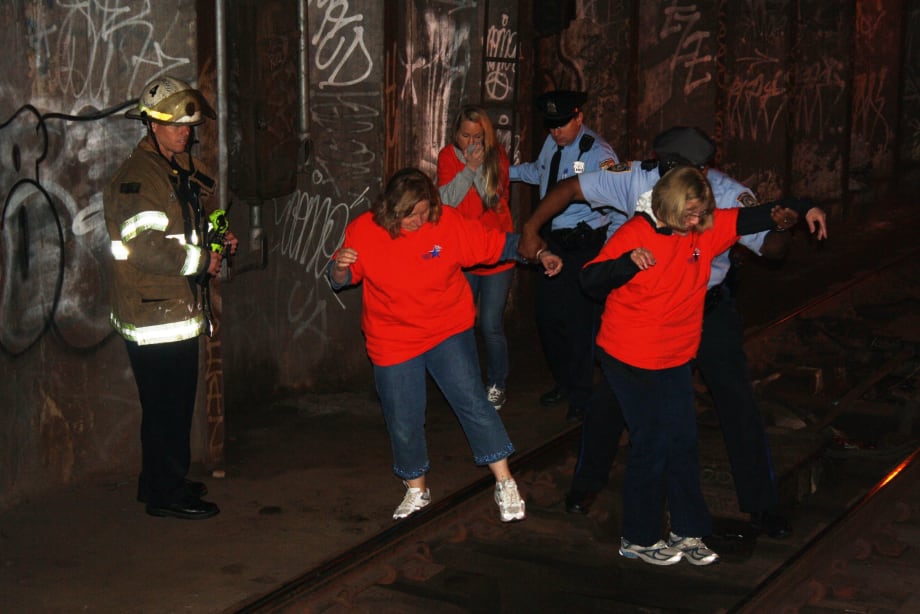
A SEPTA police officer, Philadelphia police officer and Philadelphia firefighter assist “victims” through the subway tunnel.


The blood curdling screams. The deafening bangs. An explosive device concealed in a travel bag was detonated on a packed Southeastern Pennsylvania Transportation Authority (SEPTA) subway car near Fairmount Station. SEPTA officials and Philadelphia first responders raced to the location to rescue passengers trapped in the subway tunnel and prevent further destruction.
It was a scenario TV dramas would say was “ripped from today’s headlines.” While the tense and scary situation seemed authentic, the May 19 terrorist attack was simulated. The dozens of victim volunteers from Philadelphia’s Medical Reserve Corps had been given instructions on the extent of their injuries. But the “attack” on the Broad-Ridge Spur of SEPTA’s Broad Street subway line held the real and very necessary purpose of testing the emergency readiness plans of SEPTA personnel and Philadelphia’s first response units.
“We prepare for the worst, develop a response and must be ready to put it into action,” said James Fox, SEPTA chief control center officer.
The event played out in real time. When the “bomb” went off at approximately 9:21 a.m., the train operator contacted SEPTA’s Control Center. Almost instantaneously, SEPTA Police Department officers, K-9 and Special Operations Response Team, as well as Philadelphia Police and Fire units, were on the scene, located just north of downtown Philadelphia, working together on a coordinated response.
“You have to be able to get to and into the train as quickly as possible," Fox said. "You have to be able to get your evacuation procedure up and running and set up an area to triage those who are injured.”
Power to the subway was turned off, allowing rescue personnel to enter the tunnel. Medics assessed the victims and those who could walk were escorted by police. Others were carried out by paramedics and firefighters. Above ground, SEPTA established a command post near the scene and buses were brought in to shelter the injured.
On the train, the bomb squad examined several suitcases, briefcases and other suspicious packages for potential explosives. Constant radio and phone updates kept all personnel abreast of the situation.
An hour and a half later, the drill was over, with more than 70 “injured” passengers, two “fatalities” and one person with a description of the suspect. And, all participating agencies received the feedback needed to evaluate and refine their preparedness plans.
Mandatory emergency drills like this are invaluable for transportation agencies not only because they provide the opportunity to test staff knowledge and the thoroughness of readiness responses, but also because they afford the chance to work closely with their local police and fire departments without the chaos of an actual event. In SEPTA’s case, because the Broad-Ridge Spur portion of the subway does not operate on Sundays, the drill was able to take place in the actual subway tunnel, allowing first responders to get a feel for the conditions they will be working under should an attack or similar incident occur.
“You never want to see something like this happen, but if there is an incident, we want to be prepared to handle it,” Fox said.
Emergency drills are also valuable in that they demonstrate to the public that organizations are evaluating their safety efforts on a regular basis.
"We want our riders and the residents of our region to know that we are preparing the first responders in a procedure so that they know exactly how they are going to handle this type of situation," Fox said.
RELATED: "Transit safety is a community effort"
In case you missed it...
Read our METRO blog, "Transit agencies should take advantage of 'Dump the Pump Day'" here.
More Blog Posts
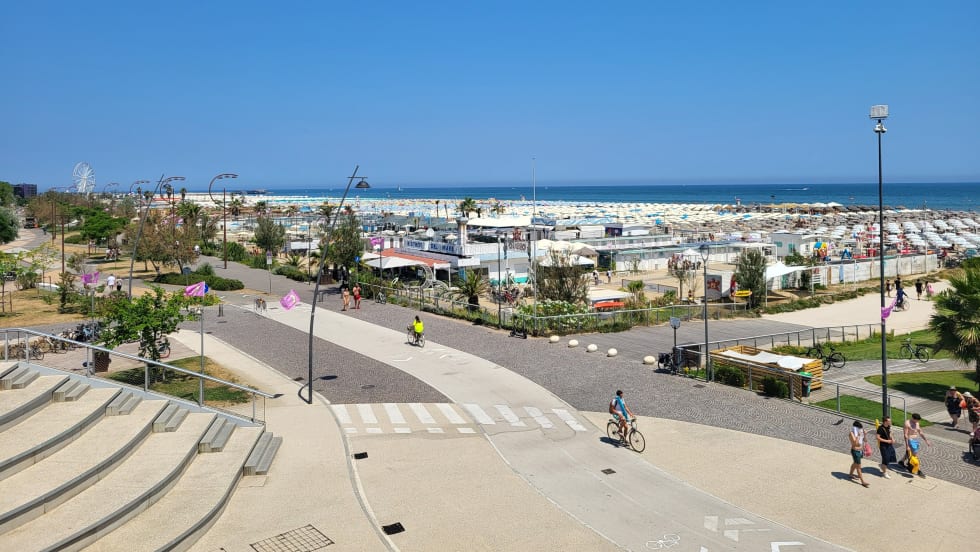
Velo-city Conference 2026: Latest Trends in Cycling as Part of Urban Mobility
The global cycling conference highlighted how cities are integrating bicycles into multimodal transportation networks, expanding cycle tourism and reshaping urban mobility.
Read More →
Kindness Isn’t Soft...It’s Strategic.
Mike Bismeyer — often known as “The Kindness Guy” — has spent more than 17 years in public transit and mobility, serving in industry leadership roles, speaking across North America, and advocating for stronger workplace cultures. But his message doesn’t come from theory. It comes from lived experience.
Read More →
Inside ITF 2026: Transport Reacts to A Challenging World
Transport leaders from around the world gathered in Leipzig, Germany, for the 2026 International Transport Forum to discuss resilience, climate impacts, supply chains and the future of sustainable mobility.
Read More →
Every Ride Tells a Story — But You’re Not Just Selling the Ride
You’re selling the moment, the meaning, and the emotion behind it.
Read More →
How Digital Signage is Reshaping the Traveler Experience at Transportation Hubs
What was once a landscape of static signs has evolved into a responsive, immersive environment powered by real-time visual communication.
Read More →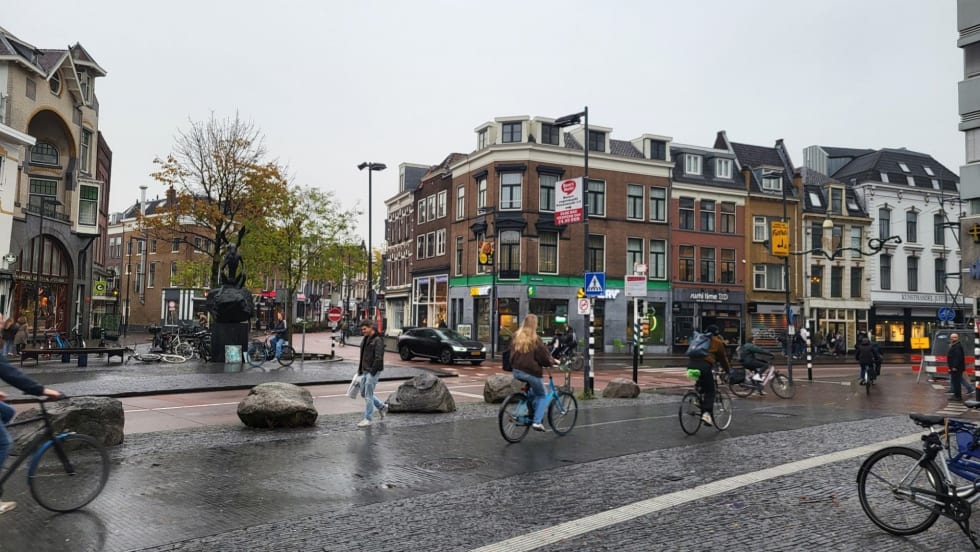
Latest Trends in Urban Mobility from Polis Conference 2025
Polis comprises cities and regions, as well as corporate partners, from across Europe, promoting the development and implementation of sustainable mobility. This year’s event had over a thousand attendees across various policy forums and an exhibition.
Read More →
Why Transit Leaders Require Better Tools for Operational Clarity In Today’s Tech-Fragmented Environment
Across North America and beyond, transit agency officials are contending with a perfect storm of operational headaches and strategic challenges that hamper daily service and long-term progress.
Read More →
The Powerless Brokers: Why California Can’t Build Transit
It is no secret that transit in the U.S. is slow and expensive to build.
Read More →
Why Transport Sustainability Should Focus on People Instead of Cars
Simply incentivizing electrification is not enough to make a meaningful impact; we must shift our focus toward prioritizing public transportation and infrastructure.
Read More →
Transit ROI & System Efficiencies Will Drive 'Big, Beautiful' Transit Funding
For many years, the narrative surrounding public transit improvements has been heavily weighted toward environmental gains and carbon reduction. While these are undeniably crucial long-term benefits, the immediate focus of this new funding environment is firmly on demonstrable system efficiencies and a clear return on investment.
Read More →