



Tackling Rail Maintenance 'Blitz'-Style to Minimize 'Down' Time
Maintenance and construction projects can present quite the conundrum for transportation organizations with rail operations: shut down a major portion or entire line in one shot to get the work done while offering substitute service for riders? Work overnights and weekends for long stretches of time? One solution to the maintenance/construction puzzle is the “blitz” — a balancing act between productivity and customer inconvenience.

Maintenance and construction projects can present quite the conundrum for transportation organizations with rail operations: shut down a major portion or entire line in one shot to get the work done while offering substitute service for riders? Work overnights and weekends for long stretches of time? One solution to the maintenance/construction puzzle is the “blitz” — a balancing act between productivity and customer inconvenience.
For the second consecutive summer, SEPTA is utilizing the blitz method, which is favored by freight rail lines, to complete much-needed repairs and upgrades for its trolley tunnel — a five-mile, single-track passageway that carries approximately 40,000 commuters every day between downtown and West Philadelphia on five trolley routes. In 2013, the tunnel was closed for 10 days while SEPTA’s in-house crews completed numerous projects, such as replacing approximately 10,000 feet of worn overhead wire and 2,500 feet of support troughing, along with power cleaning, painting and making repairs to stations.
RELATED:Track Maintenance Equipment Gets Job Done Faster, Safer
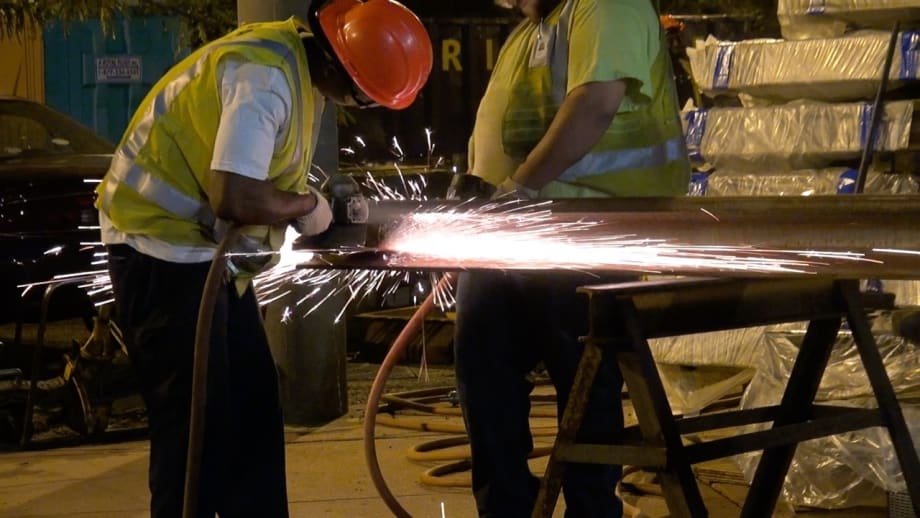
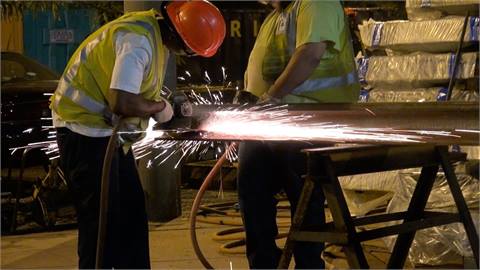
In 2014, the tunnel will be closed for 17 days while the authority’s crews replace nearly 24,000 feet of worn overhead contact wire; weld together long rail strings and install more than 14,000 feet of new rail; replace two concrete-embedded track switches; replace worn track components and clean the track drains and stormwater system throughout the tunnel; test back-up and emergency lighting cables; and complete numerous station maintenance tasks and station repairs. SEPTA will also complete a major station upgrade at the 15th Street westbound station in just one month because much of the work will be done during the closure.
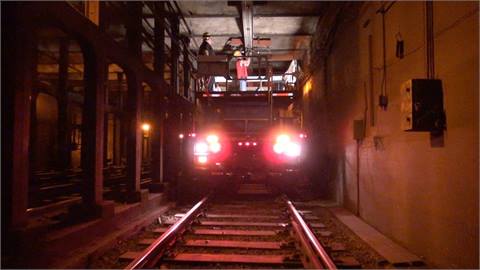
In all, some 250 employees will participate in the 390 hours that the tunnel is closed to ensure all projects are complete by the start of the service day on August 18.
“This ‘blitz’ concept is used in the transportation industry because it allows organizations to maximize productivity during improvements projects while minimizing the period of inconvenience to passengers and communities that we serve. This is especially true when there is a single track operation, like our trolley tunnel,” said SEPTA Deputy GM Jeff Knueppel. “Because the tunnel is in use all day, every day, with the exception of a few hours on Sunday evenings, and is a single track operation, it is difficult for our crews to get productive work windows. Without this blitz and 17-day closure, we’d have months of nighttime and weekend shutdowns to complete all of the various projects.”
A key factor for the to the blitz’s being able to happen is that SEPTA’s Market-Frankford subway-elevated line runs parallel to the trolleys through downtown Philadelphia, eliminating the need to use buses for service substitution.
RELATED:SEPTA to save $4 million yearly in rail energy costs
Portions of SEPTA’s trolley tunnel date back to the turn of the century — the 20th century. It’s been 30 years since the rails have been renewed and eight years since the wires were replaced. With 662 trolleys per day (200,000 per year) traveling through the tunnel, the infrastructure must be reliable. It is a single track operation — if one section of track goes down, trolleys cannot operate.
“We chose this time of year to do the work because our ridership is at its lowest,” said Knueppel. “When our riders return from vacation and head back to school en masse at the end of August and beginning of September, they will be using a trolley tunnel that is safer, more reliable and more attractive.”
SEPTA’s Trolley Tunnel Blitz also demonstrates the importance of government investment in transportation, as major construction elements for the project were funded by Pennsylvania’s Act 89, a landmark bill which was approved by the Commonwealth’s legislature and signed by Gov. Tom Corbett last fall to provide a dedicated, long-term funding solution for transportation infrastructure investments in Pennsylvania.
In case you missed it...
Read our previous blog, "How to Maximize Peak Performance from Your New Transit Maintenance Facility"
More Blog Posts
Building a Winning FTA Grant Proposal: Why Propane Autogas is the Pragmatic Choice for Fleet Resilience
With $610 million available through the FY 2026 Buses and Bus Facilities Competitive Program and the Low or No Emission Grant Program, agencies must build a compelling case before the September 21 deadline that balances environmental compliance with operational feasibility.
Read More →
Velo-city Conference 2026: Latest Trends in Cycling as Part of Urban Mobility
The global cycling conference highlighted how cities are integrating bicycles into multimodal transportation networks, expanding cycle tourism and reshaping urban mobility.
Read More →
Kindness Isn’t Soft...It’s Strategic.
Mike Bismeyer — often known as “The Kindness Guy” — has spent more than 17 years in public transit and mobility, serving in industry leadership roles, speaking across North America, and advocating for stronger workplace cultures. But his message doesn’t come from theory. It comes from lived experience.
Read More →
Inside ITF 2026: Transport Reacts to A Challenging World
Transport leaders from around the world gathered in Leipzig, Germany, for the 2026 International Transport Forum to discuss resilience, climate impacts, supply chains and the future of sustainable mobility.
Read More →
Every Ride Tells a Story — But You’re Not Just Selling the Ride
You’re selling the moment, the meaning, and the emotion behind it.
Read More →
How Digital Signage is Reshaping the Traveler Experience at Transportation Hubs
What was once a landscape of static signs has evolved into a responsive, immersive environment powered by real-time visual communication.
Read More →
Latest Trends in Urban Mobility from Polis Conference 2025
Polis comprises cities and regions, as well as corporate partners, from across Europe, promoting the development and implementation of sustainable mobility. This year’s event had over a thousand attendees across various policy forums and an exhibition.
Read More →
Why Transit Leaders Require Better Tools for Operational Clarity In Today’s Tech-Fragmented Environment
Across North America and beyond, transit agency officials are contending with a perfect storm of operational headaches and strategic challenges that hamper daily service and long-term progress.
Read More →
The Powerless Brokers: Why California Can’t Build Transit
It is no secret that transit in the U.S. is slow and expensive to build.
Read More →
Why Transport Sustainability Should Focus on People Instead of Cars
Simply incentivizing electrification is not enough to make a meaningful impact; we must shift our focus toward prioritizing public transportation and infrastructure.
Read More →