




RELATED: 'Connected' Vehicle Testing Aims to Bolster Bus Safety
The Benefits and Challenges of IoT in Public Transportation
In 2017, nearly 60% of all installed IoT devices in smart cities were used in smart commercial buildings and transportation. IoT devices can help the public transportation industry reduce costs in significant ways. Consider these four ways IoT is impacting the transportation industry’s bottom line...
April 25, 2017
U.S.DOT/UMTRI
4 min to read
U.S.DOT/UMTRI
Smart cities rely heavily on the Internet of Things (IoT). In 2017, nearly 60% of all installed IoT devices in smart cities were used in smart commercial buildings and transportation. By 2020, smart cities will use 1.39 billion connected things to deliver sustainability and accomplish climate change goals.
However, the environment isn’t the only beneficiary of this digital transformation. IoT devices can help the public transportation industry reduce costs in significant ways. Consider these four ways IoT is impacting the transportation industry’s bottom line:
Vehicle-to-Vehicle (V2V) solutions
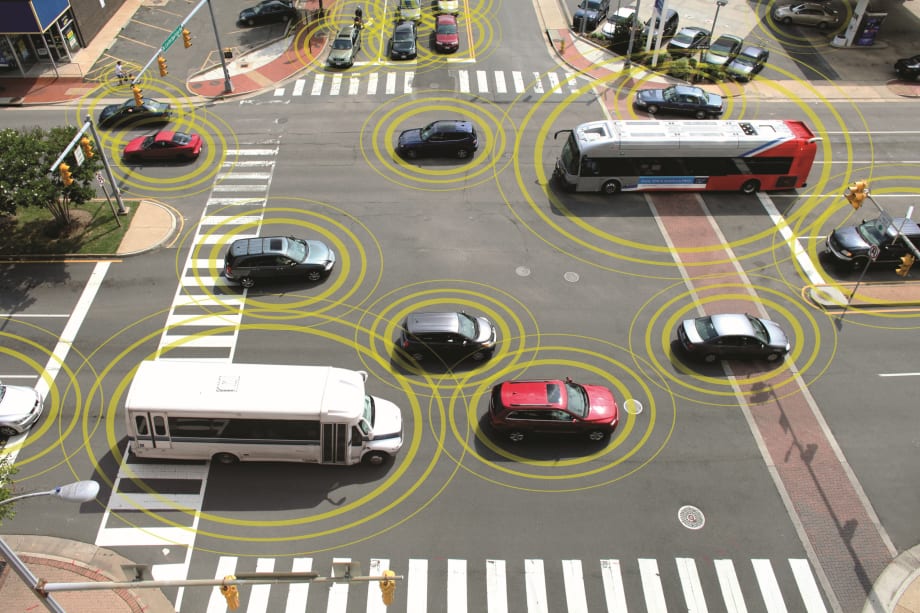
The National Highway Traffic Safety Administration (NHTSA) is exploring the use of Vehicle-to-Vehicle (V2V) communications to reduce traffic accidents and increase overall safety. Current V2V technology is designed to avoid accidents and warn drivers of impending crashes. Additional V2V solutions include Left Turn Assist, which warns drivers not to turn left in front of oncoming traffic, and Intersection Movement Assist, which warns drivers not to enter an intersection because the probability of colliding with another vehicle is high. When combined, Left Turn Assist and Intersection Movement Assist prevent up to 592,000 crashes per year.
Real-time vehicle location information and data
Via mobile application, location-enabled IoT devices can alert waiting passengers with real-time vehicle location information and data, estimated trip times, and notifications when they should leave their current locations to catch a bus or train. These IoT devices also allow transit officials to analyze and improve routes and options based on aggregated data.
Predictive, preventive maintenance
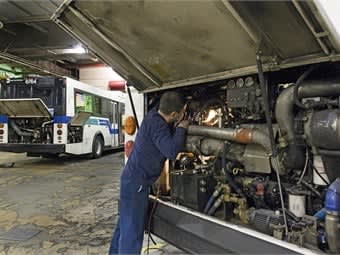
IoT sensors allow administrators to monitor the health of a fleet from any connected device. Predictive maintenance utilizes IoT to assess the condition of vehicles and foresee failures before they occur. Condition-based maintenance can prevent failures, extend vehicle life, and improve the reliability of monitored vehicles. The ability to set up alerts for low battery, check engine, oil change, coolant temperature, inspection reminders, and more, allows vehicles to run safely and stay on the road longer.
Safety compliance
Federal and state regulations dictate everything from the maximum amount of time a driver can be on the road without rest, to bus and train size, weight, and signage limitations. IoT devices can ensure drivers are adhering to established industry and/or employer guidelines. Organizations can track how fast vehicles are moving, how long they remain idle, and enable Global Positioning System (GPS) tracking to know exactly where any fleet vehicle is at any point in time. The aggregated IoT solution data can help transit authorities identify operation areas with high risk and develop new safety measures to keep workers and passengers safe.
Like any other newly implemented technology, IoT solutions do bring some challenges to the public transportation industry:
Security breaches
As the number of network-connected devices and sensors continues to grow exponentially, measures must be taken to protect sensitive data and networks. Ensuring that all IoT devices are compliant with an organization’s security policies and enrolled in an Enterprise Mobility Management (EMM) solution is a great starting point. Other considerations include data transmission encryption, user access control, and device authentication.
Extended network infrastructure
The proliferation of IoT devices will make it necessary for organizations to work with larger data capacity and manage more IP addresses, increasing the workload for Information Technology (IT) teams. The network infrastructure supporting an IoT solution must be able to handle the constant communication and collection of data from sensors and IoT devices. Most IoT solutions’ data outputs grow as more automated workflows and controls are added to each program. So, it is important that networks have the capacity to easily scale as organization and program needs evolve.
Increase in investment
The adoption of IoT technology is expected to result in savings and operational optimizations for most organizations, but it can require a significant investment. Some of the costs associated with an IoT solution deployment include network infrastructure; implementation downtime; retrofitting vehicles or machines to be directly connected to an IoT device; customization, configuration, and training; security; and the cost to plan, implement, and manage the IoT solution.
It is worth noting that the success of IoT in public transportation — or any industry for that matter — depends largely on the ability to successfully monitor, collect data, and garner insights from a constantly growing set of IoT devices. There are many cloud-based solutions that can track IoT assets and report on their basic characteristics. However, there are very few solutions that also manage and optimize a significant cost element in IoT — mobile carrier data usage.
Fortunately, there is a well-developed solution that can be used in IoT: a Mobility Management Platform (MMP) in conjunction with Managed Mobility Services (MMS). An MMP is a software-first solution that empowers enterprises by centralizing all connected device data in one platform. Through expense management, an MMP optimizes the use of mobile carrier networks for smartphones and can also perform the same function for IoT devices. Additional platform features that are applicable to implementing IoT solutions include device, program, and workflow management.
The key is having one location from where IoT program administrators can manage, monitor, and safeguard all IoT devices, software, and data to provide their organizations with the business intelligence to make more impactful decisions.
Chris Koeneman is the sr. VP of MOBI, a provider of software and services to management mobility (www.mobiwm.com).
Subscribe to Our Newsletter
More Blog Posts
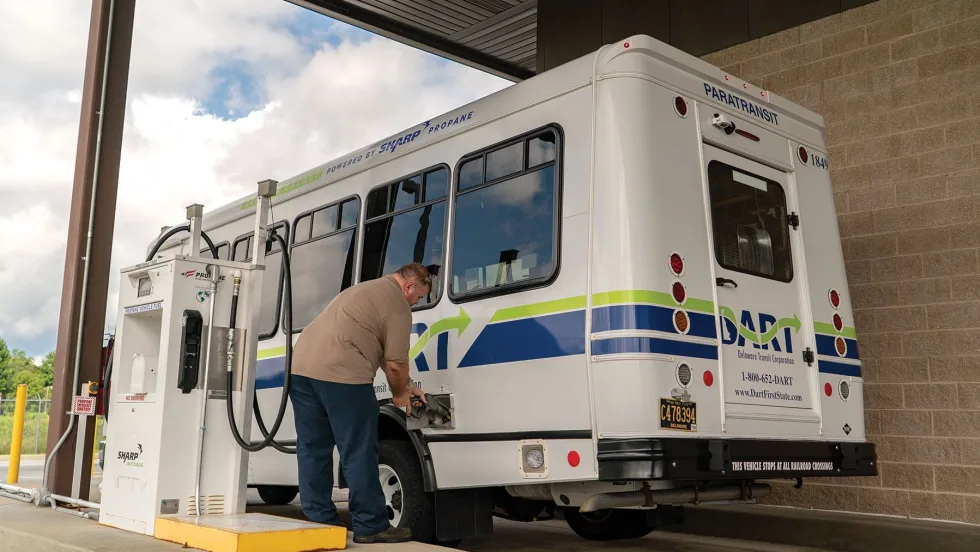
Building a Winning FTA Grant Proposal: Why Propane Autogas is the Pragmatic Choice for Fleet Resilience
With $610 million available through the FY 2026 Buses and Bus Facilities Competitive Program and the Low or No Emission Grant Program, agencies must build a compelling case before the September 21 deadline that balances environmental compliance with operational feasibility.
Read More →
Velo-city Conference 2026: Latest Trends in Cycling as Part of Urban Mobility
The global cycling conference highlighted how cities are integrating bicycles into multimodal transportation networks, expanding cycle tourism and reshaping urban mobility.
Read More →
Kindness Isn’t Soft...It’s Strategic.
Mike Bismeyer — often known as “The Kindness Guy” — has spent more than 17 years in public transit and mobility, serving in industry leadership roles, speaking across North America, and advocating for stronger workplace cultures. But his message doesn’t come from theory. It comes from lived experience.
Read More →
Inside ITF 2026: Transport Reacts to A Challenging World
Transport leaders from around the world gathered in Leipzig, Germany, for the 2026 International Transport Forum to discuss resilience, climate impacts, supply chains and the future of sustainable mobility.
Read More →
Every Ride Tells a Story — But You’re Not Just Selling the Ride
You’re selling the moment, the meaning, and the emotion behind it.
Read More →
How Digital Signage is Reshaping the Traveler Experience at Transportation Hubs
What was once a landscape of static signs has evolved into a responsive, immersive environment powered by real-time visual communication.
Read More →
Latest Trends in Urban Mobility from Polis Conference 2025
Polis comprises cities and regions, as well as corporate partners, from across Europe, promoting the development and implementation of sustainable mobility. This year’s event had over a thousand attendees across various policy forums and an exhibition.
Read More →
Why Transit Leaders Require Better Tools for Operational Clarity In Today’s Tech-Fragmented Environment
Across North America and beyond, transit agency officials are contending with a perfect storm of operational headaches and strategic challenges that hamper daily service and long-term progress.
Read More →
The Powerless Brokers: Why California Can’t Build Transit
It is no secret that transit in the U.S. is slow and expensive to build.
Read More →
Why Transport Sustainability Should Focus on People Instead of Cars
Simply incentivizing electrification is not enough to make a meaningful impact; we must shift our focus toward prioritizing public transportation and infrastructure.
Read More →