



The Value of MaaS for the Public Sector
MaaS is a concept that has been around for some time now, however, there is one burning question that remains: What is the value, and for whom?


Getty Images/RRice1981
MaaS is a concept that has been around for some time now, however, there is one burning question that remains: What is the value, and for whom? Well in the public sector, value is a complicated issue to unpack. Value for the public sector can span multiple domains including societal, environmental, and economic.
Societal value for the public sector related to MaaS places a strong emphasis on access. This is related to the equitable access to goods and services in which inhabitants can easily obtain on a routine a regular basis. When taken into the context of the “15-minute city” this translates into an environment that is rich with multimodal opportunities that encourage active transportation (walking, cycling) and place public transport at the center of the shared mobility ecosystem. MaaS is seen as a digital layer that delivers seamless access to multimodal opportunities, thus expanding the options for mobility access.
Environmental value for the public sector describes how MaaS can encourage modal shift and behavioral changes related to urban mobility. Specifically, public sector planners, administrators, and public transport operators place a high value on setting strategic policies that shift overreliance on single car usage to other, greener, and more carbon neutral modes of mobility. From an environmental perspective, achieving zero carbon has become one of the north star KPIs in which governments, agencies and organizations have set for themselves with regards to compliance with UN Sustainable Development Goals (SDGs) and Sustainable Urban Mobility Plans (SUMPs).
Economic value is the cost savings or added value in which MaaS has the potential to deliver to the public sector, consumers of shared mobility services and public transport. By taking a simple measure of economic analysis, one can determine that the return on investment (ROI) for successfully implementing a door to door MaaS platform can yield economic benefits not only to public transport and rail operators (e.g. increased ridership and passengers), but also to consumers themselves, such as time savings (reducing intermodal transfer times), and leveraging open mobility marketplaces to compare cost for the best possible multimodal offer, which may in fact include personal cars and parking as individual components in a multimodal journey.
Opportunities for MaaS in the Public Sector
When looking at a more detailed view of what MaaS brings to the table for the public sector, it should be understood there are specific opportunities for collaboration with cross departmental stakeholders across a variety of agencies. Specifically, MaaS can be seen as a digital mobility marketplace enabler that packages a variety of services and offers to align with added value that public sector authorities seek to deliver.
Some of the specific MaaS added value use cases and programs in which can be delivered within the public sector include the following, such as:
Agency-Wide Mobility Marketplace — Offering a cross departmental agency open mobility marketplace to be accessed agency-wide (employees, contactors, multiple departments).
Employee Mobility Demand — Delivering a base level of mobility demand for public sector employee vehicles and usage via MaaS.
Employee Mobility Budgets — Connecting an open mobility marketplace to support employee budgets (to support freedom of choice and cash for junkers).
New Sales Channels — Creating open mobility ecosystems that encourage and boost digital ticket sales for public transport and rail via multiple B2B consumer facing platforms.
Goods Delivery & Curbside Management — Orchestrating public and private fleets, parcel deliveries, and even shared fleets for multiple deliveries.
Medical & Educational Mobility Access — Providing seamless, door to door access for medical transport, educational transport, and paratransit but integrating with demand responsive transport (DRT).
Urban Planning & Infrastructure Insights — Leveraging MaaS and shared mobility data as a digital layer to inform mobility governance, policy, and future investment in multimodal capital infrastructure programs.
MaaS has the potential to be the enabler for public sector agencies to better align with societal, environmental, and economic policies and goals. But not only that, it is a digital layer that encourages innovation, boosts public/private partnerships, and facilitates shared mobility ecosystems that can be delivered to multiple stakeholders via open mobility marketplaces. By taking a more critical view of the actual value MaaS brings to the public sector, we have better insights into the role it will play in the long term as cities emerge from the COVID pandemic and seek to be more sustainable for all inhabitants.
More Blog Posts
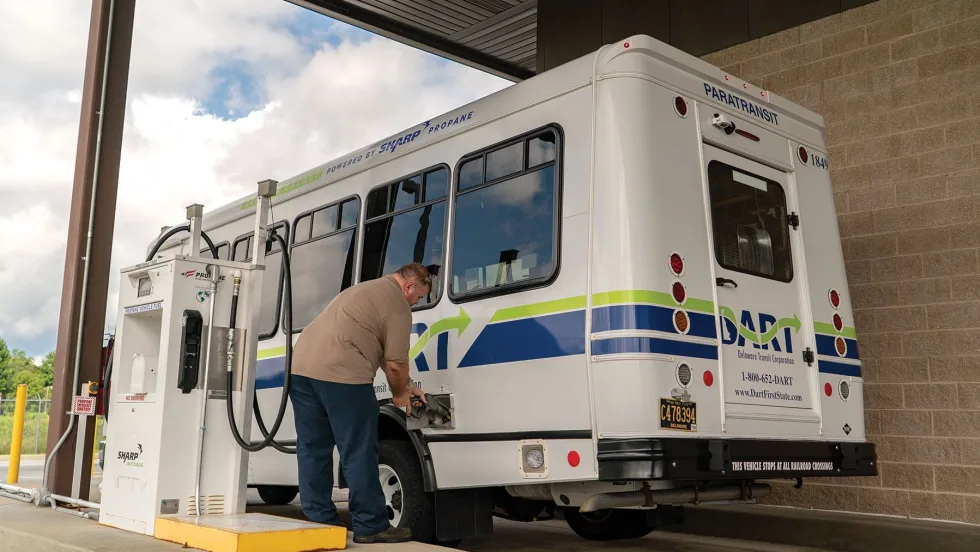
Building a Winning FTA Grant Proposal: Why Propane Autogas is the Pragmatic Choice for Fleet Resilience
With $610 million available through the FY 2026 Buses and Bus Facilities Competitive Program and the Low or No Emission Grant Program, agencies must build a compelling case before the September 21 deadline that balances environmental compliance with operational feasibility.
Read More →
Velo-city Conference 2026: Latest Trends in Cycling as Part of Urban Mobility
The global cycling conference highlighted how cities are integrating bicycles into multimodal transportation networks, expanding cycle tourism and reshaping urban mobility.
Read More →
Kindness Isn’t Soft...It’s Strategic.
Mike Bismeyer — often known as “The Kindness Guy” — has spent more than 17 years in public transit and mobility, serving in industry leadership roles, speaking across North America, and advocating for stronger workplace cultures. But his message doesn’t come from theory. It comes from lived experience.
Read More →
Inside ITF 2026: Transport Reacts to A Challenging World
Transport leaders from around the world gathered in Leipzig, Germany, for the 2026 International Transport Forum to discuss resilience, climate impacts, supply chains and the future of sustainable mobility.
Read More →
Every Ride Tells a Story — But You’re Not Just Selling the Ride
You’re selling the moment, the meaning, and the emotion behind it.
Read More →
How Digital Signage is Reshaping the Traveler Experience at Transportation Hubs
What was once a landscape of static signs has evolved into a responsive, immersive environment powered by real-time visual communication.
Read More →
Latest Trends in Urban Mobility from Polis Conference 2025
Polis comprises cities and regions, as well as corporate partners, from across Europe, promoting the development and implementation of sustainable mobility. This year’s event had over a thousand attendees across various policy forums and an exhibition.
Read More →
Why Transit Leaders Require Better Tools for Operational Clarity In Today’s Tech-Fragmented Environment
Across North America and beyond, transit agency officials are contending with a perfect storm of operational headaches and strategic challenges that hamper daily service and long-term progress.
Read More →
The Powerless Brokers: Why California Can’t Build Transit
It is no secret that transit in the U.S. is slow and expensive to build.
Read More →
Why Transport Sustainability Should Focus on People Instead of Cars
Simply incentivizing electrification is not enough to make a meaningful impact; we must shift our focus toward prioritizing public transportation and infrastructure.
Read More →