



Therapy Dogs are 'Well-Prepared' Passengers on Transit
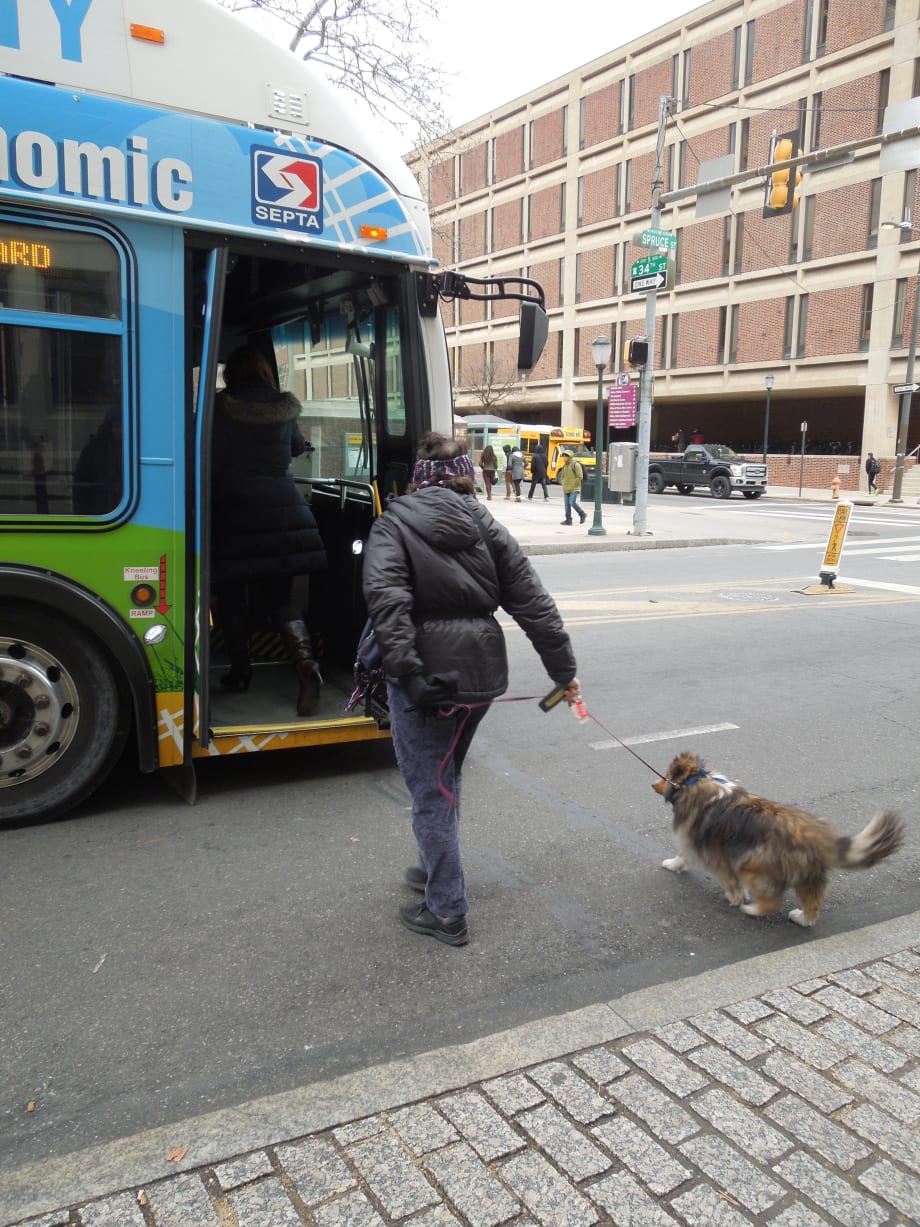
Seeing a canine passenger on mass transit is not uncommon, but the reasons why a dog might catch the train or hop a bus are varied (remember Eclipse, the Seattle Lab mix that uses the bus, often on her own, to get to the dog park?). Most public transit pooches are working —as K-9 officers or service animals. In the Philadelphia region, other animals — in approved carriers only—are permitted to ride the Southeastern Pennsylvania Transportation Authority’s buses, trains and trolleys. However, a new pilot program underway by SEPTA allows registered therapy dogs volunteering at two Philadelphia hospitals to use two designated bus routes to travel to their sites.

Photos courtesy SEPTA
Photos courtesy SEPTA
Seeing a canine passenger on mass transit is not uncommon, but the reasons why a dog might catch the train or hop a bus are varied (remember Eclipse, the Seattle Lab mix that uses the bus, often on her own, to get to the dog park?). Most public transit pooches are working —as K-9 officers or service animals. In the Philadelphia region, other animals — in approved carriers only—are permitted to ride the Southeastern Pennsylvania Transportation Authority’s (SEPTA) buses, trains and trolleys. However, a new pilot program underway by SEPTA allows registered therapy dogs volunteering at two Philadelphia hospitals to use two designated bus routes to travel to their sites.
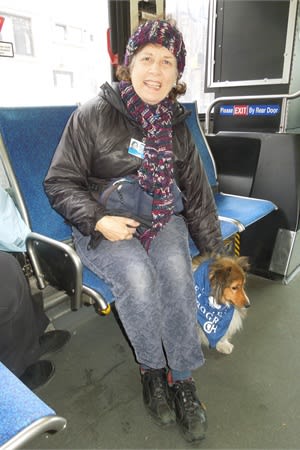
The Therapy Dog Pilot Program launched in early February, allowing registered therapy dogs for The Children’s Hospital of Philadelphia (CHOP) and the Hospital of the University of Pennsylvania (HUP) and their handlers to use SEPTA’s Route 40 and 42 buses to travel to the hospital campuses in West Philadelphia. Dogs are identified with therapy dog bandanas and the handlers, in addition to paying their fares, must show their hospital volunteer identification.
“There are several volunteers who have regularly taken advantage of riding the bus with their dogs since the pilot began,” said Cynthia Hayes, SEPTA’s manager, customer advocacy. “We’ve gotten positive feedback regarding the warm welcome the dogs and handlers have received when they board the buses. Our operators have enjoyed having the four-legged passengers along for the ride.”
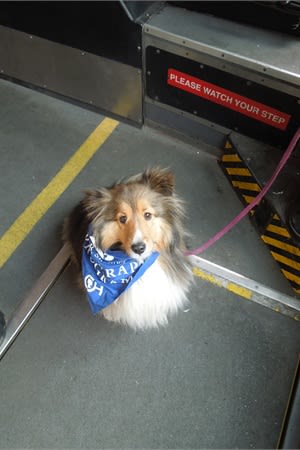
SEPTA is working with CHOP and HUP on the pilot because those institutions require their therapy dogs to undergo additional physical and behavioral screenings from the University of Pennsylvania’s School of Veterinary Medicine. “The therapy dogs go through rigorous training and screening processes before they volunteer at our hospital,” said Lisa Serad, program coordinator for the Gerald B. Shreiber Pet Therapy Program at CHOP. “We know that our volunteers are well-prepared for their bus trips.”
CHOP and HUP are hoping that a successful pilot program will help them attract more therapy dog volunteers. “Some of our current volunteers live in downtown Philadelphia,” said Serad. “If they don’t have a car, they need to take a taxi to the hospital for their assignments. The bus is much more cost effective and convenient. We know that there are many potential volunteers who would join our therapy dog program if they were able to use public transit.”
SEPTA’s pet therapy pilot runs through September. “At that time, we will evaluate the program and determine if we will continue it,” said Kim Scott Heinle, SEPTA assistant GM, customer service. “Animal therapy can make a great difference in the recovery or treatment of patients. If SEPTA can help the hospitals expand their programs by allowing therapy dogs and their handlers to ride our vehicles, then we are on board with doing what we can to make the pilot work.”
In addition to having SEPTA’s assistance with their pet therapy programs, Philadelphia and Pennsylvania hospitals have the support of State Sen. Andy Dinniman, who represents nearby Chester County, Pa. Dinniman has introduced a bill to the Pennsylvania Senate that will allow registered therapy dogs to ride mass transit. Dinniman applauds the steps SEPTA has already taken. “SEPTA's pilot project recognizes the value of therapy dogs as well as their handlers' need to sometimes use public transit to get to and from hospitals, senior centers, schools and other places," he said. "And, what SEPTA is trying out on Bus Routes 40 and 42, I am trying to do statewide with my Senate Bill 640, which would make sure registered therapy dogs and their handlers have the right to use public transportation across the Commonwealth."
More Blog Posts
Building a Winning FTA Grant Proposal: Why Propane Autogas is the Pragmatic Choice for Fleet Resilience
With $610 million available through the FY 2026 Buses and Bus Facilities Competitive Program and the Low or No Emission Grant Program, agencies must build a compelling case before the September 21 deadline that balances environmental compliance with operational feasibility.
Read More →
Velo-city Conference 2026: Latest Trends in Cycling as Part of Urban Mobility
The global cycling conference highlighted how cities are integrating bicycles into multimodal transportation networks, expanding cycle tourism and reshaping urban mobility.
Read More →
Kindness Isn’t Soft...It’s Strategic.
Mike Bismeyer — often known as “The Kindness Guy” — has spent more than 17 years in public transit and mobility, serving in industry leadership roles, speaking across North America, and advocating for stronger workplace cultures. But his message doesn’t come from theory. It comes from lived experience.
Read More →
Inside ITF 2026: Transport Reacts to A Challenging World
Transport leaders from around the world gathered in Leipzig, Germany, for the 2026 International Transport Forum to discuss resilience, climate impacts, supply chains and the future of sustainable mobility.
Read More →
Every Ride Tells a Story — But You’re Not Just Selling the Ride
You’re selling the moment, the meaning, and the emotion behind it.
Read More →
How Digital Signage is Reshaping the Traveler Experience at Transportation Hubs
What was once a landscape of static signs has evolved into a responsive, immersive environment powered by real-time visual communication.
Read More →
Latest Trends in Urban Mobility from Polis Conference 2025
Polis comprises cities and regions, as well as corporate partners, from across Europe, promoting the development and implementation of sustainable mobility. This year’s event had over a thousand attendees across various policy forums and an exhibition.
Read More →
Why Transit Leaders Require Better Tools for Operational Clarity In Today’s Tech-Fragmented Environment
Across North America and beyond, transit agency officials are contending with a perfect storm of operational headaches and strategic challenges that hamper daily service and long-term progress.
Read More →
The Powerless Brokers: Why California Can’t Build Transit
It is no secret that transit in the U.S. is slow and expensive to build.
Read More →
Why Transport Sustainability Should Focus on People Instead of Cars
Simply incentivizing electrification is not enough to make a meaningful impact; we must shift our focus toward prioritizing public transportation and infrastructure.
Read More →