




Both the City and County received an Local Government Efficiency Program grant to fund transitional activities associated with this consolidation.
Tips for integrating/merging public transit systems
The City of Poughkeepsie worked with Duchess County to consolidate their two transit systems. What were the lessons learned?
December 10, 2019

The City of Poughkeepsie worked with Duchess County and consolidated their two transit systems.
John Andoh
4 min to read
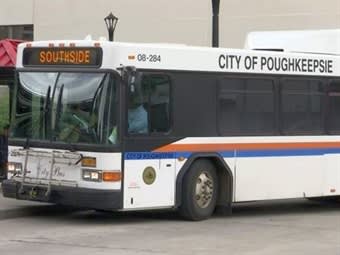
The City of Poughkeepsie worked with Duchess County and consolidated their two transit systems.
John Andoh
In July 2017, based on previous planning efforts, Dutchess County Public Transit, in Poughkeepsie, N.Y., assumed the operation of Poughkeepsie City Bus in a manner that was very adversarial and controversial. The City of Poughkeepsie worked with Duchess County and consolidated their two transit systems. Since the City’s system was experiencing declining ridership and was a drain on city finances, this consolidation will not only save the city money, but has resulted in a significantly improved county bus service, which will benefit the many riders who use it.
The City of Poughkeepsie and Dutchess County for years talked about merging the two transit systems together, however for various reasons, the consolidation did not occur until in 2017, the Mayor of Poughkeepsie made a bold move to save the city from bankruptcy by discontinuing City Bus. This was a controversial decision, but a year later, was viewed as a wise decision. The local Dutchess County Transportation Council, also known as the MPO, studied how a consolidated transit system could work and the cost savings that the City and County could both incur by having one operator access regional funding from the federal and state governments.
Once the Mayor made the decision, the City Council decided to create a committee to study the issue. The study committee determined that they can save and make changes, which could allow the City to afford a transit system, however, the Mayor did not fund the transit system beyond July 1, 2017 in his budget, which was ultimately approved. In New York State, consolidation is encouraged for efficient government. Both the City and County received an Local Government Efficiency Program grant to fund transitional activities associated with this consolidation.
While this was going on, the County and the City worked together to design a transit system that made sense, utilizing additional state and federal resources to help fund the expansion of Dutchess County Public Transit. With the City discontinuing its bus service, the County expanded its bus service, which was a unique approach toward integrating two transit systems into one. Multiple public hearings were held regarding changes to former bus routes to gather feedback. There was much apprehension toward the changes. Many current and former riders of City Bus did not support any changes being made, and ultimately, the issue became a Title VI issue with labor organizations getting involved to file a lawsuit and Title VI claims against the proposed route changes made.
To stop the discontinuance of City Bus, City Council voted to not transfer the FTA assets to Dutchess County, requiring Duchess County to use older assets for the expanded system. On the labor side, fortunately, no layoffs occurred, and the City staff assigned to City Bus was assigned to new jobs within the Public Works Department. The County’s transit operations contractor, however, needed to hire additional personnel in anticipation of this transition since no staff from the City wanted to leave civil service employment for a private contractor.
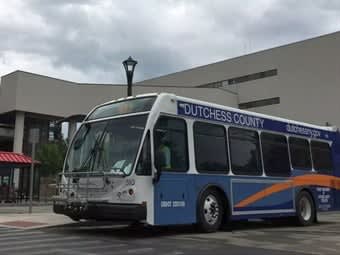
To stop the discontinuance of City Bus, City Council voted to not transfer the FTA assets to Dutchess County, requiring Duchess County to use older assets for the expanded system.
Dutchess County Transit
Moving forward
To rebuild the relationship between the City and the County, a new study was undertaken to review what City Bus used to do and what the Dutchess County Public Transit network is currently doing. What was learned from the study was City Bus was a heavily senior-dependent and many seniors were used to front door access to businesses and destinations. Walking was not an option. The routes were redesigned to better serve these destinations, including a large senior housing complex and tower. The City Council also wanted to be engaged in the decision-making process, and multiple presentations was made to City Council to discuss the route design, the schedules, the frequency, and the stop locations.
Ultimately, a lease agreement was negotiated and approved by the City Council and County Legislature. This lease agreement allowed the City to retain ownership of the transit assets and provided a $1 lease to the County to prevent a federal recapture of funds in the amount of $1.2 million. Such assets are now being used in an integrated system.
Since this consolidation, another county to the west, Ulster County was successful in integrating Kingston Citybus into Ulster County Area Transit after years of studying and monitoring what occurred with Dutchess County and the City of Poughkeepsie.
Lessons that were learned from this consolidation included:
Forming a relationship early on with the agency that you intend to consolidate with to ensure that all parties are on the same page;
Ensure labor is taken care of in advance to avoid controversy with the work force;
Avoid significant changes to service and operational procedures initially in a consolidation, so that the customer base can learn to trust and understand the new integrated agency intentions;
Be flexible, creative, and not forceful when it comes to achieving a consolidated transit system;
And, to be mindful of the financial implications associated with a consolidation. There will be one-time startup costs and the savings could be achieved over a period of time, if done correctly.
Most importantly, ensure that there is consistent communication between both parties, which includes both staff and policymakers.
John Andoh is Executive Director/CEO for The COMET and former County Transit Administrator for Dutchess County Public Transit.
Subscribe to Our Newsletter
More Blog Posts
Building a Winning FTA Grant Proposal: Why Propane Autogas is the Pragmatic Choice for Fleet Resilience
With $610 million available through the FY 2026 Buses and Bus Facilities Competitive Program and the Low or No Emission Grant Program, agencies must build a compelling case before the September 21 deadline that balances environmental compliance with operational feasibility.
Read More →
Velo-city Conference 2026: Latest Trends in Cycling as Part of Urban Mobility
The global cycling conference highlighted how cities are integrating bicycles into multimodal transportation networks, expanding cycle tourism and reshaping urban mobility.
Read More →
Kindness Isn’t Soft...It’s Strategic.
Mike Bismeyer — often known as “The Kindness Guy” — has spent more than 17 years in public transit and mobility, serving in industry leadership roles, speaking across North America, and advocating for stronger workplace cultures. But his message doesn’t come from theory. It comes from lived experience.
Read More →
Inside ITF 2026: Transport Reacts to A Challenging World
Transport leaders from around the world gathered in Leipzig, Germany, for the 2026 International Transport Forum to discuss resilience, climate impacts, supply chains and the future of sustainable mobility.
Read More →
Every Ride Tells a Story — But You’re Not Just Selling the Ride
You’re selling the moment, the meaning, and the emotion behind it.
Read More →
How Digital Signage is Reshaping the Traveler Experience at Transportation Hubs
What was once a landscape of static signs has evolved into a responsive, immersive environment powered by real-time visual communication.
Read More →
Latest Trends in Urban Mobility from Polis Conference 2025
Polis comprises cities and regions, as well as corporate partners, from across Europe, promoting the development and implementation of sustainable mobility. This year’s event had over a thousand attendees across various policy forums and an exhibition.
Read More →
Why Transit Leaders Require Better Tools for Operational Clarity In Today’s Tech-Fragmented Environment
Across North America and beyond, transit agency officials are contending with a perfect storm of operational headaches and strategic challenges that hamper daily service and long-term progress.
Read More →
The Powerless Brokers: Why California Can’t Build Transit
It is no secret that transit in the U.S. is slow and expensive to build.
Read More →
Why Transport Sustainability Should Focus on People Instead of Cars
Simply incentivizing electrification is not enough to make a meaningful impact; we must shift our focus toward prioritizing public transportation and infrastructure.
Read More →