



Transit expands its list of partners
As funding from state and federal agencies continues to be more difficult to secure, local transit systems have found a variety of new partners that not only help pay for new hours of service, but can also provide opportunities for transit agencies to restructure service in parts of the community. These partnerships can also result in improving the transit agency’s image and relevance in a community, and improved quality of service.

Courtesy Monterey-Salinas Transit
As funding from state and federal agencies continues to be more difficult to secure, local transit systems have found a variety of new partners that not only help pay for new hours of service, but can also provide opportunities for transit agencies to restructure service in parts of the community. These partnerships can also result in improving the transit agency’s image and relevance in a community, and improved quality of service.
Courtesy Monterey-Salinas Transit
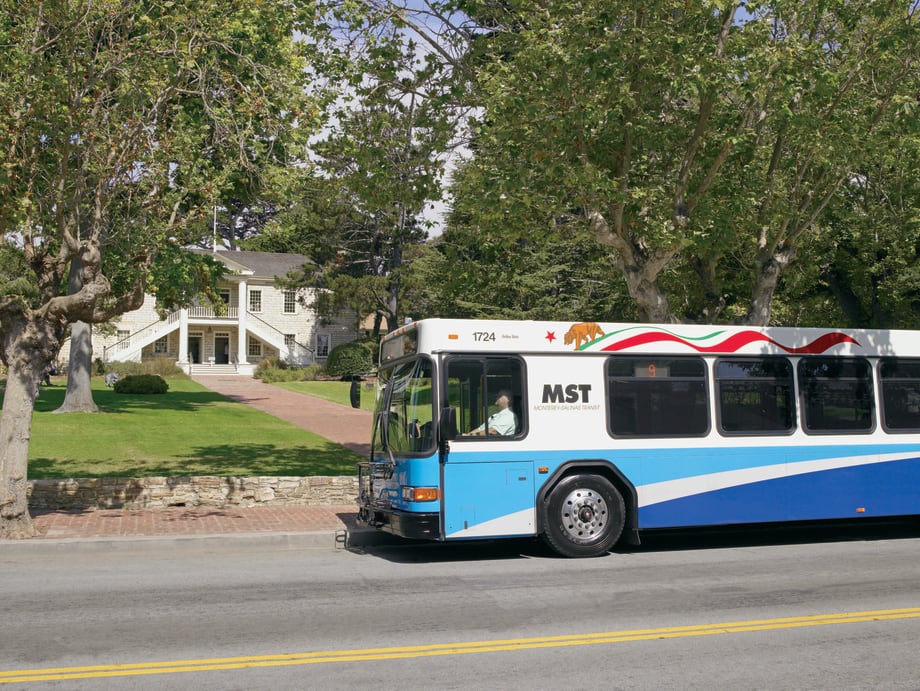
There are many examples of public sector partners, one being the Presidio military training facility in Monterey and its agreement for transit service with the Monterey-Salinas Transit agency (MTS) in California. This service is intended to meet the transportation needs of students, faculty, and staff of the Presidio to commute to work from the communities on the Monterey Peninsula, Salinas, and San Jose on weekdays. The service, which includes 12 new or redesigned commuter routes, is fully integrated with existing bus service, operates on fixed schedules, and utilizes established bus stops. The military base was becoming overwhelmed with private vehicles, and with security concerns becoming more prominent, the Presidio leaders wanted to find transportation alternatives for those who worked at the base.
While the transit service funded through the agreement is intended to primarily address the needs of the personnel on the military training base, it is open to the public as well. The Presidio pays the full hourly costs associated with this service which amounts to over $1.5 million annually. The new military commuter services are fully paid for by the Federal Transit Benefit /Transportation Incentive Program established by Executive Order 13150 through the Department of Transportation which is being used by approximately 1,000 military base personnel.
Courtesy Broward County Transit
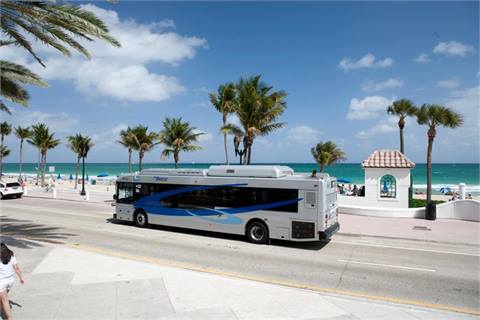
Florida's Broward County Transit (BCT) has reached agreements with 20 of the 30 cities in the county. That resulted in BCT being able to minimize meandering routes that serve condominiums and other facilities that are off the transit system’s grid network. BCT leases (for $1 a year) minibuses to the cities and provides technical assistance in terms of scheduling, while the cities operate the minibuses with their own personnel or through contracts that the cities manage. This has allowed BCT routes to stay on the major roads, providing faster and more direct service throughout the county that helps to build ridership. The cities provide more customized services in their communities that allow people to go to the front door of shopping centers or condominiums.
BCT also provides approximately half the operating cost for the city circulators, which ends up being 75% less than the amount it would cost BCT to provide the service itself. All city circulators are required to connect with BCT routes at the nearest transfer center. Hence, the city circulators also serve as feeders to, and distributors from, the county system, thereby increasing mobility and transit ridership and minimizing the first mile-last mile challenge many transit passengers face. The city circulators also help reduce the cost of paratransit service since the circulators can often accommodate the needs of people with disabilities.
The Central Contra Costa Transportation Authority (CCCTA) established the Community Connection program that has allowed more trips to be made throughout the county at a very low cost due to their partnerships with other programs that use volunteers and receive grants and provide additional trips due to CCCTA’s assistance with vehicles and training. Between increasing productivity and spreading the load, many more trips can be accommodated at a very modest cost. Not only has this program expanded options for seniors with service tailored expressly for their individual needs, but capacity has been freed up on the CCCTA’s paratransit service (LINK) to serve additional trips that were formerly taken by those now using a partner’s “Community Connection” van. Instead of ridership on LINK growing at a rate of over 3% per year, ridership on LINK stabilized and actually fell in 2007 nearly 1.5% over what it was the previous fiscal year. This allowed 10% more same-day trips to be accommodated, and LINK is able to focus on serving those very frail persons for which it was designed, with no service denials and within budget. In FY 2008, ridership on LINK grew by 4.6%, but productivity increased from 1.94 to 2 passengers per hour. Nearly 23% more same-day trips were provided as well.
Transit agencies have also partnered with downtown development authorities, transportation management associations, and convention centers, among other public partners. In addition they have partnered with private sector entities such as shopping malls, business parks, museums, hotels, major employers, associations of businesses, hospitals, and casinos that pay partially or fully for new service. I look forward to sharing information on that in a future posting.
Joel Volinski, METRO Magazine's newest contributing blogger, is the director of the National Center for Transit Research at the University of South Florida where he manages the largest university-based transit research program in the country. He is the author of the reports entitled “Lessons Learned in Transit Efficiencies, Revenue Generation, and Cost Reductions” as well as the upcoming TCRP report “Maintaining Transit Effectiveness Under Tight Fiscal Constraints.”In upcoming blogs, Joel will discuss ways transit systems are becoming more efficient.
In case you missed it...
Read our METRO blog, "Preparing for the worst."
More Blog Posts
Building a Winning FTA Grant Proposal: Why Propane Autogas is the Pragmatic Choice for Fleet Resilience
With $610 million available through the FY 2026 Buses and Bus Facilities Competitive Program and the Low or No Emission Grant Program, agencies must build a compelling case before the September 21 deadline that balances environmental compliance with operational feasibility.
Read More →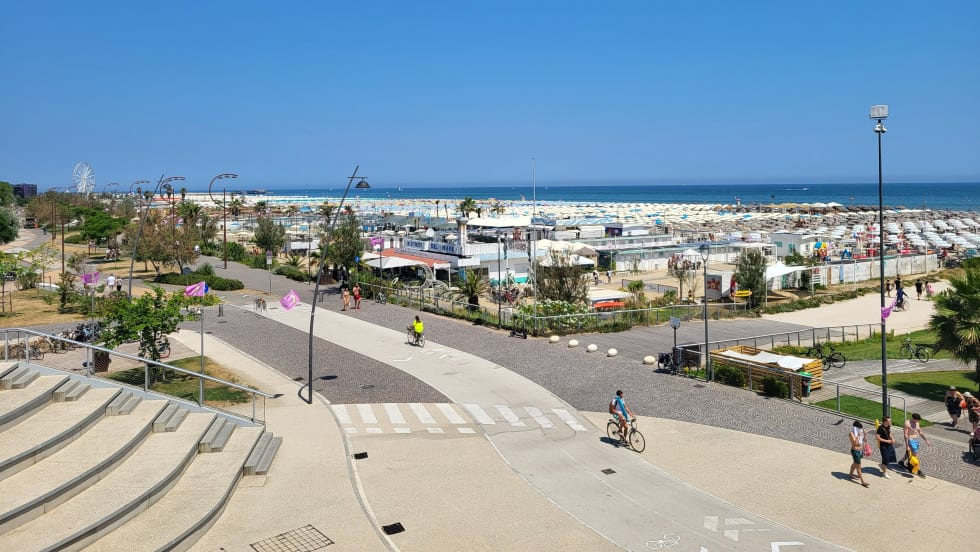
Velo-city Conference 2026: Latest Trends in Cycling as Part of Urban Mobility
The global cycling conference highlighted how cities are integrating bicycles into multimodal transportation networks, expanding cycle tourism and reshaping urban mobility.
Read More →
Kindness Isn’t Soft...It’s Strategic.
Mike Bismeyer — often known as “The Kindness Guy” — has spent more than 17 years in public transit and mobility, serving in industry leadership roles, speaking across North America, and advocating for stronger workplace cultures. But his message doesn’t come from theory. It comes from lived experience.
Read More →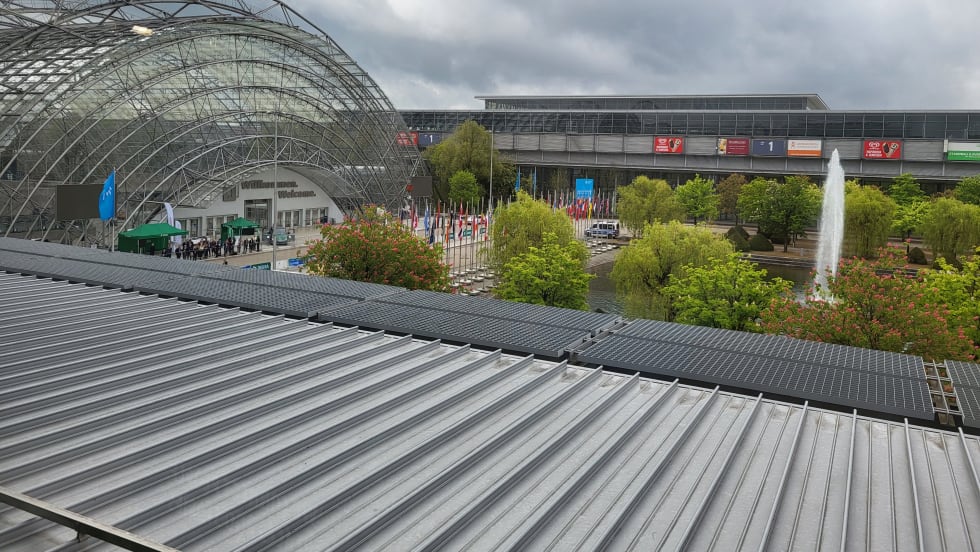
Inside ITF 2026: Transport Reacts to A Challenging World
Transport leaders from around the world gathered in Leipzig, Germany, for the 2026 International Transport Forum to discuss resilience, climate impacts, supply chains and the future of sustainable mobility.
Read More →
Every Ride Tells a Story — But You’re Not Just Selling the Ride
You’re selling the moment, the meaning, and the emotion behind it.
Read More →
How Digital Signage is Reshaping the Traveler Experience at Transportation Hubs
What was once a landscape of static signs has evolved into a responsive, immersive environment powered by real-time visual communication.
Read More →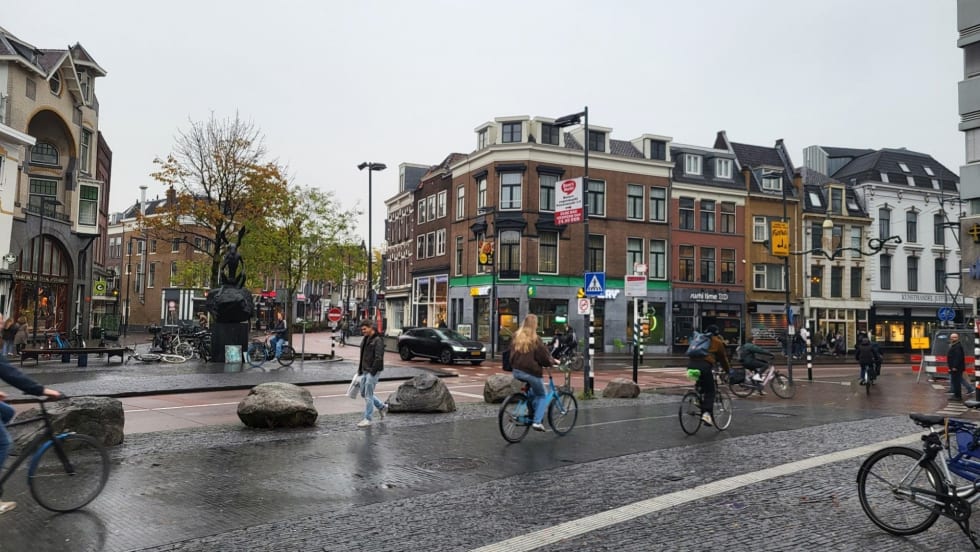
Latest Trends in Urban Mobility from Polis Conference 2025
Polis comprises cities and regions, as well as corporate partners, from across Europe, promoting the development and implementation of sustainable mobility. This year’s event had over a thousand attendees across various policy forums and an exhibition.
Read More →
Why Transit Leaders Require Better Tools for Operational Clarity In Today’s Tech-Fragmented Environment
Across North America and beyond, transit agency officials are contending with a perfect storm of operational headaches and strategic challenges that hamper daily service and long-term progress.
Read More →
The Powerless Brokers: Why California Can’t Build Transit
It is no secret that transit in the U.S. is slow and expensive to build.
Read More →
Why Transport Sustainability Should Focus on People Instead of Cars
Simply incentivizing electrification is not enough to make a meaningful impact; we must shift our focus toward prioritizing public transportation and infrastructure.
Read More →